Ethically Sourced Stones
•
Free Samples
•
Australia wide delivery
•
Serving Globally Since 1993
•
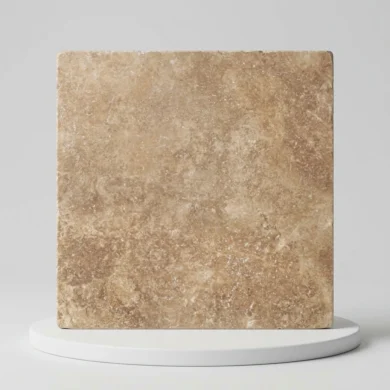
Outdoor Travertine Pavers create outdoor paving for patios, courtyards, alfresco areas, paths and pool surrounds with regular layouts and French Pattern both available. Stone Planet is a supplier of standard 30mm Travertine Pavers in multiple formats with coping, steps and other sizes available for Sydney, Brisbane and Melbourne projects of all types.
A paved area shows small differences in size, thickness, finish and colour very quickly, so choose the actual Travertine Paver before the layout is locked. For outdoor Travertine Pavers, look beyond colour and check the dimensions, finish, pore treatment, calibration and how the paving will meet coping, steps or adjoining surfaces.
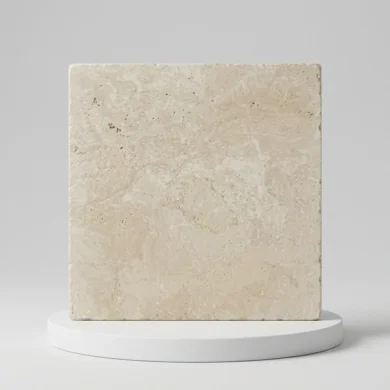
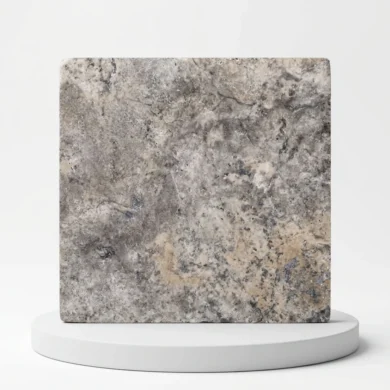
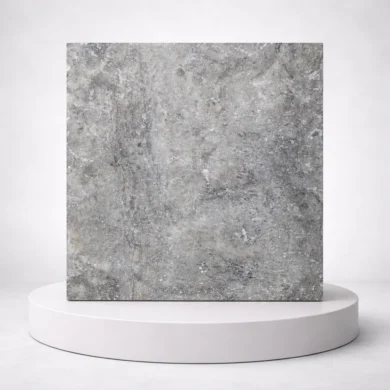
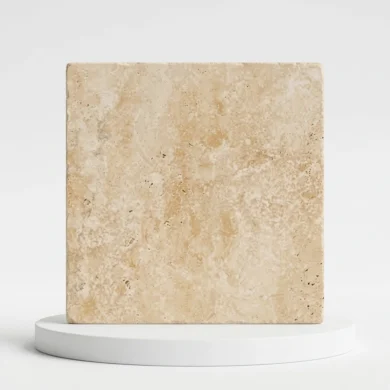
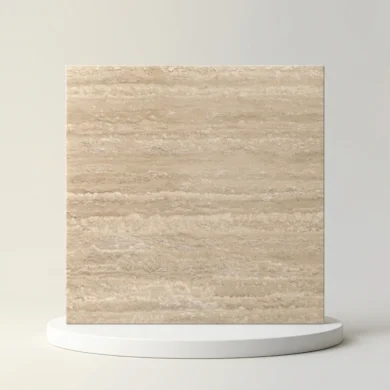
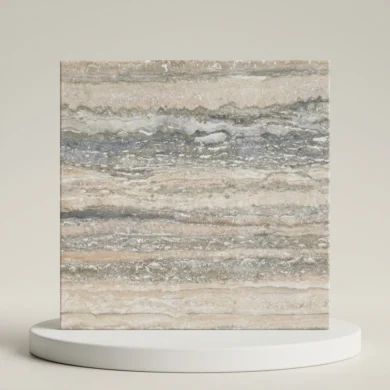
Travertine Pavers should be compared by the actual stone, size, thickness, finish and quality shown on the quote. The same stone name can appear across different Paver specifications, so the quoted product matters more than the name alone. The Travertine range includes Silver Travertine, Ivory Premium and Classic, which give very different looks once repeated across a paved area.
Stone Planet’s standard imported Travertine Pavers are 30mm thick with 20mm Travertine Pavers also available for project orders.
Thickness affects paving levels where the stone meets doors, drains, steps, pool coping and adjoining surfaces. It does not act as a universal vehicle rating or an indoor-versus-outdoor rule; the full project still needs to suit the intended use.
Common Travertine Paver sizes include 610 x 406mm, 406 x 406mm and 610 x 610mm. Larger pieces create fewer joints across open paving, while smaller pieces can work more comfortably around tight edges, paths and curves.
| Common Travertine size | How it can affect the paving layout |
| 610 x 610mm | Larger square format with fewer joints across open areas. |
| 610 x 406mm | Rectangular format suited to regular paving and mixed layouts. |
| 406 x 406mm | Smaller square format with more joints and flexibility around tighter spaces. |
Relevant calibrated Travertine products carry a stated thickness tolerance of approximately +/-2mm. Calibration gives the installer a clearer dimensional benchmark for the Pavers being laid but it does not guarantee zero lippage, faster installation or lower labour cost.
Travertine Paver finishes include Honed surfaces, Unfilled pores and Tumbled edges. Unfilled Travertine keeps more of the natural pores visible, while Tumbled edges soften the perimeter and create a looser joint line. Stone Planet also supplies Honed and Filled Travertine for projects that call for a flatter surface.
For wet or exposed areas, use slip evidence matched to the actual stone, finish and batch.
French Pattern Travertine paving uses four sizes in a repeating set and breaks up the straight grid of regular square or rectangular Pavers. The pattern is also known as Versailles Pattern.
| French Pattern piece |
| 610 x 406mm |
| 406 x 406mm |
| 406 x 203mm |
| 203 x 203mm |
French Pattern Travertine is supplied as a coordinated four-size set in the same stone, thickness and finish. Quote the four pieces together rather than treating them as separate Paver sizes.
Compare the piece mix, quoted coverage, joint assumption and cutting allowance before ordering French Pattern. Curves, pool edges, garden beds and angled boundaries can increase waste, so the area shown on a plan will not always equal the final order quantity.
French Pattern works well where the project wants a more varied paving rhythm than a simple grid but the pattern still needs careful set-out rather than random placement.
Travertine Pavers suit patios and outdoor entertaining areas with regular layouts and French Pattern both available. For alfresco areas, choose the Paver size and pattern around the shape of the space, door thresholds, outdoor kitchen zones and the way the paving connects to the rest of the landscape.
A regular Paver layout gives the patio straighter joint lines, while French Pattern creates a more varied surface. Courtyard and alfresco paving can also mix with coping, steps or cobblestones when those pieces are planned with the main stone.
Stone Planet supplies Travertine Pool Pavers for pool surrounds. Plan the poolside Travertine paving with the pool coping so the colour, finish, edge profile and adjoining levels work together.
For paving around the pool, match any required slip evidence to the actual Travertine, finish and batch rather than assuming every pool Paver carries one rating. Stone Planet does not apply a blanket saltwater or pool-chemical claim to every Travertine Paver.
For a Travertine pool edge, compare Bullnose, Pencil Edge and Drop Edge profiles with the main paving before the order is placed.
Travertine courtyard paving, pathways, verandahs and terraces often benefit from a size that suits the geometry of the area. Smaller Pavers can handle tighter paths and changes in shape more comfortably, while larger pieces reduce the number of joints across broad terraces.
For connected outdoor areas, keep the main Travertine paving in one production lot where practical and plan cuts, borders and adjoining stone before the final quantity is ordered. Travertine quality and batch checks matter more as the paved area gets larger because small changes repeat across many sqms.
Driveway paving needs a different check from a patio or path. A 30mm Paver does not prove vehicle suitability by thickness alone; the actual stone, traffic, support and complete driveway specification need to suit the job. For a driveway, consider the whole project rather than using thickness as a shortcut.
For driveways and entries where a smaller unit suits the layout, Cobblestones may be worth comparing with large-format Pavers. A cobblestone driveway, path or border creates a different joint pattern, visual scale and edge treatment from regular Travertine paving.
Regular Travertine Pavers create straight joint lines and a controlled repeating layout. Cobblestones use smaller units for a denser joint pattern, while Crazy Paving uses irregular pieces for a looser, more varied surface.
Stone Planet supplies calibrated 20mm Travertine Crazy Paving and 20mm Travertine cobblestones as separate outdoor formats. They are not simply thinner versions of standard 30mm Pavers because the layout, cuts, joints and final appearance are different.
If the stone itself is still undecided, compare natural stone Pavers across other materials before locking the outdoor palette.
Sealing Travertine Pavers helps manage staining from everyday outdoor use. It does not make the paving waterproof and it does not create a slip rating.
There is no one resealing interval for every patio, poolside or courtyard. The stone, finish, exposure, traffic and sealer determine when the surface needs attention.
Use a neutral cleaner made for natural stone and avoid acidic products that can etch Travertine. Sweep or rinse away grit, leaves and other debris before they sit on the paving for long periods, especially around outdoor entertaining areas and paths.
Stone Planet’s current Travertine Paver price range is approximately $75 to $130 + GST per m². Buyers often ask for the average Travertine Paver price but a current range is more useful than one midpoint because the cost changes with the stone, quality, size, finish and order quantity.
When comparing Travertine paving cost, make sure the quotes use the same thickness and format. A lower price per sqm can describe a different product, finish, French Pattern pack or project scope.
For anyone comparing Travertine Paver suppliers, the useful number is the delivered cost of the same specification, not simply the lowest headline rate.
Stone Planet offers sale pricing on selected Travertine Pavers. Compare the discounted Paver by stone, 30mm thickness, size, finish and available quantity so the sale price is judged against the actual product being supplied.
A lower-priced or discounted Travertine Paver can be good value when the specification suits the project. The price alone should not be used as proof that two different Pavers are equivalent.
Stone Planet supplies Travertine Pavers to homeowners, trade buyers, landscapers, builders and resellers across Sydney, Brisbane, Melbourne and other regions of Australia. Wholesale prices for Travertine Pavers are quoted based on the product, quantity, delivery and complete requirement of the client.
Stone Planet’s standard imported Travertine Pavers are 30mm thick with common square and rectangular sizes plus 20mm Pavers for project orders. This gives buyers a clear starting specification before custom pieces or adjoining stone are added.
Outdoor projects often need more than the main Paver. Stone Planet coordinates French Pattern with Pool Coping, Treads and Risers, cobblestones and Crazy Paving so the order is planned as one outdoor stone package rather than several disconnected purchases.
Where the same stone continues into a tiled floor, Travertine Tiles can be coordinated with the outdoor Pavers so colour and finished levels are planned together.
Stone Planet’s Denizli factory handles sizing, finishing, calibration, quality control and batch-lot management before Travertine is packed for Australia. Those checks matter on paving because small dimensional or finish differences repeat across a large outdoor area.
Stone Planet supplies residential, trade and wholesale Travertine Paver orders across Australia. Stone Planet also supplies project orders in custom thicknesses, cuts, sizes and finishes through its Turkish quarry and production network.
For larger outdoor jobs, planning the paving, coping and steps together makes quantities and finished levels easier to resolve before installation. Good outdoor project planning matters when several natural-stone areas need to meet across the same property.
Colour and aspect matter. Light Travertine pavers like Ivory and Silver reflect more sun and stay noticeably more comfortable under bare feet than dark stone or concrete. Full exposure will still heat any surface, but Travertine generally sits on the cooler side compared with many alternatives in Sydney and Brisbane summers.
For light use paths and small garden areas, a compacted road base and sand bed can be sufficient to install the outdoor travertine pavers. Around pools, main patios and driveways, a reinforced concrete base is far safer long term and here you can use travertine tiles to save money instead of travertine pavers. Sand alone under a main deck or driveway almost always leads to movement, rocking pavers and complaints a few seasons later.
Good quality Travertine pavers perform well around saltwater pools when they are properly sealed and detailed. The key is to avoid salt water from sitting on the stone or in the joints for long periods and to refresh penetrating sealers on a regular cycle so salt stays near the surface, not deep in the pores.
We generally recommend resealing external Travertine pavers every 1-2 years with a quality penetrating sealer, depending on traffic and exposure. Pool surrounds and coastal sites might need more frequent attention.
Rocking pavers usually point to base or joint issues, not the stone itself. If the base is soft, poorly compacted or waterlogged, any paver will move over time. When Travertine pavers are laid on a sound base with packed joints, they behave as predictably as other quality stones and are unlikely to start moving under normal use.
Yes. One colour can look excellent across all three areas, especially in Ivory or Classic tones, but driveways may call for tighter joints. Stone Planet can help you plan that, so the project looks consistent but still works structurally
Any stone can chip if it has a heavy impact. However dense premium Travertine outdoor pavers handle everyday use well. Chips in softer grades are more common which is why we focus on dense quality natural stone. If a single paver does chip badly, it can usually be lifted and replaced without disturbing the whole area when laying correctly.
Good penetrating sealers are designed to sit within the stone. Wet look sealers or enhanced sealers can reduce grip, which is why we avoid them for pool surrounds, steps and other wet areas. Choosing the right sealer is part of the job, not an afterthought.
You can, but you need to respect the stone. Low to moderate pressure with a wide fan nozzle is generally fine. Very high pressure or narrow jets can open up the pores and damage the surface, especially on softer grades. If you are unsure, test in a small area first and keep the nozzle moving rather than fixed.
Stone Planets keeps batch records and can usually source close matches if you extend a deck or path later. Natural stone will always carry some variation from one quarry run to the next, so we will be honest about how close the match is likely to be before you order more. Many clients find that slight variation adds to the stone’s character rather than detracting from it.
If you lay your pavers on a flexible sand base, the outer perimeter must be locked in. Landscapers achieve this by "haunching" the border row. This means they set the outermost edge of the pavers into a wet mix of sand and cement beneath the ground level. This creates a solid, invisible barrier that stops the paving sand from washing out during heavy rain and prevents the stones from migrating outward.
The bedding layer should always be washed river sand (commonly sold as paving sand). You must never use brickies sand or bricklaying sand. Brickies sand contains clay, which holds moisture. If it rains heavily, the clay expands and can push your pavers out of level.
Tumbling is a process that knocks off the sharp 90-degree corners of the stone. It leaves a slightly rounded and distressed edge. This is a functional necessity for the outdoors. Because outdoor ground moves, two pavers might eventually sit a millimeter out of level with each other. If they had sharp, square edges, that height difference becomes an immediate trip hazard. A tumbled edge travertine stone paver masks slight ground variations and stops bare toes from catching.
Never sweep regular beach sand or garden dirt into the gaps. You should use a polymeric gap sand. You sweep this dry sand into the joints and lightly mist it with a hose. The water activates polymers in the sand, causing it to harden into a flexible mortar. This locks the pavers tightly together and creates an impenetrable barrier against weeds and ant nests.
Yes. This process is called dip sealing or six-sided sealing. Saltwater is highly corrosive. If you only seal the top of the stone, saltwater splashed from the pool will soak into the paving sand and absorb up through the bottom of the unsealed paver. As the water evaporates in the sun, salt crystals expand just beneath the surface, causing the face of the stone to flake off (known as spalling). Dip-sealing the entire block prevents this completely.
Organic stains from eucalyptus leaves or bird droppings are common in backyards. Do not use bleach or a high-pressure washer set to a pinpoint nozzle, as this can blast open the natural pits and damage the stone. Instead, use an alkaline-based natural stone cleaner or a poultice powder. Let the cleaner dwell on the stain to break down the organic matter, gently scrub with a stiff nylon brush, and rinse with an open-flow hose.
Water pooling is an installation error, not a stone issue. When preparing the compacted road base and sand bed, your landscaper must build in a fall (a slight slope). The Australian industry standard is a drop of roughly 10mm for every 1 meter of paving. This subtle slope is barely visible to the eye but ensures rainwater naturally drains off the surface into your garden beds or strip drains.
You cannot score and snap 30mm natural stone like a ceramic tile, nor should you cut it dry with a standard grinder. You must use a wet saw equipped with a continuous rim diamond blade specifically designed for dense natural stone. The water cools the blade, eliminates hazardous silica dust, and ensures the paver's edges do not chip or shatter during the cut.
No, and we advise against it. We specifically supply our outdoor pavers as unfilled. Leaving the natural pits open increases the physical surface area of the stone, which provides significantly better traction and grip when the ground is wet. The holes also help water drain off the immediate surface faster.
The standard industry rule is to order 10% more square meterage than your actual measurements. This covers the offcuts generated when trimming pavers to fit edges and corners. However, if your design involves curved pool edges, a circular fire pit, or a diagonal 45-degree laying pattern, you should increase your allowance to 15% due to the higher volume of complex cuts required.
When installed and maintained correctly, travertine pavers can last between
30 and 70 years. Because travertine is a natural stone (a form of terrestrial limestone), it is inherently more durable than man-made concrete pavers, which tend to fade or crack over a much shorter
20-year cycle.
The actual lifespan of your specific installation depends on three primary factors:
• The Grade of Stone
• The Climate
• The Installation Method
Quality Grade and Longevity
The structural integrity of the stone is the biggest predictor of its lifespan.
• Premium Grade: These pavers are high-density with minimal holes.
They are the most resistant to "spalling" (chipping) and can easily last
half a century or more.
• Standard/Commercial Grade: These contain more natural voids.
Over decades, these holes can expand or trap debris, which may lead to
surface wear if not properly maintained.
In Australia, the cost for 30mm travertine pavers typically ranges from
$60 to $120 per square metre for the material alone.
Prices vary based on the grade, color, and finish of the stone.
Below is a breakdown of the current market rates:
Cost by Grade (30mm Pavers)
Grade Price Range (Per m²) Description
Commercial / Standard Grade $60 – $80 Features more natural holes and significant
color variations.
Premium / "A" Grade $85 – $120+ Denser stone with fewer holes and high color
Consistency (popular for Ivory and Silver varieties).
You can, but you need to plan it. Concrete against natural stone often looks like a repair unless the transition is deliberate. If you want to blend the two, we recommend clear edges, intentional level changes and using concrete only in structural zones like driveways, with Travertine handling the visible, lighter-use areas
Unsealed stone will mark faster. Once sealed with a good penetrating sealer, most marks from leaves, soil and general outdoor use sit closer to the surface and clean off with the right products. Dark metals and some furniture feet can still leave marks; we suggest protecting contact points and checking them early rather than waiting until the end of the season.
Small level changes are common and can usually be handled with step transitions or graded paving. The key is not to force large height differences into a single flat plane. Travertine pavers work well with low steps, split levels and edges that make the change of height clear and safe.
The stone can be the same; what changes is finish and colour. In deep shade, very dark colours can feel heavy, while extremely light colours can show dirt more easily. Around pools and sunny decks, lighter colours help with heat. We look at your yard as a whole and suggest where the same paver will work and where a small shift in colour or finish will help.
Wear usually reduces sharpness rather than grip, but incorrect cleaning and some sealers can make any surface feel slick. Using penetrating sealers and pH-neutral cleaners keeps the micro-texture of the stone intact. If an area does become too smooth over many years, re finishing sections is possible rather than replacing everything.
Normal use under heaters and barbecues is fine. Direct, prolonged heat or repeated spill of fat and food will mark any material. Using trays, mats and sensible placement under heavy equipment protects both the stone and the structure. Travertine has good thermal performance, but common-sense layout still applies.
Price reflects more than just the name. Quarry source, grade, density, thickness, finish, and how many middlemen sit between the quarry and you all change the number. Very low prices often carry thinner stone, mixed grades or unknown batch control. When we quote, we explain what sits behind the number so you can compare like for like, not just the label