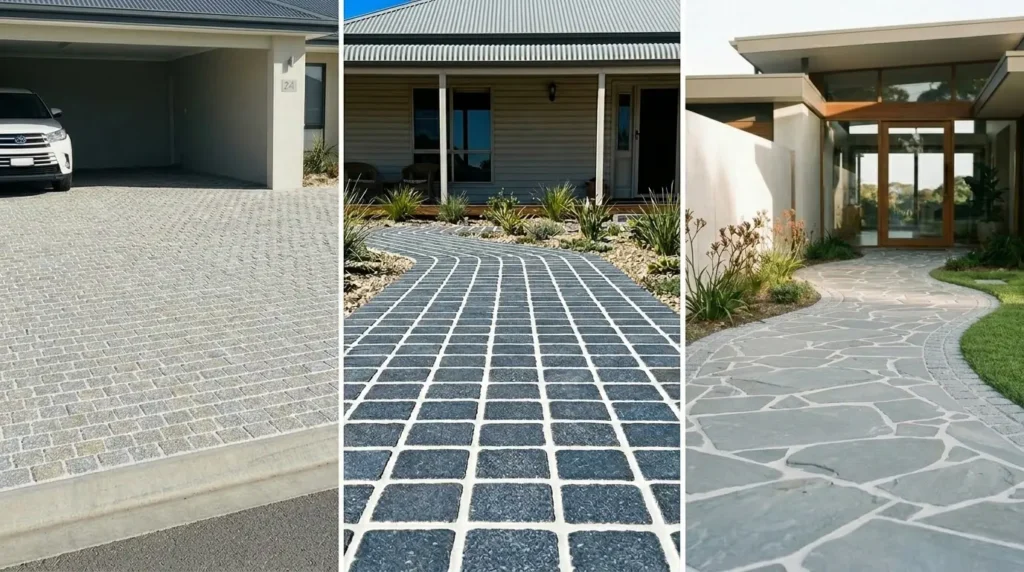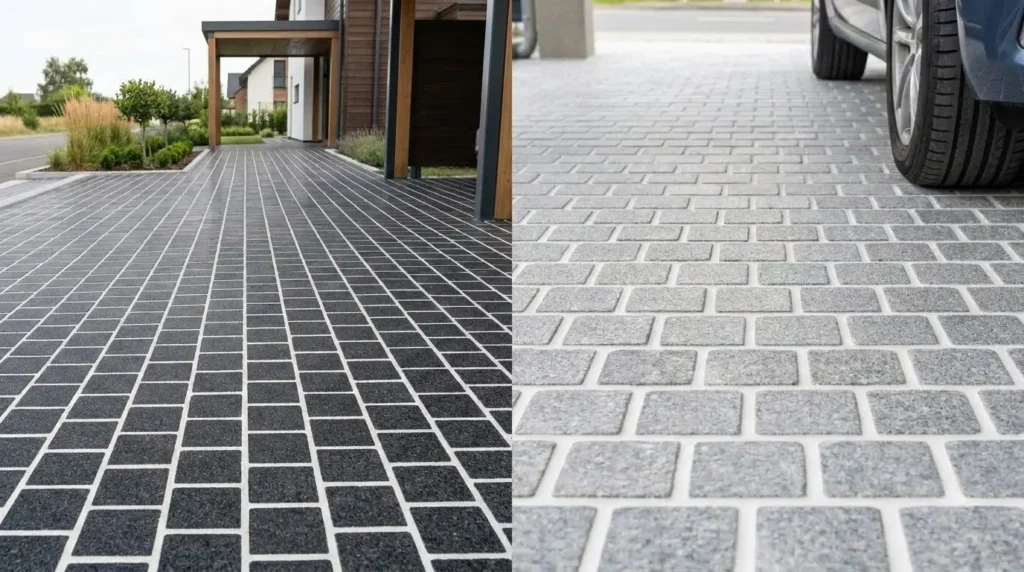
Many natural stone enquiries begin with a quantity: “I need 50 square metres.” “I need 100 square metres.”
That is a reasonable place to start, but it is rarely enough information to place the final order.
The same project may also need pool coping, steps, treads and risers, cobblestones, Crazy Paving, wall cladding or another paved area using a different format. Those requirements may involve different dimensions, profiles, thicknesses or stock positions.
The most useful rule is: Order for the whole project, not just the square metres.
Before committing to natural stone, work out what every part of the project requirement, confirm the quantity and specification with the tradesmen installing it, check whether all coordinating products are actually available, and make sure the important supply details are recorded in writing.
What Should You Decide Before Asking for a Final Stone Quote?
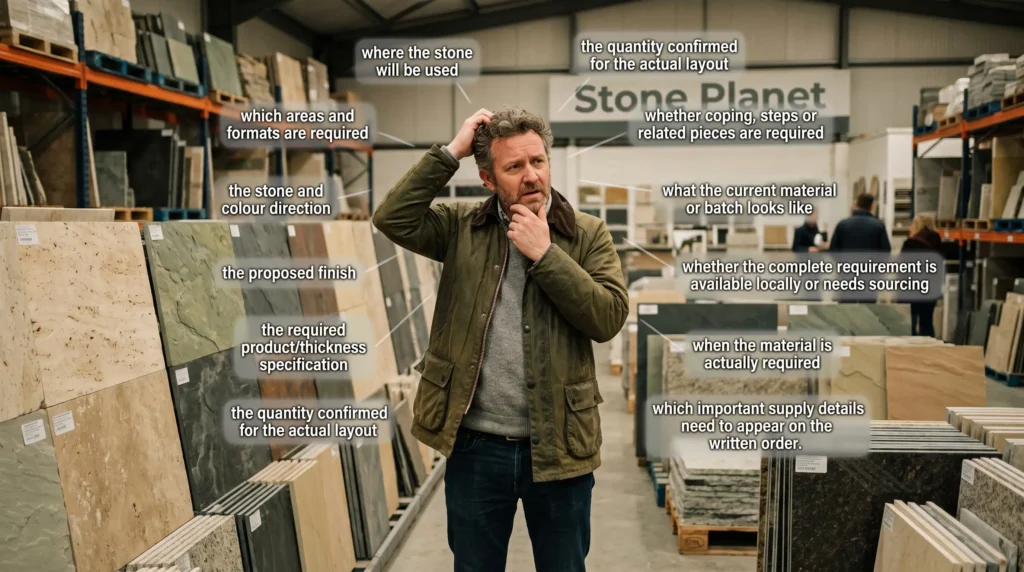
Before finalising an outdoor natural stone order, you should ideally know:
- where the stone will be used;
- which areas and formats are required;
- the stone and colour direction;
- the proposed finish;
- the required product/thickness specification;
- the quantity confirmed for the actual layout;
- whether coping, steps or related pieces are required;
- what the current material or batch looks like;
- whether the complete requirement is available locally or needs sourcing;
- when the material is actually required;
- which important supply details need to appear on the written order.
Stone Planet’s first questions generally follow the same process. Which stone are you considering? Which colour? Where is it going? How much do you need? Has the quantity been checked by the installer, builder or landscaper? Does the project also need coping or related formats? When do you need the material?
Budget is also worth discussing early. Some experienced customers arrive with a clear budget, while others choose the appearance they like first and talk about price later. An approximate range helps narrow realistic stone directions before too much planning is built around something outside the intended spend.
Tell the Supplier Where Every Part of the Stone Will Be Used
“Where is the stone going?” is an important specification question.
A pool surround, driveway, alfresco area, garden path and set of outdoor stairs do not necessarily need the same product or finish simply because the owner wants one stone colour across the project.
Describe the project area by area.
For example:
- pool surround;
- pool coping;
- two outdoor steps;
- alfresco paving;
- side pathway;
- driveway border.
Once the complete use is understood, Stone Planet can check what products and related formats are actually available, while the builder, installer or landscaper can confirm what the construction requires.
If indoor and outdoor areas also need to coordinate visually, raise that at the start. That particular design problem is covered separately in our indoor-outdoor natural stone flooring guide, because matching visual appearance does not mean every zone needs the same technical specification.
Order the Whole Project, Not Just the Flat Paving Area
Flat paving area is only one part of many natural stone projects.
A customer may ask for 60 m² of outdoor pavers but later reveal that the job also needs:
- pool coping;
- drop-edge, bullnose or another coping profile;
- steps;
- treads;
- risers;
- cobblestones;
- Crazy Paving;
- walling or cladding;
- another paved zone;
- a planned extension.
We regularly notice related pieces omitted from the first enquiry. The problem with adding them later is that not every stone is available in every format, profile or thickness, and related products do not necessarily share the same stock position as the main paver.
Before finalising the quote, list every part of the project that will use stone, including items that are not measured as flat paving.
You do not necessarily need every detail solved during the first conversation. The important thing is that the supplier knows those requirements exist before the main material is committed.
Have the Installer Confirm the Quantity Before Ordering
Bring the installer, landscaper or builder into the stone decision before the order is placed, not after the pallets arrive.
Stone Planet supplies the material. The relevant project professional is better positioned to confirm the final quantity, project set-out and construction requirements for the actual site.
Suppliers do not remotely determine matters such as:
- substrate engineering;
- structural capacity;
- drainage and falls;
- waterproofing;
- bedding or construction build-up;
- movement-joint design;
- project-specific installation systems.
An approximate area is useful for quoting, but the final order quantity should reflect the real layout.
This is particularly important with natural stone because needing another order later can also mean trying to coordinate with material from a different production lot.
How Much Extra Natural Stone Should You Allow?
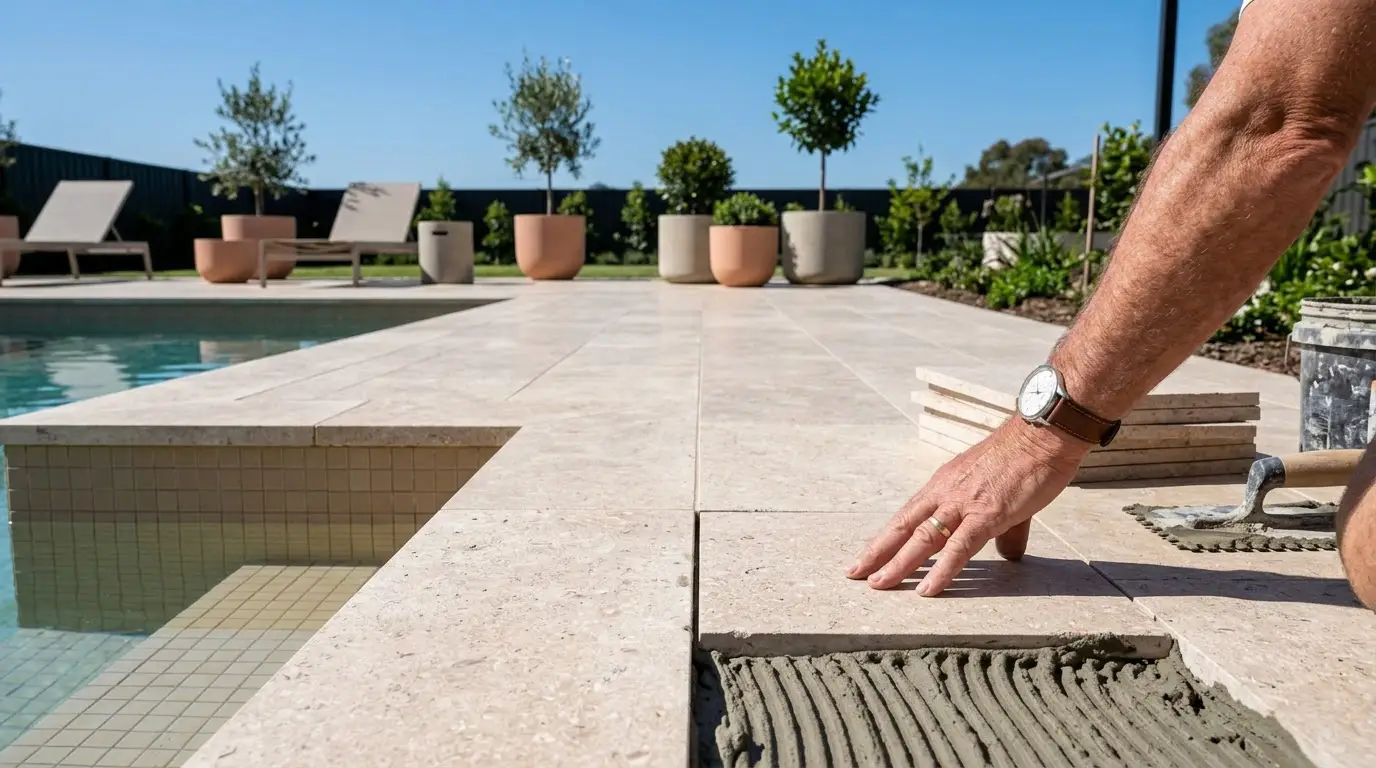
There is no single waste percentage that fits every natural stone project.
It is advised to use practical starting allowances when discussing quantities, but these are planning figures rather than universal construction rules.
Tiles – around 15%. Final quantity depends on layout and cuts.
Pavers – around 10%. Installer should confirm.
Loose wall cladding – around 15%. Project and layout dependent.
Stacked stone – around 10%. Project and layout dependent.
Cobblestones – around 10%. Layout dependent.
Pool coping – around 10%. Pool shape and cuts matter.
Curved or kidney-shaped pool coping – around 15% may be considered because additional cutting can increase the allowance.
Layouts that often need more careful quantity planning include French Pattern, Crazy Paving, circular areas, curved or kidney-shaped pools and projects involving numerous cuts.
Your installer, landscaper, builder or other appropriate project professional should confirm the actual quantity for the layout before the order is placed.
If you also want usable spare stone retained for future repairs or project changes, discuss that separately when confirming the quantity. Do not assume the cutting allowance will automatically leave enough suitable spare material.
Confirm Thickness Before You Commit to the Order
Customers often ask whether a 20 mm or 30 mm stone can be used in a particular area.
We can discuss what products are available and understand where they intend to use them, but thickness alone does not establish whether a stone suits a particular installed system.
Two important considerations are the construction specification and the physical height available in the area. Existing thresholds, doors, pool edges or other finished levels can affect what can physically be accommodated.
The actual stone and product installation matters as well.
Avoid shortcuts such as: 20 mm always means one application, or 30 mm automatically means another.
Confirm the project specification first, then order the appropriate available product.
Choose Paving, Coping and Related Pieces Together
If the project needs matching coping, steps or related stone pieces, discuss them before committing to the main paving.
Pool projects are a common example. Many customers order the paving first and return later for coping, only to find that the preferred coping product or profile was unavailable at that point, or that the original material position had changed.
Depending on the circumstances, the customer may then have to:
- wait for supply;
- reconsider the coping profile;
- use a contrasting stone direction;
- proceed without the profile originally intended.
It is much easier to resolve these requirements together at the beginning than to find compatible pieces after the main paving order has already moved through stock.
Tell Stone Planet early if the project needs:
- pool coping;
- steps;
- treads;
- risers;
- cobbles;
- Crazy Paving;
- related paving formats.
Do not assume every stone is manufactured or stocked in every format.
Check Complete-Project Availability, Not One Product Size
A very common question is: “You have the paver in stock. Do you have the matching coping?”
Sometimes yes.
But the fact that one paver size is available does not prove that:
- another paver format is available;
- matching coping is available;
- the desired coping profile is available;
- the required thickness is available;
- enough material exists for the whole project;
- all required pieces can be coordinated from suitable current material.
So the useful question is not simply: “Is this paver in stock?”
It is: “Can the complete stone requirement for this project be supplied within my timeline?”
Stone Planet may check local stock, related formats, current material, factory availability, possible production/import options, quantity and timing before confirming the full project position.
What about larger projects?
For larger orders – often projects in the few-hundred-square-metre range – Stone Planet may also be able to explore dedicated production or importing depending on the stone, quantity, factory position and required timeline.
That is not a fixed minimum order rule. Feasibility needs to be checked case by case.
Tell the Supplier When You Actually Need the Stone
Stone Planet asks about timing because availability and project installations are connected.
We repeatedly see customers lock in an installation period, continue comparing stones and prices, and delay confirming the material. When they return closer to installation, their preferred stone, colour, size or batch may no longer be available.
At that point the buyer may have to compromise on:
- stone selection;
- colour;
- size or format;
- current availability;
- sometimes price.
Comparing suppliers and pricing is reasonable.
The important distinction is that browsing or receiving a quote does not mean the stock has been reserved.
At Stone Planet, stock is reserved after a deposit is received. How long that stock remains reserved is confirmed with the client as part of the order arrangement.
If the installation date matters, work backwards from it and confirm the order rather than assuming today’s available stock will still be available when the project starts.
Understand the Difference Between a Sample and Current Material
Stone Planet uses different ways of helping customers assess natural stone depending on the product and project, including physical samples, current-material photographs, multiple photographs and representative pieces where appropriate.
There is an important distinction:
A sample helps you decide whether you like the stone direction. Current material review helps you understand what is being supplied now.
A sample does not guarantee that a later production batch will look identical.
One small piece also cannot represent the complete range of tone, veins, markings or movement that may appear across a larger natural stone project.
Where natural variation is important to the decision, ask what the current material looks like rather than relying only on a product photo or old sample.
Plan for Natural Variation Before Installation Starts
Natural variation is usually better understood across the broader laid area than by comparing every individual piece with one sample photograph.
In our experience, customers become concerned during installation because certain pieces carry more colour, markings or movement than the sample they originally saw.
Another problem can occur when the installer selects the most visually similar pieces first. The more varied material is then left until the end and becomes concentrated in one part of the project.
The better approach is to understand the expected variation before installation starts and have the installer distribute or blend the natural range across the relevant area rather than treating the most similar pieces as the only acceptable ones.
That does not mean every possible issue should automatically be accepted as “natural variation”.
If the delivery appears inconsistent with the agreed product, size, finish or order details, or you believe there is a genuine product-quality issue, raise it promptly through the supplier’s applicable delivery or claims process.
Expected natural variation and an actual supply issue are different questions.
The Three Pre-Order Mistakes you should avoid
1. Ordering from an estimated quantity
The buyer works from an approximate area rather than a final layout and then needs another order.
2. Not confirming thickness or specification
The stone is selected before the installer or builder confirms what the site and construction require.
3. Not ordering the project as one coordinated requirement
The pavers are solved first, while coping, stairs, treads or other products are left for later.
A fourth problem is confirming the order too close to installation.
Stone Planet rarely sees buying far too early as the major issue. The recurring problem is waiting too long and then having to choose from whatever is available at short notice.
Before You Commit, Get the Important Details in Writing
This is one of the most useful checks a stone buyer can make.
If a detail matters to the project, get it written into the order confirmation rather than relying on a phone conversation.
This is not about distrust.
A stone enquiry can involve colour, finish, multiple sizes, coping profiles, quantities, special orders, lead times and several people. Weeks or months may pass between the first discussion and delivery.
Before committing to the order, check the written quote, order confirmation or invoice – whichever document records the agreed supply details.
Depending on the project, that may include:
- stone or product name;
- colour or selection;
- finish;
- size;
- thickness;
- quantity;
- coping profile;
- related formats;
- special-order or custom details;
- importing arrangements where relevant;
- agreed availability or timing wording.
If a particular technical report or document forms part of the specification, make sure that requirement is also identified appropriately rather than assuming the product name alone covers it.
A written order cannot control natural variation or site conditions, and it does not transfer construction responsibility to the supplier.
It does give everyone a clearer record of what was actually agreed to be supplied.
Stone Planet’s Pre-Order Checklist
Before committing money to an outdoor natural stone order, check:
- Every area is identified.
- Coping and related formats are known.
- The stone, colour and finish have been selected.
- The installer or appropriate project professional has confirmed the required product specification.
- The quantity reflects the actual layout and cutting allowance.
- Any dedicated spare-material requirement has been considered separately.
- Complete-project availability has been checked.
- The delivery requirement is based on the actual project timeline.
- Samples/current material have been reviewed where appropriate.
- The expected natural variation is understood before installation starts.
- The important supply details are written into the order documents.
- If stock needs to be reserved, the deposit and agreed reservation period are clear.
Where to Go Next
If you are still deciding which broad natural stone direction belongs on the shortlist, our Travertine vs Limestone vs Marble comparison can help with that earlier material-selection decision.
Once the material direction is settled, use the relevant Stone Planet commercial pages to check current product rather than expecting this planning article to carry every live specification.
Current primary routes include Stone Pavers for paving formats and product discovery, Stone Tiles where tile formats are relevant, Pool Coping for coping products and profiles, and Pool Surrounds where the broader pool application still needs to be resolved.
If the project includes visually connected indoor and outdoor areas, Veiw Our Blogs – Indoor-Outdoor Natural Stone Flooring.