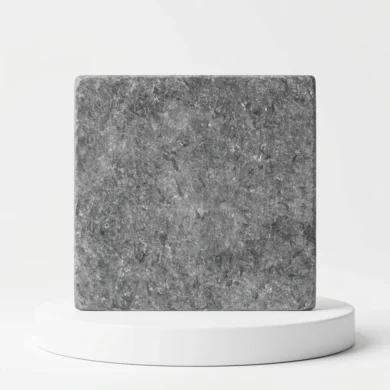
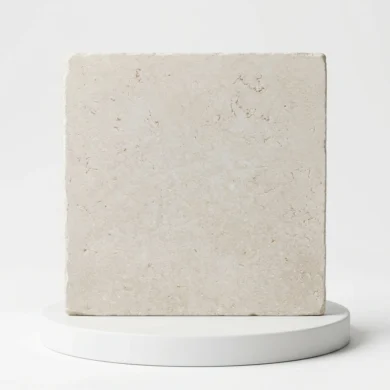
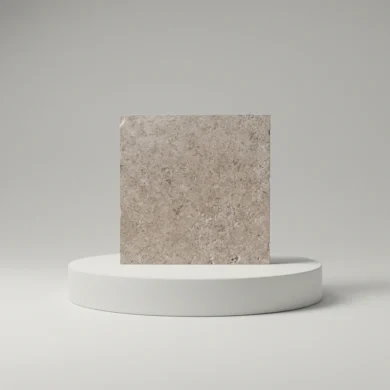
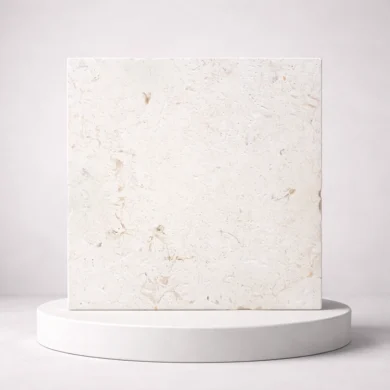
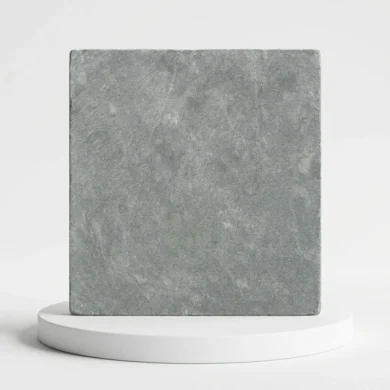
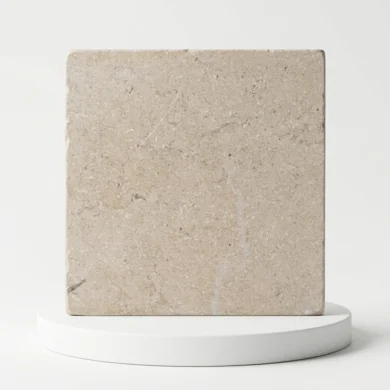
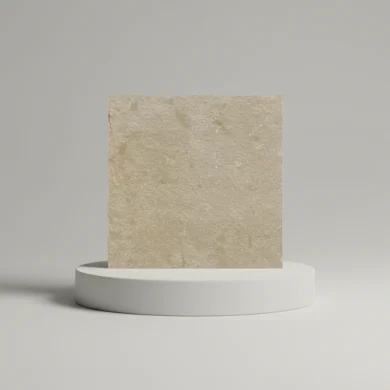
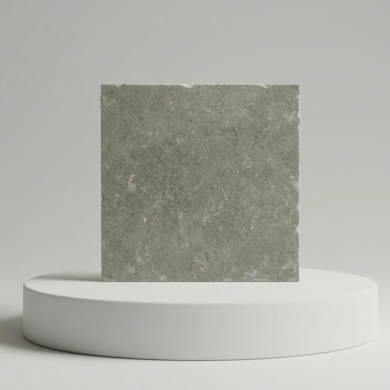
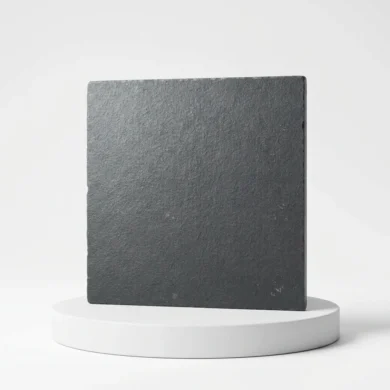
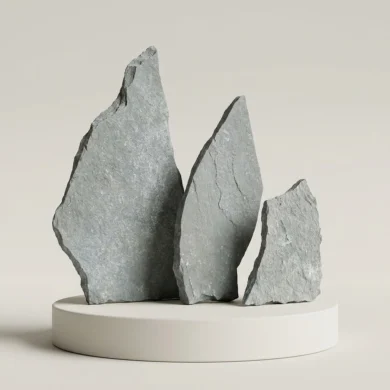
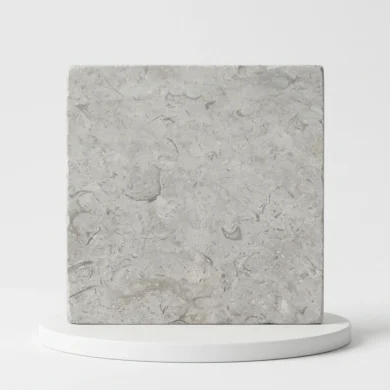
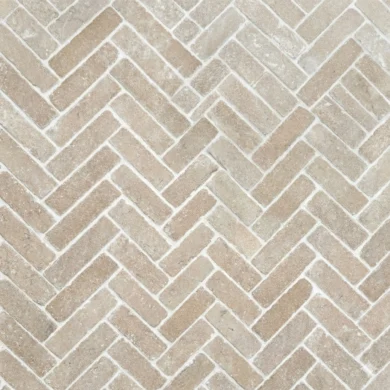
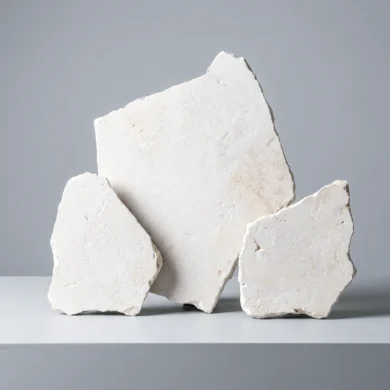
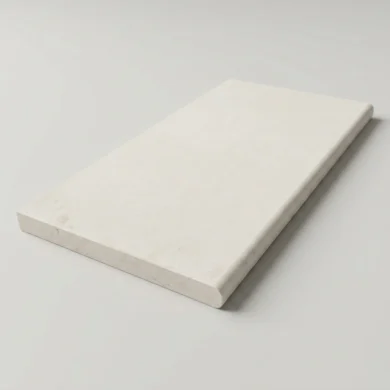
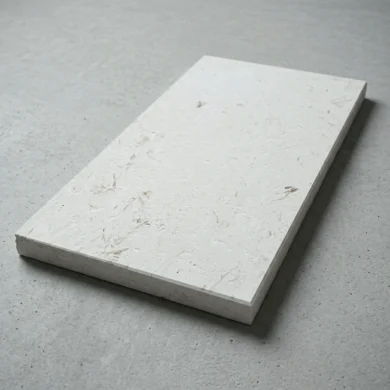
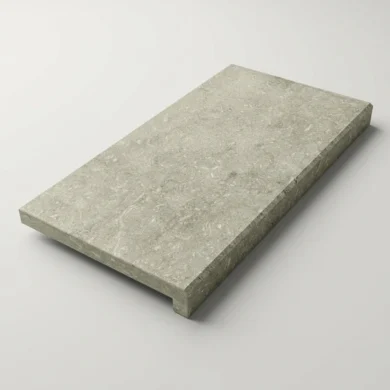
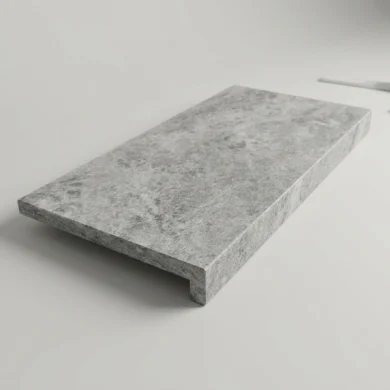
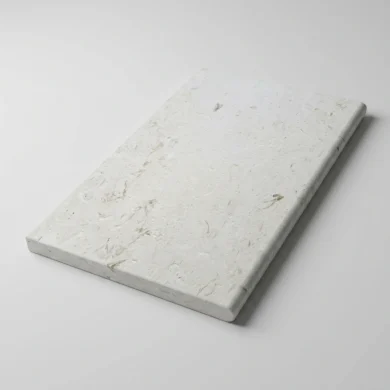
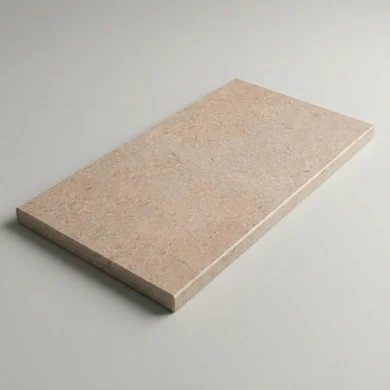
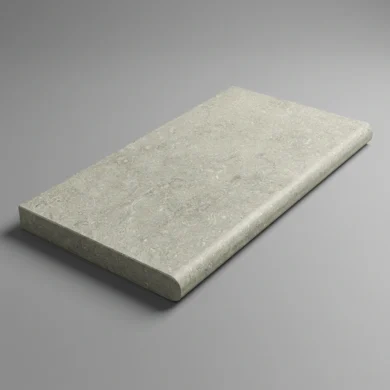
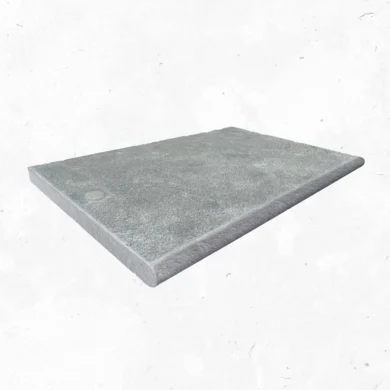
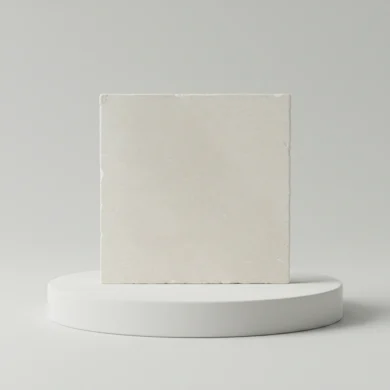
Limestone can feel understated across indoors and architectural outdoors which is why it works across such a wide range of Australian projects. It is also a stone that deserves to be compared properly. Two products can carry a similar colour name and nominal size yet differ considerably in quality, finish, thickness, calibration and technical specification.
What Is Natural Limestone?
Natural Limestone is a sedimentary stone composed predominantly of carbonate minerals. Its mineral composition, geological formation and quarry source influence everything from colour and markings to density, porosity and surface character.
For a buyer, the geology matters only where it changes the decision. Limestone generally has a quieter visual character than heavily veined Marble and can be processed into refined honed surfaces, textured finishes and a wide variety of architectural formats. Depending on the individual stone, natural markings, fossil detail, tonal movement and surface variation may become part of its character.
Its carbonate composition also explains an important maintenance consideration: acidic substances can etch the surface. Staining is a different issue and relates to liquids entering the stone pores. Understanding that distinction makes both specification and care considerably easier.
Natural Limestone should also be distinguished from products such as liquid limestone and crushed limestone. Liquid limestone is a poured product commonly made with crushed limestone aggregate, while crushed limestone is generally sold as aggregate. Stone Planet supplies quarried natural Limestone processed into tiles, pavers and other architectural stone formats.
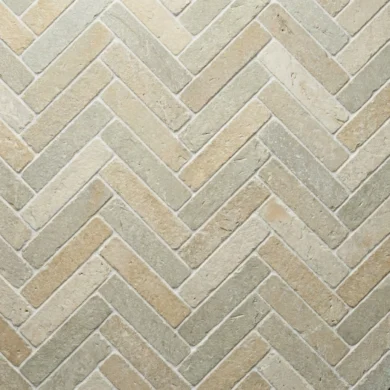
Limestone Colours, Origins & Selections
Stone Planet’s Limestone is sourced from Egypt, Turkey, India, Vietnam and Morocco, supported by direct quarry buying where applicable, quarry partnerships, Stone Planet owned factories in Denizli, Turkey and Rajasthan, India, and selected partner factories.
The current collection includes:
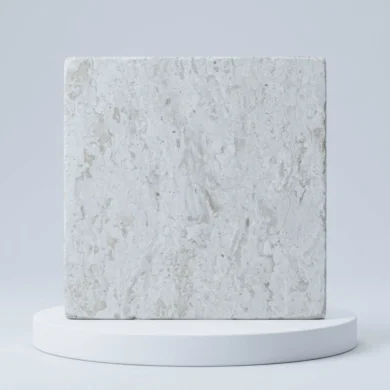
- Egypt : London Grey, Galala Light, Sinai Pearl, Imperial, Miley Grey and Damas Light
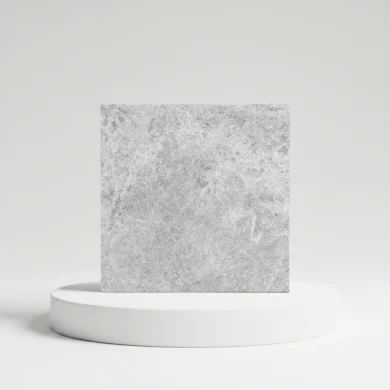
- Turkey: Tundra Grey, Shell White, Seagreen and Capri White
- India: Indie Grey, Tuscan Beige and Midnight Shadow
- Vietnam: Belgium Blue Limestone
- Morocco: Oglio and Garonne
Together, these selections give buyers light, warm, grey and deeper natural stone directions without treating Limestone as one standardised product.
That distinction matters. Origin, colour name and photographs tell only part of the story. Different Limestone selections can vary in natural markings, texture, production lots, available finishes, thicknesses and technical specification. Natural variation may affect colour, tone, markings and surface character without automatically indicating a defect.
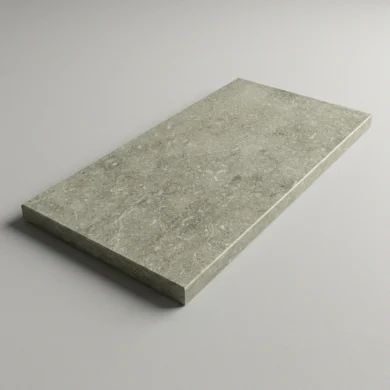
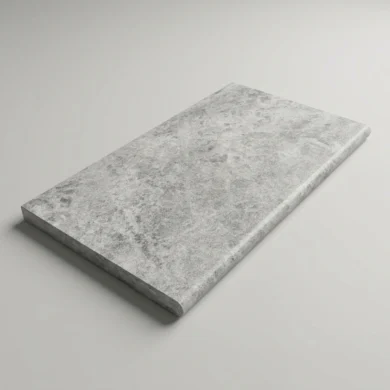
Named products deserve to be compared as individual stones rather than assuming that every Limestone with a similar appearance will perform or be supplied in the same way. Tundra Grey Limestone and Sinai Pearl Limestone are examples where product level technical evidence can support the buying decision.
Understanding Limestone Quality: Premium, Commercial, First & Second Choice
Quality terminology is one of the least clearly explained parts of buying natural stone. Terms such as premium, first choice, second choice and commercial grade appear throughout the international stone market, but they are not one globally standardised grading system. Their useful meaning comes from what the quarry, factory or supplier actually accepts within each selection.
What Does Premium Limestone Mean?
A premium Limestone should mean more than an attractive sample and a premium price. Quality begins with the raw stone and continues through cutting, finishing, dimensional checking and sorting.
- cracks and undesirable fissures
- excessive holes or surface openings where relevant
- dimensional consistency
- edge and corner quality
- finish consistency
- natural colour range
- sorting standards
- calibration and thickness tolerance
Stone Planet positions the Limestone collection as premium quality with quality control able to include block and slab selection, checks for cracks and fissures, dimensional and edge quality, finish consistency, sorting and control of the appropriate natural colour range.
The useful question is not simply whether a Limestone carries a premium label. The better question is what premium means for that particular Limestone.
First Choice vs Second Choice Limestone
In parts of the natural stone trade, first choice and second choice describe different sorting expectations from the same broader stone selection. First choice material may be selected to a tighter expectation around colour range, dimensions, finish, edges, fissures, holes and general presentation.
Second choice material can accept a broader range of natural and production characteristics. Depending on how a supplier defines the grade, it may contain greater tonal spread, more visible fissures or openings, greater dimensional variation, edge imperfections or pieces that would have been removed from a tighter selection.
That does not automatically make second choice Limestone unusable. For a rustic landscape or a project where variation is part of the design, a broader selection can make commercial sense. For a large continuous floor or another application where dimensional and visual consistency matters considerably, the same compromise may become far more noticeable.
The important part is understanding what has changed between the two grades rather than assuming the label alone explains the value.
What Does Commercial Grade Limestone Mean?
Commercial grade is another supplier or market term rather than one universal Limestone specification. It can describe stone selected to a broader tolerance or appearance range, particularly where price and volume take priority over tighter selection. The actual difference may involve colour variation, sorting, dimensional consistency, surface character or other production criteria.
Commercial grade Limestone should not automatically be equated with defective stone. Nor should a cheaper square metre rate automatically be treated as better value. The buyer needs to compare the finished proposition: what is accepted within the grade, how consistent the dimensions are, what proportion of the material is likely to suit the intended design, and what additional sorting or installation work may result.
How Stone Planet Assesses Limestone Quality
Stone Planet’s Limestone quality assessment is not based on one generic grading label. Depending on the product, the process can consider block and slab selection, cracks and undesirable fissures, excessive holes where relevant, dimensional consistency, edge quality, finish consistency, sorting and the natural colour range expected from that Limestone.
Natural stone should still look natural. Quality control is not an attempt to make Limestone visually identical from piece to piece. It is about understanding the expected character of the stone and controlling the production variables that should not be random.
Limestone Finishes
A finish changes more than the way Limestone looks. It changes texture, the way light reads across the surface, how natural markings present and which technical evidence should be considered for the finished product.
Stone Planet’s Limestone finishes include honed, sandblasted, tumbled, acid washed, natural split and antique surfaces, depending on the particular Limestone and product.
Honed Limestone
Honing produces a smooth, low sheen surface without taking the stone to a high polish. It gives Limestone a refined, architectural character and allows the underlying grain and markings to remain prominent without a reflective surface dominating the design.
A honed finish can work across suitable floor, wall and architectural applications, but the finish itself should never be treated as proof of a particular slip classification or application suitability.
Sandblasted & Textured Limestone
Sandblasting creates a more textured surface by mechanically working the face of the stone. The result has a different visual and tactile character from honed Limestone and can be particularly relevant where the project requires documented wet slip performance.
The crucial point is that sandblasted is a finish description, not a slip test result. Where slip resistance matters, compare evidence for the exact stone and finish rather than relying on the finish name alone.
Tumbled, Antique & Natural Split Limestone
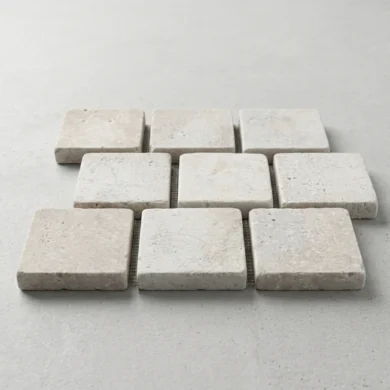
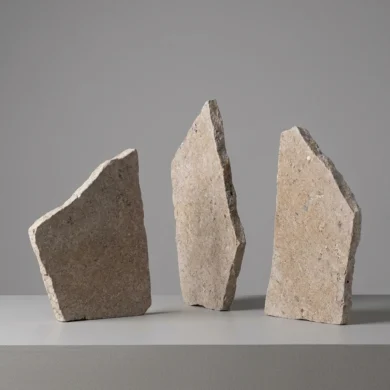
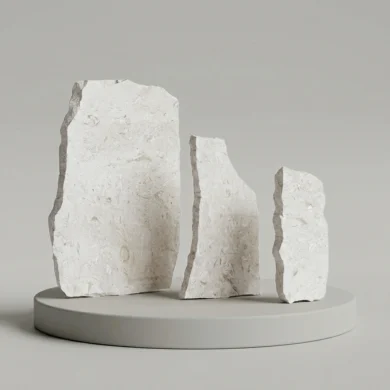
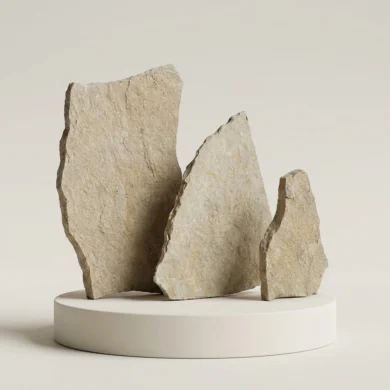
Tumbled Limestone develops softened edges and a more aged surface character. Antique finishes create a worn, tactile appearance that can sit between highly refined and deliberately rustic stone. Acid washed Limestone uses a controlled surface treatment to create a different texture and finish appearance. Natural split Limestone retains more of the naturally cleft surface character and can be relevant to selected architectural and walling applications.
The right finish comes back to the look of the project and the specification required from the actual Limestone.
Limestone Sizes, Thicknesses & Formats
Limestone supplied by Stone Planet includes 12 mm, 15 mm, 20 mm and 30 mm thicknesses. The available thickness depends on the actual Limestone selection, origin, format and product.
Limestone Thicknesses: 12, 15, 20 & 30 mm
Thickness should be checked alongside the format, dimensions, finish and project specification rather than chosen in isolation.
A buyer comparing Limestone should ask what thickness the particular product carries, whether that figure is nominal or actual, whether the product is calibrated, what tolerance applies and whether the format suits the intended installation.
That is more useful than assuming 12 or 15 mm automatically means tile and 30 mm automatically means paver. Stone Planet’s Limestone does not follow one universal tile versus paver thickness split.
Limestone Tiles & Pavers
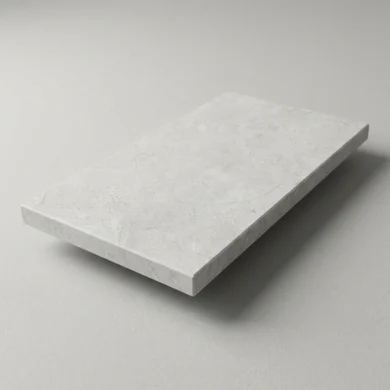
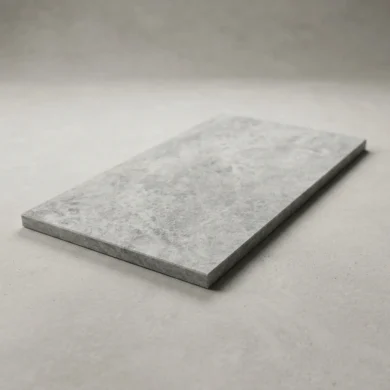
Limestone tiles and Limestone pavers represent different format decisions, but thickness alone should not be used to define them universally. For tiled floors, walls and other bonded applications, compare the actual
Limestone tile collection, including product thickness, finish, dimensions and calibration. For regular format paving, the deeper questions shift toward the actual
Limestone paver collection, available thicknesses and finishes, project conditions, adjoining surfaces and installation requirements.
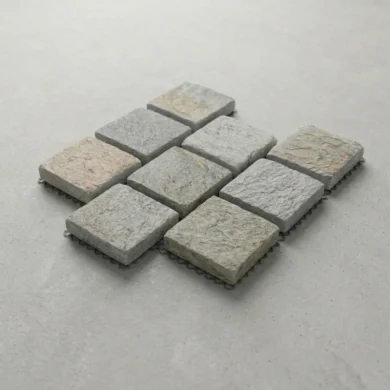
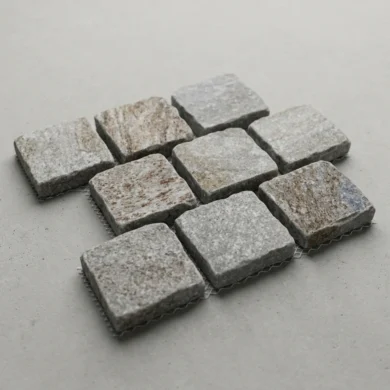
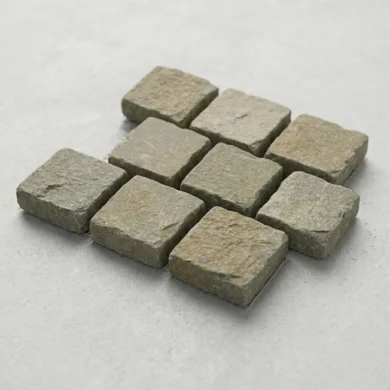
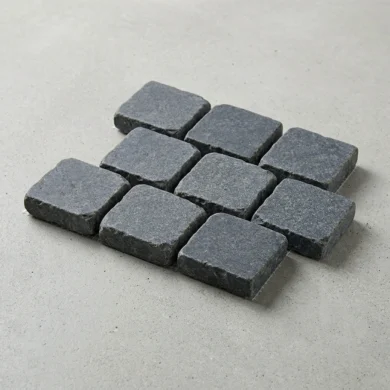
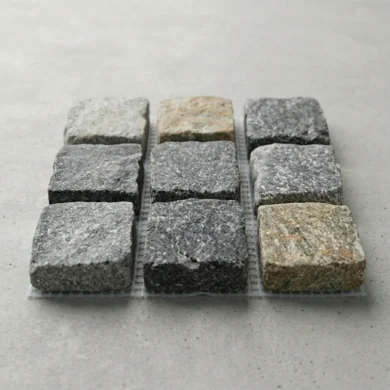
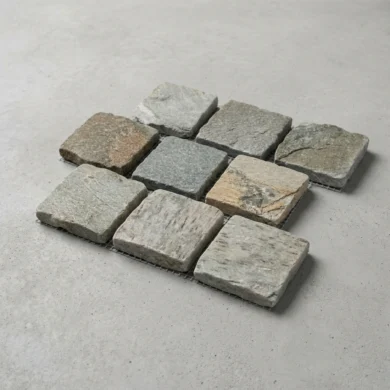
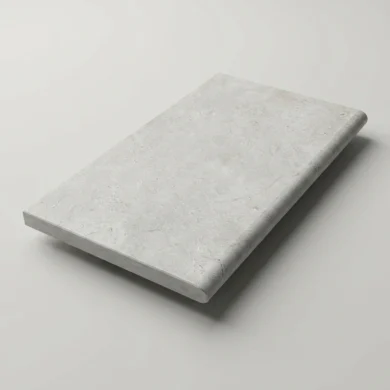
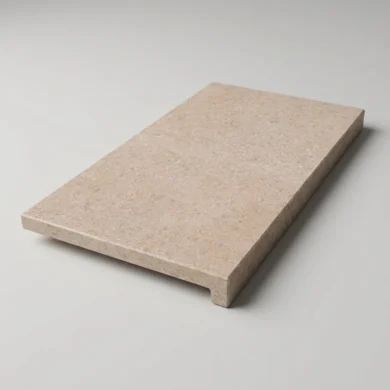
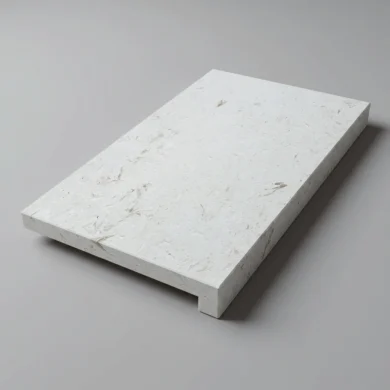
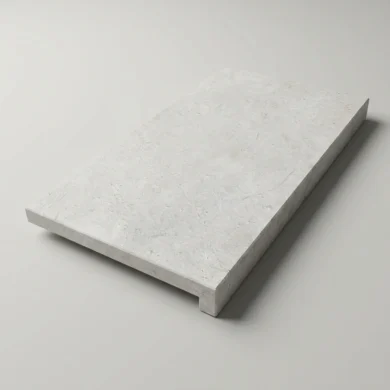
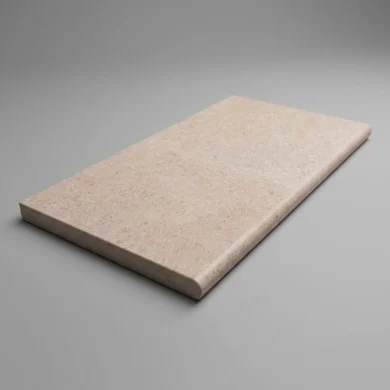
Limestone Coping, Crazy Paving, Cobblestones, Steps & Walling
These formats give designers and homeowners more ways to carry Limestone beyond one flat surface while allowing each format to be specified for its actual role.
How to Compare Limestone Before You Buy
This is where two similar looking Limestone products can start to separate. Colour and finish may narrow the shortlist. Technical data helps explain what is actually being offered.
Density & Water Absorption
Density and water absorption describe different physical characteristics of the stone. Bulk density records mass relative to volume. Water absorption measures how much water the tested specimen absorbs under the applicable test method. These figures can help compare Limestone products, but they should be read with the test method, units and product identity rather than converted into a universal rule about all Limestone.
For general dimension stone context, ASTM C568 groups Limestone by density and associated minimum or maximum properties:
| Classification |
Minimum Density |
Maximum Absorption |
Minimum Compressive Strength |
Minimum Modulus of Rupture |
| Low Density |
1760 kg/m3 |
12% |
12 MPa |
2.9 MPa |
| Medium Density |
2160 kg/m3 |
7.5% |
28 MPa |
3.4 MPa |
| High Density |
2560 kg/m3 |
3% |
55 MPa |
6.9 MPa |
Two product examples show why product level evidence is more useful than a category-wide claim:
Tundra Grey Limestone – Sandblasted bulk density approximately 2755 kg/m3; water absorption by weight approximately 0.66%; water absorption by volume approximately 1.72%
Sinai Pearl Limestone – Sandblasted bulk density approximately 2657 kg/m3; water absorption by weight approximately 0.47%; water absorption by volume approximately 1.27%
The value is not in declaring that all Limestone behaves this way. It is in being able to compare an identified product using identified data.
Calibration & Thickness Tolerance
Calibration concerns dimensional consistency through the thickness of the stone. Relevant calibrated Limestone products have an approximate stated thickness tolerance of ±2 mm. That tolerance should only be applied where the actual product is confirmed as calibrated. It is not a Limestone wide specification.
For the buyer, this is exactly why 600 x 400 Limestone is not a complete specification. The more useful comparison is size plus thickness plus finish plus calibration or tolerance plus actual Limestone selection.
Slip Test Evidence
Slip performance should also be matched to the actual stone and surface finish.
These results belong to the named stone and finish. They should not be shortened into a category wide Limestone rating or a finish wide guarantee. Where slip evidence forms part of the project specification, compare the report for the actual product and finish being considered.
Limestone for Floors, Paving, Pools, Walls & Landscape Design
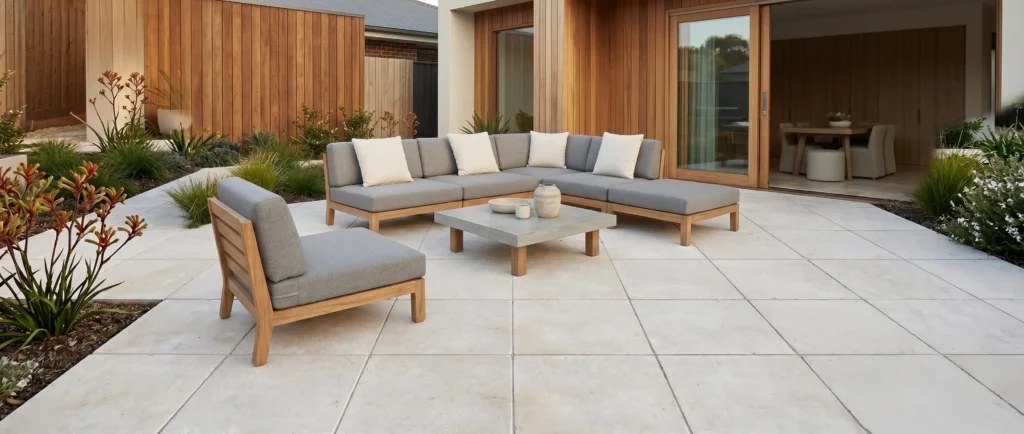
Limestone can move through very different architectural settings but each usage asks a different question of the stone. For flooring, buyers tend to focus more closely on dimensions, finish, calibration, natural variation and how the stone reads across a larger continuous surface. The Limestone tile collection and broader
natural stone flooring options take that decision further.
For paving and
alfresco areas, the actual paver format, thickness, finish and project build up become more important. Regular format projects can move deeper into Limestone pavers, while more organic layouts can introduce crazy paving.
Around pools, field paving needs to coordinate with the chosen finish and pool coping at the waterline. Product specific technical evidence matters where the project calls for it.
On walls and architectural features, selected Limestone walling or cladding products introduce texture and depth without forcing the same specification used on a floor. The natural stone wall cladding buying guide adds deeper planning detail.
Across larger landscapes, Limestone can connect paving, cobbles, steps and other architectural details without every surface having to use the same physical format. For broader coordination ideas, see natural stone landscaping ideas.
Caring for Limestone: Etching, Staining & Sealing
Etching vs Staining
Etching and staining are often discussed as though they are the same problem. They are not. Etching is a chemical reaction at the stone surface. Because Limestone is carbonate based, acidic substances can react with it and alter the finish, often leaving a duller or changed patch.
Staining occurs when material enters the stone and causes discolouration. That distinction matters because sealing is intended primarily to reduce absorption and give the owner more time to deal with staining agents. It does not make a carbonate stone immune to acid.
Cleaning Limestone
Routine Limestone care should favour products suitable for acid sensitive natural stone. Remove loose grit, deal with spills promptly and use a pH appropriate natural stone cleaner rather than acidic household cleaners that can attack the surface.
The selected finish and the way the area is used will influence the maintenance routine, so care advice is more useful when it is matched to the actual Limestone rather than reduced to one schedule for every project.
Dip Sealing Limestone: Stone Planet Five Step Approach
For horizontal Limestone, the current Stone Planet sealing approach focuses on protecting more than the visible top face. The principle behind dip or all side sealing is straightforward: moisture does not only approach installed stone from above. Treating the underside and edges before installation adds protection to surfaces that become inaccessible once the stone is laid.
Start with cleaning the limestone : The surface should be free from dust, dirt and contaminants before sealing.
Dip seal or seal all sides before installation : Treat the top, underside and edges with a penetrating sealer suitable for the Limestone and installation system.
Install the Limestone : Proceed with the system specified for the actual product and project.
Clean after installation. Remove installation residue using products appropriate for acid sensitive natural stone.
Reseal the exposed top surface : Complete the surface protection after installation and cleaning.
The exact sealer, coverage, drying conditions and installation compatibility should follow the product manufacturer and project specification rather than assuming one chemical system suits every Limestone.
How does Limestone compare with Other Natural Stones?
The useful comparison is not which natural stone is universally best. It is which material gives the project the right combination of appearance, finish, format and specification.
Is limestone the same as Travertine?
Limestone and Travertine are both carbonate stones but Travertine is particularly recognisable for its natural void structure. Limestone can present a quieter, more continuous surface character depending on the selection. Buyers choosing between them should compare the actual stones rather than relying on the material names alone. Compare Travertine, Limestone and Marble
Is limestone and marble the same natural stone?
Marble forms through metamorphism and recrystallisation of carbonate rich rock which can create a different crystalline structure and distinctive veining or movement. Limestone generally offers a different visual language often chosen where a quieter natural stone surface suits the architecture.
Is there only colour difference In Limestone & Sandstone?
Sandstone is a different geological material and can produce very different colour, texture and surface character. The relevant comparison is between the actual selections, finishes and specifications rather than assuming one broad material category automatically outperforms another.
Limestone Prices in Australia
How Much Does Limestone Cost per Square Metre (sqm)?
Stone Planet has natural Limestone supply pricing around $74 to $126 per sqm/m2.
That range is more useful as a starting point than as a universal Limestone price. The final cost depends on the actual selection, quality expectation, dimensions, thickness, finish, format, quantity and project requirements.
What Changes the Price of Limestone?
Selection and quality: Tighter selection and sorting can change raw material yield and production cost.
Origin and stone: Different quarries and Limestone selections carry different extraction, production and freight economics.
Thickness and dimensions: More material and larger formats can affect block yield, weight and production.
Finish: Additional surface processing changes manufacturing cost.
Calibration and tolerance: Tighter dimensional control adds another production requirement.
Profiles and special formats: Coping, treads, risers and other fabricated pieces require more work than a straightforward flat format.
Quantity and logistics: Ordered size, packing and freight influence the delivered position.
Price makes far more sense when these variables are visible.
Why Can Two Limestone Quotes Be So Different?
Because Limestone is not a complete quotation specification. Before deciding that one supplier is expensive and another is cheap, put the quotations on the same footing:
- same Limestone selection
- same stated quality or grade of Limestone
- same Limestone dimensions
- same Limestone thickness
- same Limestone finish
- same Limestone calibration or tolerance
- same Limestone profiles and special pieces
A low rate can still be good value. A higher rate can still be poor value. The meaningful comparison is what limestone and specification the price actually buys.
Why Buy Limestone from Stone Planet?
Stone Planet has been a limestone supplier globally since 1993. Our Limestone products are sourced from Egypt, Turkey, India, Vietnam and Morocco. We combine quarry relationships with self owned factories in Denizli and Rajasthan with selected partner factories.
This allows Stone Planet to discuss block and slab selection, meet quality expectations, dimensions, finishes, thicknesses, calibration and project specific requirements across the collection. Custom sizes, thicknesses, finishes and specific quality requirements can also be discussed through the quarry, factory and partner network where the project supports them.
For homeowners, builders, designers, landscapers and resellers, Stone Planet is a supplier of Limestone in every vertical of the industry.
Free samples and Australia wide delivery by Stone Planet gives buyers a practical way to compare natural stone before committing to the project.