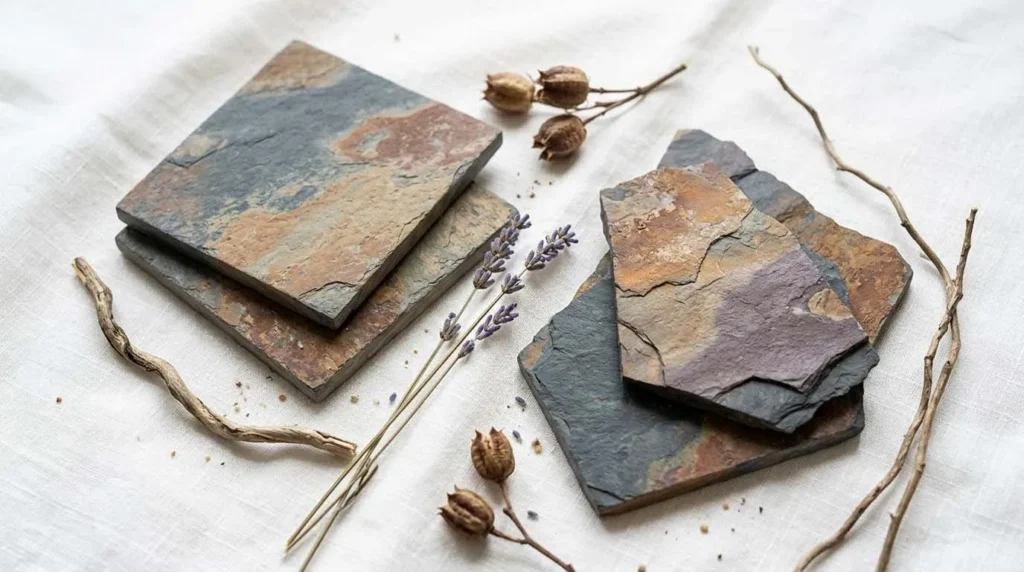
Natural Stone Materials at a Glance
Natural stone is not one uniform product. Each material has its own colour range, surface character, available finishes and production possibilities. The table below gives a broad view without replacing the deeper specification of the individual stone.
| Material |
Character of Stone |
Formats |
| Travertine |
Natural pores and a distinctive crosscut appearance across warm, neutral and grey selections. |
Pavers, tiles, coping, crazy paving, walling and other project formats. |
| Limestone |
A broad collection spanning light creams, beige and greys through to darker natural selections. |
Tiles, pavers, coping, crazy paving, cobblestones, treads, risers and selected walling formats. |
| Marble |
Natural veining and colour variation, with Stone Planet’s current collection primarily focused on outdoor projects and lighter greys. |
Pavers, tiles, coping, crazy paving, batons, treads, risers, walling and custom project pieces. |
| Granite |
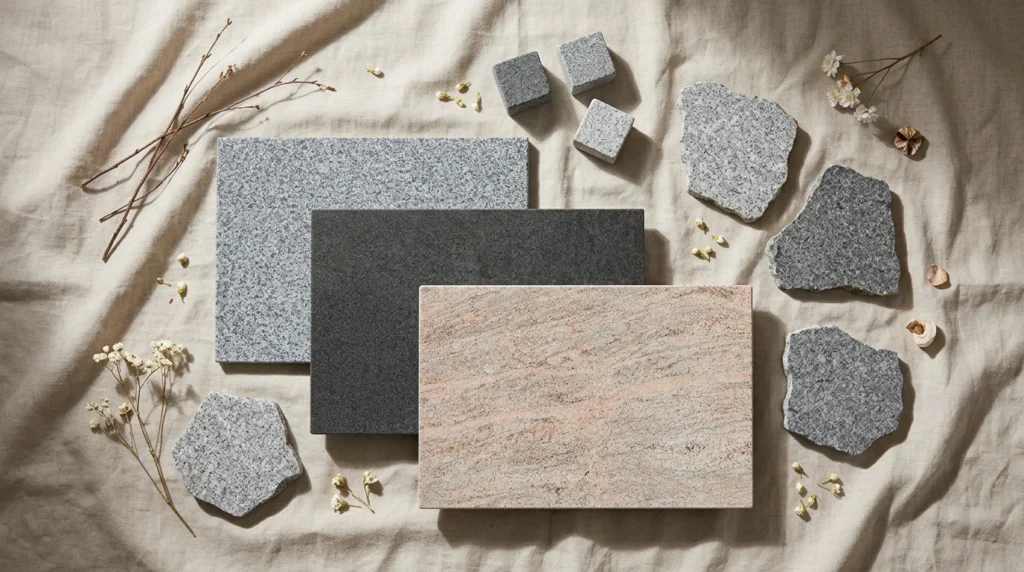
A broad natural stone collection supplied across regular paving, tiled and landscape formats. |
Tiles, pavers, French Pattern, crazy paving, cobblestones, coping, treads, risers and walling. |
| Bluestone |
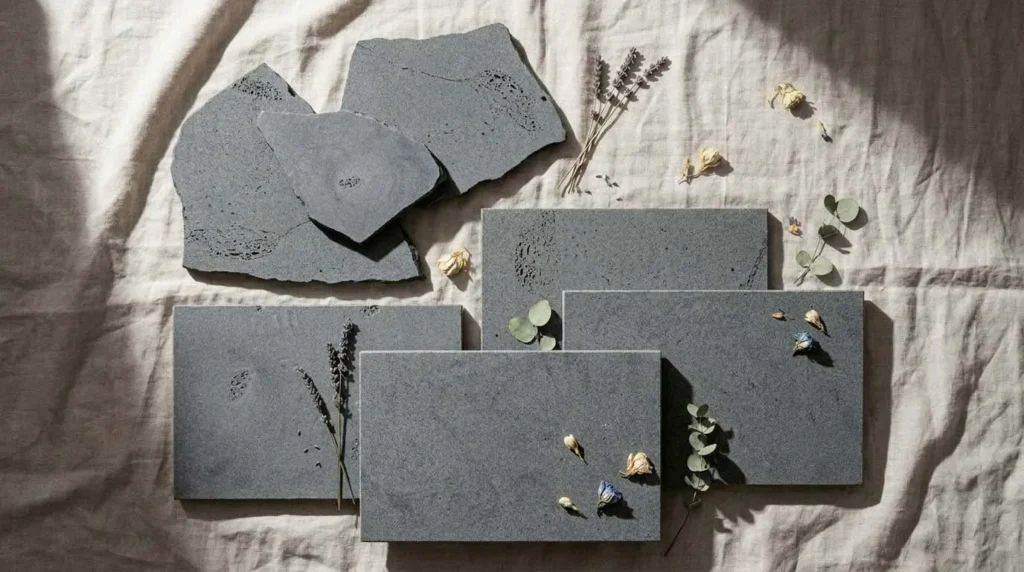
A grey natural stone collection supplied in Sawn and Honed finishes, with paving and tiled formats forming an important part of the range. |
Pavers, tiles, crazy paving, cobblestones, coping, treads, risers and selected walling formats. |
| Sandstone |
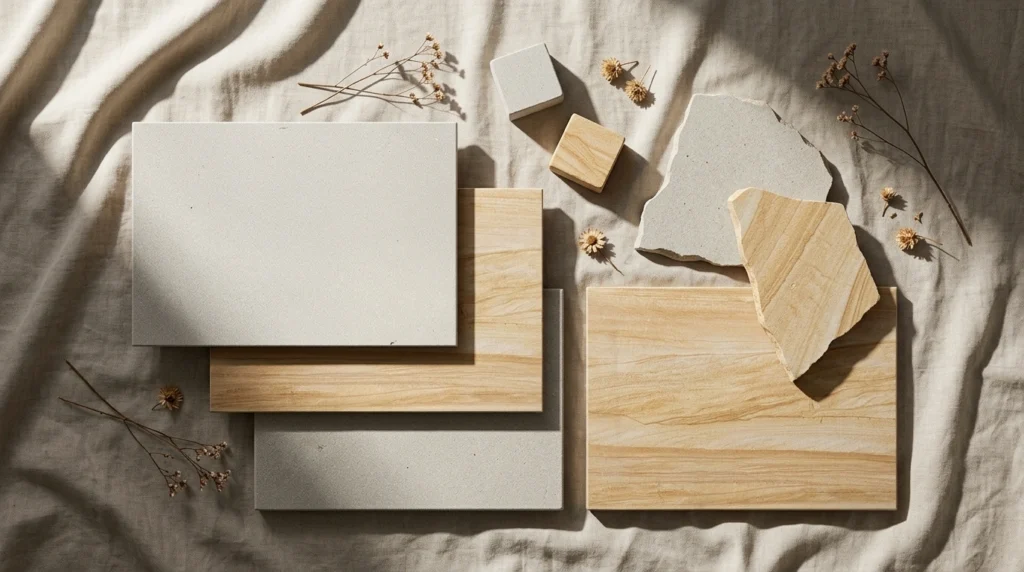
A collection led by Indian Sandstone, including Natural White, Grey and Teakwood selections. |
Pavers, tiles, crazy paving, cobblestones, coping, stepping stones, treads, risers and walling. |
| Porphyry |
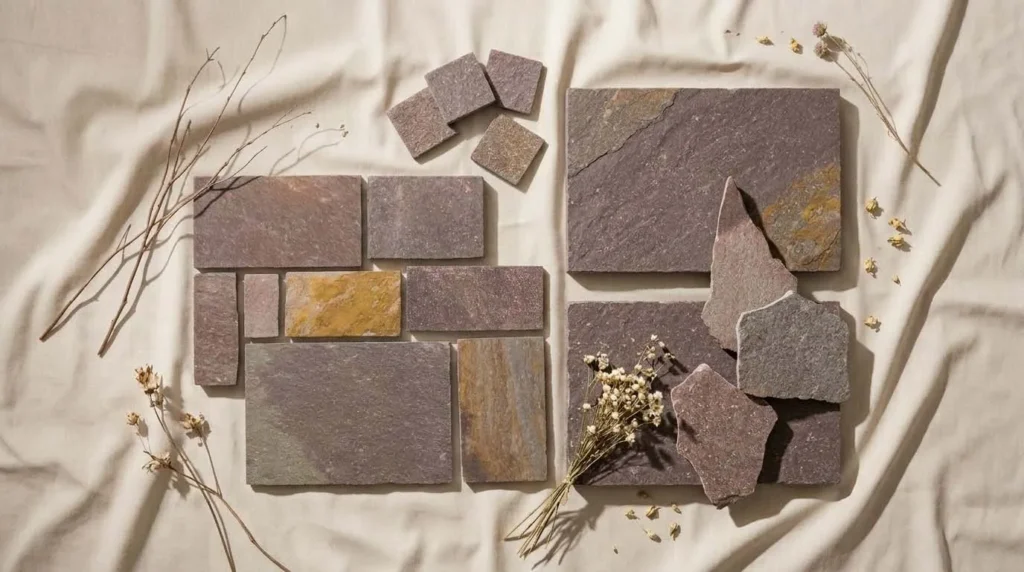
A current Stone Planet natural stone material category. |
Current product and format availability is selection-specific. |
| Slatestone |
A current Stone Planet natural stone material category. |
Current product and format availability is selection-specific. |
How Natural Stone Materials Differ
The first material decision is usually visual, but appearance is only part of the specification. Natural colour, surface finish, format availability and the conditions of the project all affect which stone becomes the practical choice.
Colour and Natural Character
Travertine shows natural pores and tonal changes. Limestone can read quietly across a large area or carry more obvious fossil and mineral detail, depending on the selection. Marble is defined by natural colour and veining. Granite, Bluestone and Sandstone create very different surface character again. A single sample is useful for colour direction, but natural stone should be judged as a material that varies across multiple pieces.
Projects that are still deciding between Travertine, Limestone and Marble often benefit from comparing the three as complete material families rather than choosing from colour alone.
Surface Finish
Finish changes both the appearance and the practical surface of natural stone. Honed, Sandblasted, Antique, Natural Split, Tumbled and other finishes do not mean the same thing across every material. The actual finish should be considered with the stone, format and project rather than treated as a universal performance label.
Format
The same material can appear in more than one physical format. Stone Pavers, Stone Tiles, Crazy Paving, Cobblestones, Pool Coping, Treads and Risers and Natural Stone Walling are different product decisions even when they are produced from the same stone.
Project Conditions
Outdoor exposure, wet areas, vehicle traffic, adjoining levels and the way the stone will be installed can change the specification. Those conditions should narrow the material choice rather than being added after the colour has already been decided.
Travertine
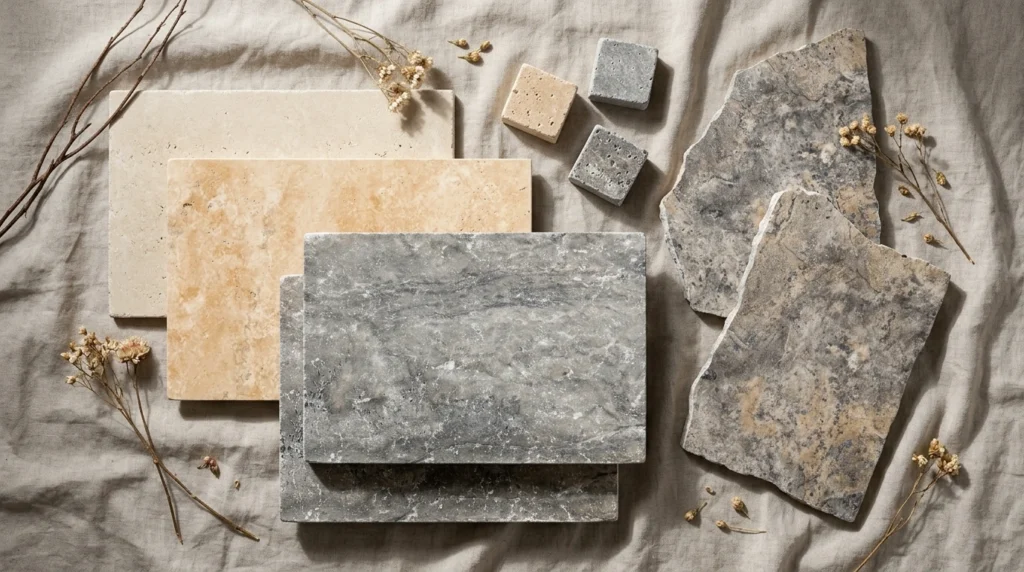
Travertine supplied by Stone Planet is sourced from Turkey. Crosscut is the current stocked cut direction, with selections including Silver, Premium Silver, Classic, Ivory Premium, Noce, Philadelphia and Scabos. The collection spans indoor and outdoor formats, with finish and product availability depending on the actual selection.
Limestone
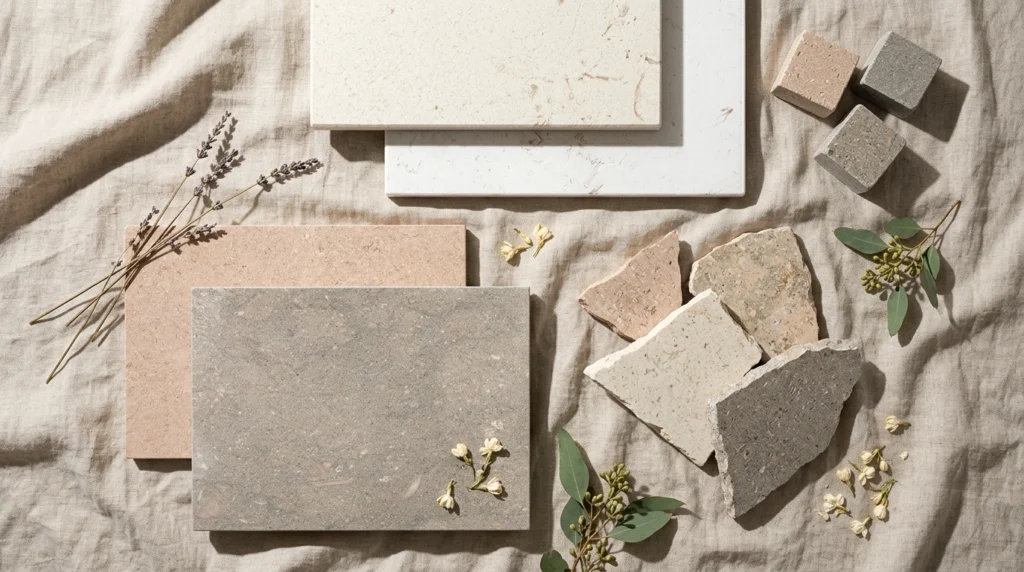
Limestone is sourced by Stone Planet from Egypt, Turkey, Vietnam, Morocco and India. The collection covers a wide colour range and includes tiles, pavers, coping, crazy paving, cobblestones, treads, risers and selected walling formats. Finish, thickness and format availability vary by the individual Limestone.
Marble
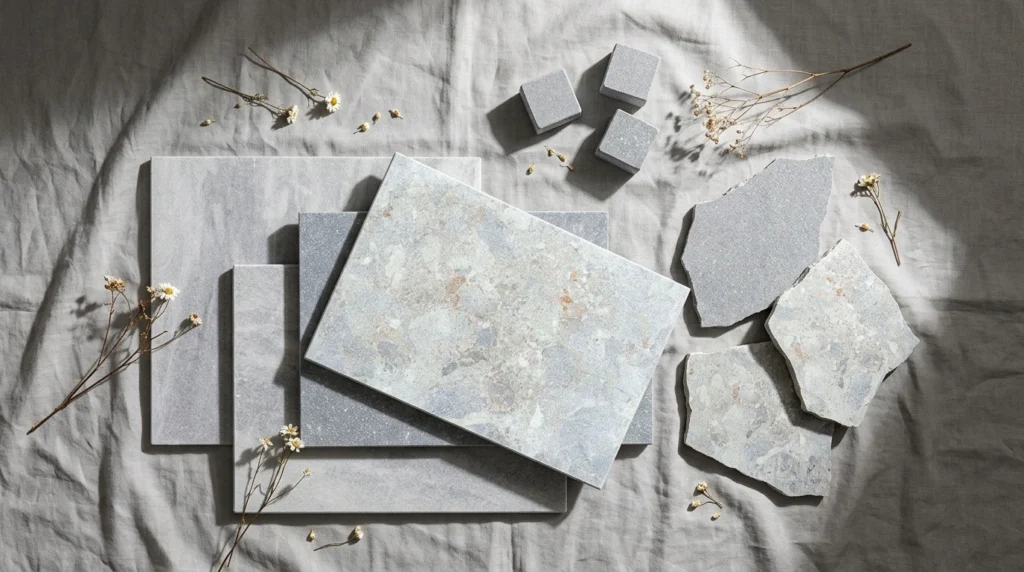
Marble is currently led by Stone Planet’s outdoor collection, with stronger Australian demand for lighter grey selections. Marble is supplied across pavers, tiles, pool coping, crazy paving, batons, treads, risers, walling and custom project pieces. Suitable indoor Marble remains part of the broader range without defining the collection as an indoor-only category.
Granite
Granite is supplied across tiles, pavers, French Pattern, crazy paving, cobblestones, coping, treads, risers and walling formats. The actual finish, thickness and product specification should be treated separately from assumptions about structural capacity or vehicle loading.
Bluestone
Bluestone includes Sawn and Honed finishes in Stone Planet’s current collection. Pavers, tiles, crazy paving, cobblestones, pool coping, steps and other project formats form part of the wider range. The material should be selected by the actual product and finish rather than by a generic Bluestone performance claim.
Sandstone
Sandstone is sourced primarily from India, with Australian Sandstone also available through partners. Current confirmed Stone Planet selections include Natural White, Grey and Teakwood Sandstone. The collection spans paving, tiled, walling and landscape formats, with finish and thickness depending on the individual product.
Porphyry and Slatestone
Porphyry and Slatestone are also represented as current Stone Planet material categories. Product-level details, formats and technical claims should be based on the current selection rather than generalised across either material family.
Natural Stone Across a Whole Project
A project rarely ends with the main paving or floor. Pool edges, steps, walling, paths, thresholds and adjoining surfaces can introduce different formats while still using a coordinated natural stone palette.
Thinking about natural stone throughout a landscape helps keep paving, coping, cobbles, steps and walling related without forcing every part of the project into one format.
The same principle applies to indoor-outdoor continuity with natural stone: visual continuity can be maintained even where the finish or construction specification changes between interior and exterior areas.
Natural Stone for Different Applications
Material choice changes with the project. Pool surrounds place more emphasis on wet-surface finish, water management and coping coordination. Driveways introduce vehicle loading and pavement construction. Alfresco areas bring thresholds, furniture and food use into the decision, while backyards and boundary walls create their own combinations of stone, format and exposure.
Before a larger exterior order is finalised, planning the natural stone order around the whole outdoor project helps account for paving, coping, steps, quantities and related pieces together.
Stone Planet Natural Stone Supply
Stone Planet is an Australian natural stone wholesale supplier serving homeowners, trades and resellers. The business has supplied natural stone since 1993 and provides Australia-wide delivery and free samples as part of its current service.
Different material families follow different sourcing and production routes. The exact quarry, factory, finish, size and product specification should therefore stay attached to the relevant stone rather than being generalised across the entire natural stone collection.