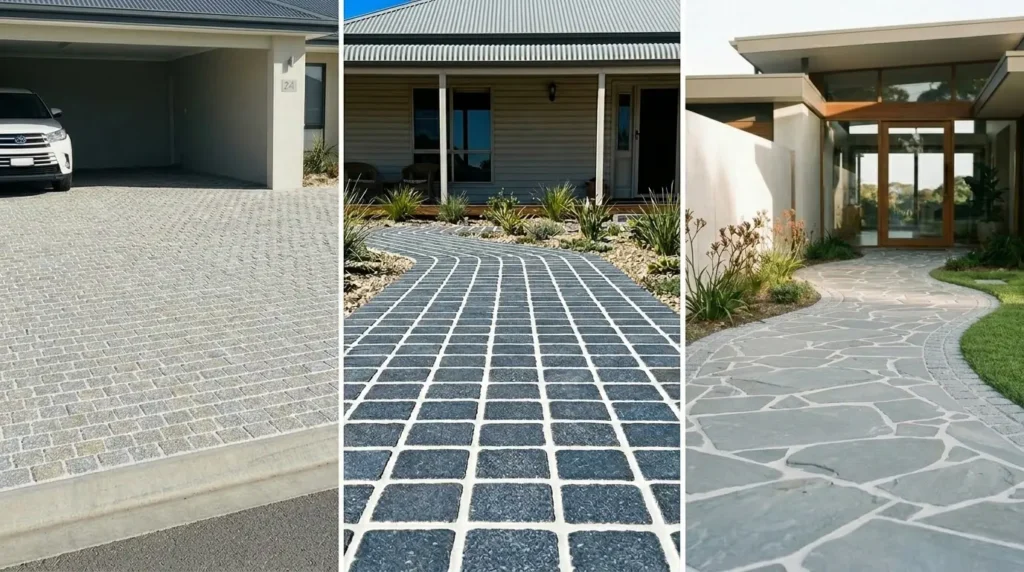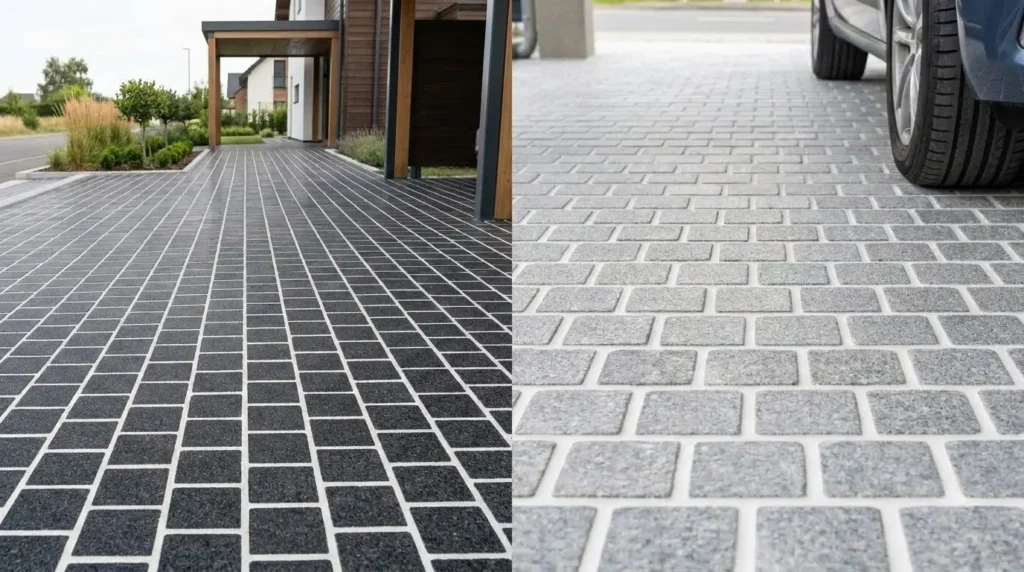


An indoor outdoor natural stone project does not require the indoor and outdoor face surfaces to be identical. The goal is to coordinate the visual relationship while each area uses a product, finish and specification appropriate to its usage.
This is extremely important in comparison to getting the colour tone as per your requirement. A living area and a pool surround can be in the same space but their purpose is not the same. Trying to us the same surface treatment, thickness or format across both these areas can create issues.
The more useful question is not: “How do I make everything exactly the same?”
It is: “What does each area need, and how do I make those two appropriate surfaces work together visually?”
That is the basis of a successful indoor-outdoor stone transition.
What Does this Continuity Actually Mean?
When you look from outside while sitting on a chair through to your alfresco area, gardens or pool surrounds, the things you notice first are the colour, tone and the character of the stone . You cannot visually determine the thickness by a glare.
That means continuity can still work where:
- the finish changes
- the thickness changes
- the pattern changes;
- the stone tile and stone paver formats differ;
- the outdoor product has different technical specifications.
Visual continuity does not require technical similarlity.
For Stone Planet customers trying to coordinate adjoining areas, the practical visual priorities are usually:
- colour and tone;
- stone selection;
- finish.
That order describes what customers tend to notice first. It does not mean finish is technically less important. Finish still needs to suit the actual use of each zone.
What Should Match and What Can Change?
- Colour / tone – Consider natural variation, current batch and surrounding colours.
- Stone selection – A stone name does not guarantee identical appearance.
- Finish -. Consider usage of each area and relevant product specification.
- Thickness – Consider the actual stone, product and project requirements.
- Format / pattern – Consider sightline, room proportions and overall design.
- Production batch – Future lots may not reproduce earlier material.
- Floor levels / thresholds – Resolve with builder, installer or design team.
The strongest projects usually decide what genuinely needs to coordinate and what is allowed to change before the material is ordered.
Same Stone Does Not Mean Same Finish
This is one of the most common areas where indoor-outdoor projects go wrong.
Some customers start with the assumption that using exactly the same finish everywhere will create the closest match. Visually, that sounds logical. Practically, the indoor and outdoor zones may have very different requirements.
Stone Planet’s rule is: Choose each area’s finish for how that area will be used first, then coordinate the two appropriate finishes visually.
Do not force one finish through both zones simply because the colour looks closest.
For example, a smoother indoor finish may be part of the design brief inside, while the outdoor area may need a different surface treatment. Likewise, specifying a heavily textured outdoor-type surface indoors simply to preserve matching colour may not produce the indoor result the customer wanted.
Where slip resistance forms part of the project requirements, check the relevant product, finish and supporting slip evidence rather than assuming suitability from a finish name alone.
The Common Mistake in Selecting Indoor Outdoor Natural Stone
The biggest mistake is choosing the finish for matching colour rather than for how the area will actually be used.
It can happen in either direction. A customer may fall in love with a smooth indoor appearance and want the same treatment to continue outside. Another customer may find an outdoor finish they like and decide to carry that texture through the whole project simply because it creates the closest tonal match.
Both decisions put matching ahead of use. The better sequence is:
Use first -> appropriate finish -> visual coordination.
That one change in thinking can prevent a large part of the compromise involved in trying to make two different-use areas technically identical.
Why Can the Same Stone Look Different in Two Finishes?
Because surface processing can materially change how natural stone reads.
In our experience, acid treatments can bring out more texture and character in some stones. Sandblasting can also make some selections appear visually lighter or whiter compared with another treatment of the same stone.
These are practical observations rather than universal rules. Different stones react differently to processing.
The important consequence for an indoor-outdoor project is this:
- Do not assume two finishes of the same stone will look identical simply because the stone name is identical.
- Where the visual transition matters, compare representative samples of the proposed indoor and outdoor finishes side by side where available.
A Stone Name Is Not a Manufactured Colour Code
Customers often assume: same stone name = same colour. Natural stone does not work that way. Appearance can vary with:
- quarry or source;
- production batch or lot;
- natural tone and veining;
- markings and colour movement;
- surface finish;
- source programme where commercial names are used broadly.
A commercial stone name describes a material direction. It is not a manufactured colour reference.
This does not make natural variation a problem. Variation is one of the reasons many people choose natural stone in the first place.
It simply means that where two visible areas need to coordinate closely, the decision should be based on actual current material, not the product name alone.
Should Indoor and Outdoor Stone Come From the Same Batch?
Where close visual coordination matters, it is usually worth planning the two areas together. That allows you to check the current material, relevant formats and total quantity as one project rather than treating the second area as an unrelated order later. It also matters because a later production lot should not be expected to reproduce the same colour like the previous delivered stone. I have had customers complete one area and then return later for an adjoining extension without having flagged that future requirement during the original order. By that stage, the first batch had sold.
The replacement material may still be sold under the same commercial stone name, but the later batch can show different tones, markings or movement.
The practical lesson is simple:
If an adjoining area may be added later, tell the supplier before the first order.
Same-batch planning improves coordination. It does not guarantee perfect colour uniformity, because natural variation still exists within a batch.
For larger combined projects, early planning also gives us as a supplier, time to check whether additional material may need to be imported rather than assuming the required quantity will remain available locally.
Does the Format Have to Continue Through the Door?
No. A customer can use several different approaches. Some continue rectangular or square formats through both indoor and outdoor spaces. Others deliberately change the layout at the threshold.
A common example is: simple rectangular flooring indoors + French Pattern outdoors.
French Pattern is genuinely popular among our clients, and it does not have to be reproduced indoors for the two areas to relate visually.
The opposite is also possible: a consistent rectangular format may strengthen the sightline where the room design supports it.
The important principle is: Continuity can come from colour and material even when the pattern changes.
Joint alignment and identical formats are useful design tools, not requirements for every successful transition.
Match, Coordinate or Contrast?
There are three practical approaches.
1. Same Stone, Different Appropriate Finishes
This gives the strongest material relationship where the same stone selection is available for both zones.
The stone and overall colour direction create continuity while each area gets the finish appropriate to its use.
2. Related Colour Family, Different Stone or Product
Sometimes one stone does not provide the right product specification or format for both parts of the project.
In that case, two different products can still work together if their colour, movement and overall character coordinate convincingly.
This can be more successful than forcing one product into an area where it does not belong.
3. Deliberate Contrast
Not every transition needs to look like one continuous surface.
One may suggest contrast where the indoor and outdoor zones have different visual roles, surrounding colours change, landscaping introduces a different palette or the current natural stonebatches do not create a convincing close match.
Where two products clearly will not look identical, a deliberate contrast can produce a stronger design relationship than trying to disguise the difference.
Can Indoor and Outdoor Stone Be Different Thicknesses?
Yes. We can supply related natural stone in different thicknesses depending on the actual product programme. Examples may include indoor formats around 12 mm or 15 mm, while outdoor products may be available in 12 mm, 20 mm or 30 mm depending on the stone, finish and format.
Those figures are examples, not universal rules.
Indoor stones are not always 12 or 15 mm, and outdoor stones are not automatically 20 or 30 mm.
Available thickness depends on:
- the actual stone;
- processing feasibility;
- product range;
- finish;
- format;
- project specification.
Thickness also should not be used by itself to decide the installation method or structural suitability of a project.
Stone Planet supplies the stone. The builder, installer or relevant project professional needs to resolve the construction specification, substrate, finished levels and installation system.
What About Pool Areas and Wet Stone?
Natural stone can read differently when wet compared with dry. Around a pool, that difference becomes part of the everyday appearance of the outdoor area. If an indoor floor looks directly onto a pool surround, it can therefore be useful to compare the proposed outdoor stone in both dry and wet conditions where a suitable sample can be assessed that way.
This is separate from using a colour-enhancing sealer. Stone Planet has experience with enhancing sealers that intentionally deepen or bring out the apparent colour of some stones. That is a deliberate treatment choice rather than the same thing as temporary wetting.
Not every stone changes dramatically when wet, and an enhancing sealer is not required or appropriate for every stone or every project.
Where the pool area also has a documented slip requirement, check the actual product, finish and supporting evidence separately from the visual comparison.
A Travertine Example
Travertine shows clearly how an indoor-outdoor project can remain visually connected while the specification changes.
Stone Planet has supplied projects where an indoor Travertine portion uses Honed & Filled stone while a related outdoor Travertine direction uses a different treatment, including Honed & Unfilled where appropriate to the actual product and project.
The point is not that this combination should be copied universally.
It demonstrates that the material relationship can continue while the surface treatment changes between zones.
There is no single Travertine finish combination that automatically suits every indoor-outdoor project.
Plan the Transition Before Either Area Is Ordered
If the sightline between the indoor and outdoor areas matters, the best time to plan the relationship is before either order is finalised.
Early coordination allows:
- the current stone and batch to be reviewed;
- total quantities to be considered together;
- indoor and outdoor finishes to be compared;
- format or pattern decisions to be coordinated;
- future extension requirements to be identified;
- related coping or step requirements to be considered where relevant;
- larger quantities or advance importing to be planned if required.
There is also a separate construction conversation that Stone Planet does not control.
A near-flush indoor-outdoor transition can depend on:
- finished floor levels;
- door and threshold details;
- drainage;
- falls;
- waterproofing;
- substrates;
- installation build-up.
Stone Planet supplies the stone rather than designing those construction elements. They should be resolved early with the builder, installer, designer, architect or other relevant project professional.
How should you plan your stone project?
If you came to us wanting to connect indoor and outdoor areas, we would usually start with questions rather than immediately choosing a product.
- What colour or tone are you trying to continue?
- Do you want the same stone or simply a coordinated appearance?
- How will each area actually be used?
- Which finishes are being compared?
- Does the format need to continue?
- Will both areas be ordered together?
- Have you seen representative current material?
- Has the construction team resolved the transition?
Those answers normally make the direction much clearer before an order is placed.
Bringing It Together
A successful indoor-outdoor natural stone transition is not created by forcing two different-use areas into one identical specification.
Visual continuity does not require technical sameness. Choose each area’s finish for how that area will be used. Coordinate the colour and material character. Compare the proposed finishes together. Plan the quantities and batches early where the two areas need to relate closely.
And if an adjoining stage may be added later, say so before the original material disappears.
That approach gives you a far better chance of creating a connected design without making either the indoor or outdoor surface wrong for its job.
Frequently Asked Questions
Often, yes, where the actual products and finishes suit both areas. The same stone selection can create strong visual continuity, but the indoor and outdoor specifications may legitimately differ.
No. The finish should suit how each area will be used. The two appropriate finishes can then be coordinated visually rather than forcing one treatment across both zones.
Where close visual coordination matters, planning the requirements together is useful. Material from the same batch can improve coordination, but natural stone still varies within a batch and a perfect colour match should not be promised.
Not necessarily. Stone Planet regularly sees the same stone selection read differently in colour and texture after different surface treatments. Compare the actual proposed finishes together where representative samples are available.
No. A coordinated project can use different formats in the two areas. Colour, stone character and the overall design relationship can create continuity even when the pattern changes.
Yes. This is a common design direction among Stone Planet customers. The same or related stone and colour can connect the two areas while the indoor and outdoor layouts remain different.
Yes. Stone Planet supplies some indoor products around 12 mm or 15 mm and outdoor products that may include 12 mm, 20 mm or 30 mm formats depending on the actual stone and product. These are examples rather than universal thickness rules.
Water can change the apparent depth and tone of natural stone while the surface is wet. How noticeable the change is depends on the actual stone and finish. This is separate from using a colour-enhancing sealer.
There is no universal yes or no. Suitability depends on the actual stone, finish, location, intended use and any relevant slip evidence or project requirements.
If a future adjoining area is already planned, tell the supplier before the initial order. A later production lot should not be expected to reproduce the original batch exactly.