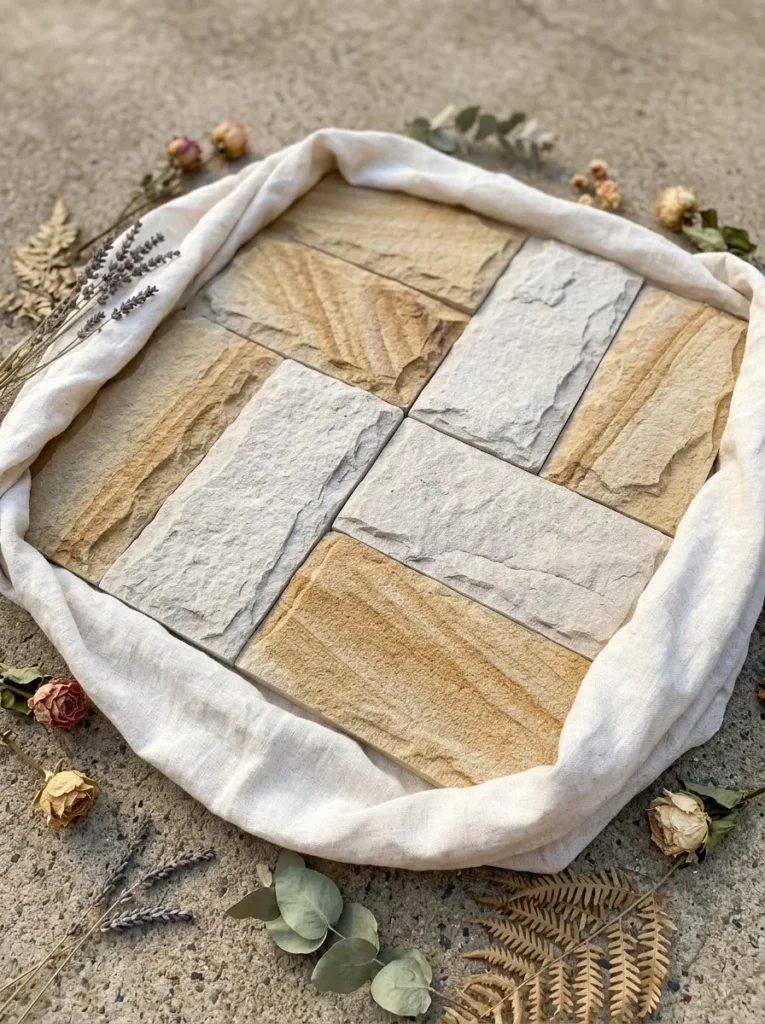
What you are actually buying from Stone Planet
We get calls regularly from client assuming natural stone walling cladding means enough material to build a wall from nothing
Stone cladding goes onto a wall that already exists or one that a builder constructs from blockwork, concrete or a similar structural system. It is covered using faces and corners. On a boundary wall, blockwork builds the actual wall and our stone faces it. On a retaining wall, an engineered structure holds the ground back and our stone dresses that structure’s face.
Four formats of Stone Cladding
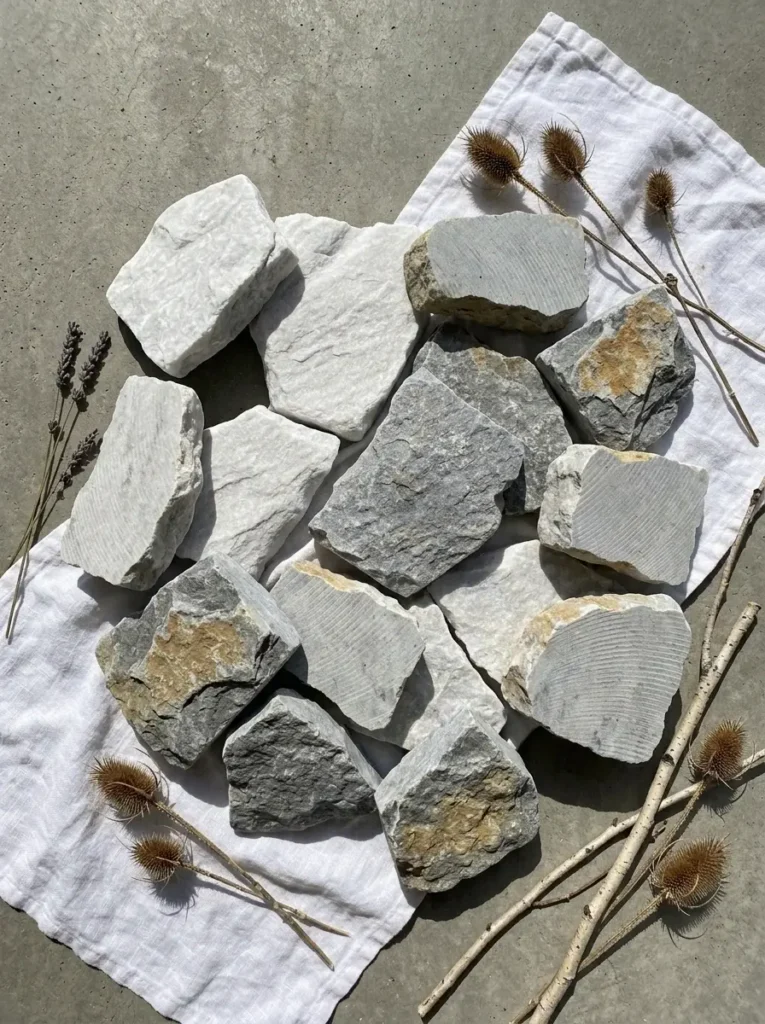
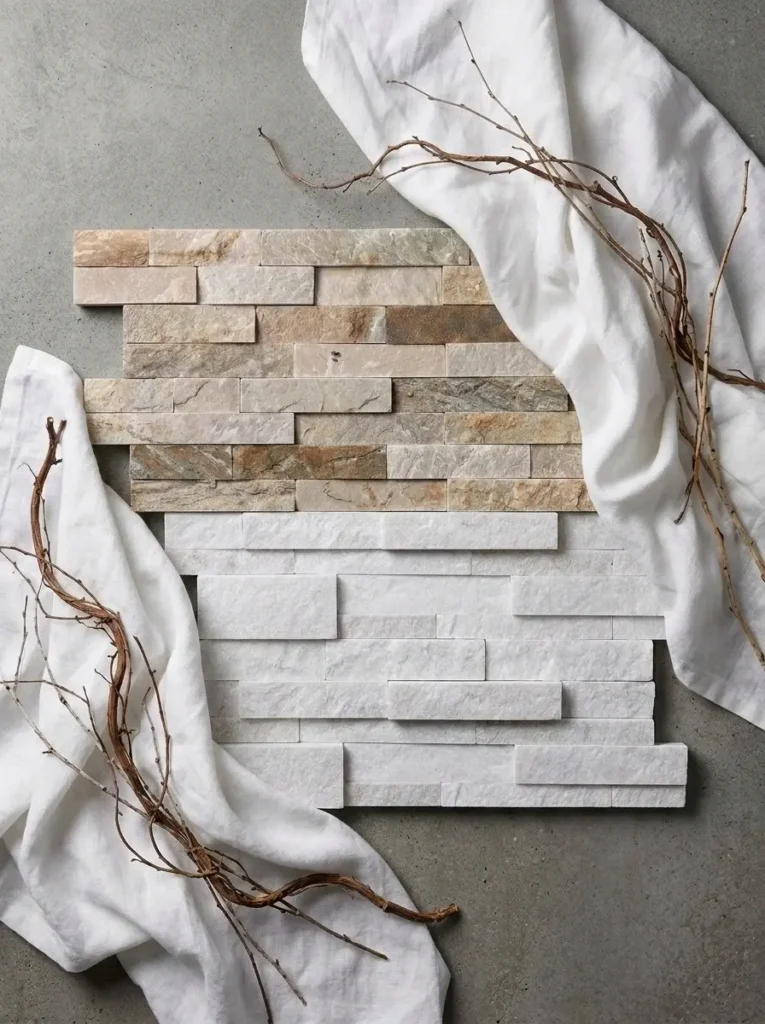
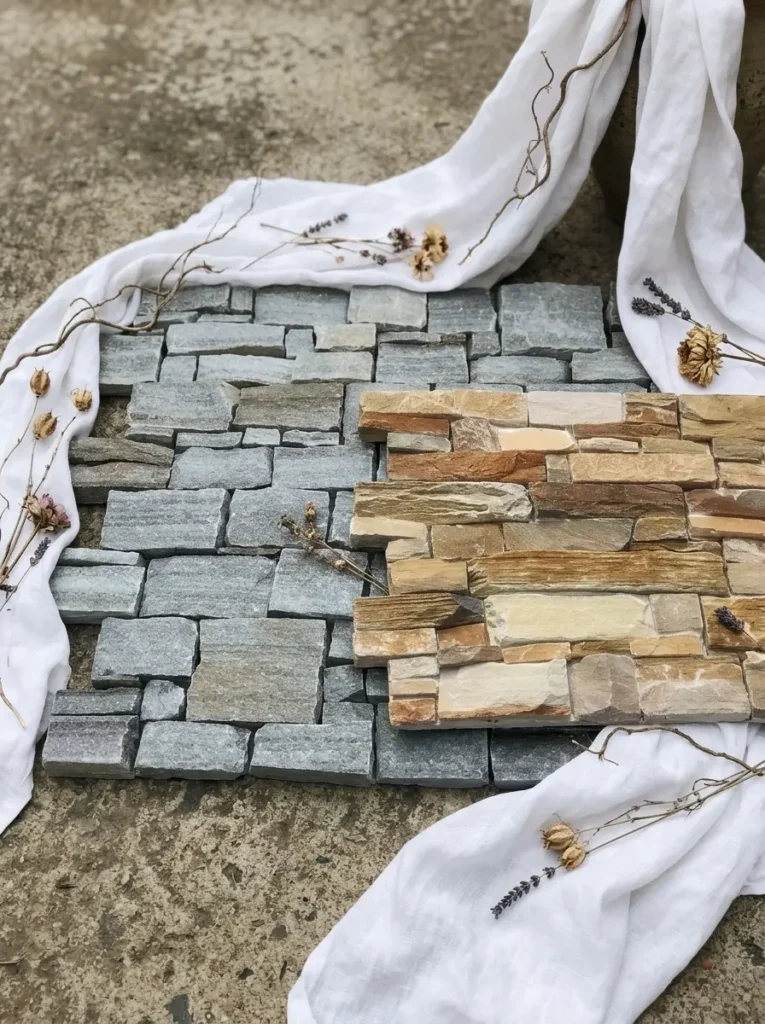
Stone Planet splits the stone walling range by physical construction rather than by trend or finish. Two formats arrive as loose individual pieces that a stonemason places by hand. Two arrive as panels which are pre-assembled at the factory.
| Attributes |
Loose Style |
Traditional |
Stacked Stone |
Ledge Stone |
| Supplied as |
Loose pieces |
Loose pieces |
Panels in Boxes |
Panels in boxes |
| Shape |
Irregular and random |
Regular rectangles and squares |
Small and layered pieces |
Larger and random pieces |
| Sizes |
150 to 350mm approximately |
500 x 250 x 30 mm, 600 x 300 x 30 mm |
Panels around 600 x 150 mm |
Panels around 600 x 200 mm |
| Back |
Flat and sawn |
Sawn flat |
Stone glued to mesh |
Cement-backed |
| Corners |
Single L-shaped pieces |
Not available |
Two-piece interlocking |
Two-piece interlocking |
| Weight |
Piece by piece |
Piece by piece |
Our lighter panel |
Our heavier panel |
| Who installs it |
Stonemason |
Stonemason or experienced tiler |
Competent tiler or builder |
Competent tiler or builder |
Loose Style Wall Cladding, Traditional Walling, Stacked Stone Wall Cladding, Ledge Stone Wall Cladding
Loose and Panel Backed Stone Cladding
This single choice shapes almost every decision that follows it.
Loose walling arrives as individual pieces and has to be installed by hand. With Free form or loose style wall cladding, your stonemason creates an irregular arrangement on the wall. With Traditional walling, they work to create lines and a planned course height instead.
Panel or Mesh Backed Stone Wall cladding arrives pre-assembled from the factory of the supplier itself. Your installer places panels rather than pieces which strips most of the composition work out of the site work and cuts the labour bill in comparison to loose stone installations.
Choosing the right natural stone wall cladding format in five minutes
Plan your work in the following order and the appropriate format will be determined.
Do you want the wall to look random or regular?
Random sends you to Loose Style or Ledge Stone. Regular sends you to Traditional. Fine, even horizontal texture sends you to Stacked Stone.
Who’s actually installing it?
A stonemason on the job opens up the loose formats properly. A competent tiler without mason experience points you toward a panel.
What’s the wall made of?
Solid masonry and concrete give you every option on this page. Framed and sheeted walls will reduce your options on the basis of weight handling.
How many corners does the design carry?
Corners cost more than flat faces in every format and a wall with six external corners changes your budget more than the stone selection does.
How big is the wall?
Large, plain elevations are best suited for panels. Small and detailed walls are best suited for loose stone wall cladding.
Interior stone walling and cladding
Stone Planet has a wide range of interior or indoor natural stone wall cladding. Our panel to loose walling options have proven their durability and enhanced the look & feel of interior spaces across Australian homes.
Weight still matters indoors but the wall on which the stones get fixed have more options than an exterior elevation such as internal stud walls, plasterboard over a frame, masonry partitions . The lighter formats in our range, particularly Stacked Stone, sit comfortably on most of them. Moisture matters differently too. An interior wall doesn’t face rain or coastal salt but it still faces steam and humidity in a bathroom or a kitchen.
Maintenance is genuinely easier inside. No weather, no runoff staining or no organic growth. There is mostly dust, occasional splash and whatever the room throws at it. That’s a real point in stone’s favour for anyone weighing it against a painted or papered wall.
The format choice indoors usually comes down to scale and surface texture rather than structural needs. A panel suits a hallway or a stairwell. A large stone format suits a double-height entry with room. A loose and irregular wall claddung suits a feature wall where the room has the height and the light to show off real relief.
If you are looking for a a specific interior application such as a fireplace, a feature wall or a bathroom, then each format covers that context through its own construction. The truth is based on on what’s actually behind the stone.
Natural Stone Wall Cladding Materials
Our walling and cladding is made of travertine, sandstone, limestone, granite, bluestone, marble, quartzite, gneiss and slate. Not every stone appears in every format. A material has to undergo splitting, sawn from back and also hold its character at a particular thickness.
The material you choose sets more than colour. It sets density and final weight. It sets porosity and how the stone takes a sealer. This decides what you’re actually allowed to clean it with as travertine, limestone and marble are calcareous stones that react badly to acid while granite, quartzite, gneiss and most sandstones handle themselves differently.
When the stone becomes your real decision rather than the format: Travertine, Limestone, Sandstone, Granite, Bluestone, Slatestone
Where is natural stone wall cladding used?
Stone Planet supplies walling and cladding for residential and commercial façades, interior and exterior feature walls, boundary walls and front fences, retaining wall faces, fireplace surrounds, columns, piers and pillars and suitable interior and exterior projects generally.
Each format of stone cladding has its own weight across those applications differently.
How does Exterior exposure/climate of Australia affect Natural Stone Walling?
Plenty of stone gets marketed as ideal for the Australian climate. Australia doesn’t have one climate, it has roughly eight of them depending how you count and it is not possible for a single natural stone to perform identically in all of them. The useful question isn’t whether stone survives outside here. It’s which stone, which finish, which sealer and which detailing suit your particular wall.
A north-facing wall in full sun dries out within hours of rain. A shaded south-facing courtyard wall can stay damp for days and that’s exactly where moss and lichen grow.
Sun does less to the stone than people assume. Ultraviolet light on the natural stone cladding in queensland barely touches the mineral structure itself. What it does is to degrade the sealers and any topical coating which is why a heavily exposed elevation generally needs resealing sooner than a sheltered one.
Coastal salt is a real mechanism worth understanding rather than dismissing as a hoax. Airborne salt lands on the stone wall cladding in Sydney and dissolves in whatever moisture is present on the surface. Then it migrates into the pores of the natural stones and crystallises again as the surface dries. That crystallisation applies pressure inside the pore structure, and repeated over years, it can flake softer, more porous stone. Dense stones such as quartz-cemented sandstones, granites, quartzites handle that considerably better than soft, porous limestones or clay-bound sandstones.
Frost effects on natural stone in Victoria is real . It works the same way salt does where water gets into the pores, freezes, expands and applies pressure from inside. Denser and lower-absorption stones such as granite and bluestone copes better.
Installation of Natural Stone Wall Cladding
Stone is heavy and its installation should be planned properly by the installer.
What’s the wall actually built from? Rendered blockwork, brick and concrete give you the most to work with. Off-form concrete usually needs rendering first because a glass-smooth surface with release agent still on it bonds to almost nothing. Fibre cement sheet and framed walls carry considerably less and only certain external grade sheets suit stone cladding at all.
Is it flat, sound and dry? Stone follows whatever it’s fixed to. A wall out by 15 mm across three metres will show in the finished face and it’ll cost your installer real hours in packing to correct it. Rendering the wall properly first is cheaper than that argument.
How high does it go and how heavy is the chosen format? Adhesive alone does plenty of work at normal heights on a solid substrate. For tall elevations, framed construction, overhangs or high wind regions, our heavier formats are suitable.
Where does the water actually go? Stone Cladding manages water. It doesn’t exclude it. Water gets in behind the stone through joints and through the stone itself. It needs a way back out. Capping at the top of the wall do more for a stone wall’s condition over ten years than anything you could ever spray onto the face. Keep the bottom clear of soil and any paving fall that lets water pond against it else the wall will wick moisture and salt straight up into the face and show you exactly how high it climbed.
Stone Planet only supplies the material. We don’t install it and we won’t pretend to specify your wall build up from a phone call.
Before you order, Natural Stone Wall Cladding: What to Check Before You Buy will help you in deciding the suitable format for your build.
Sealing is not waterproofing
This misunderstanding costs Australian buyers real money.
What the market calls a stone sealer is an impregnator. It soaks below the surface and lines the pore structure so liquids bead rather than getting absorbed. This makes the stone considerably more stain-resistant. It doesn’t make the stone waterproof and it doesn’t stop acid from etching the surface because etching is a chemical reaction happening right at the surface and the sealer is sitting beneath it.
Three things follow from that. In a bathroom or a wet area, the waterproofing membrane behind the stone is what actually keeps water in the room .
Penetrating sealers let moisture vapour escape through the stone which matters enormously on an exterior wall or anywhere over a cementitious background.
And sealing a soft, acid sensitive stone never licenses you to clean it with something acidic.
Cleaning natural stone walling
Most stone walling need very little attention. Doing that little bit correctly matters far more than doing a lot of the wrong thing.
Brush interior stone with a soft brush or a vacuum brush head. Wash exterior walls with clean water and a soft brush. Rinse it from top down so the dirt doesn’t settle anywhere.
Go for a pH-neutral stone cleaner, a proper stone soap or a mild detergent in warm water for almost everything and rinse it off properly rather than letting it dry on the face.
Keep acid away from travertine, limestone and marble stone wall cladding entirely. That rules out vinegar, lemon juice, most bathroom and shower sprays and anything marketed for limescale . These can lead to permanent damage such as loss of surface and no reseal brings it back. Some heavy duty rust removers and masonry cleaners go further and attack silicate minerals directly which means they’ll damage granite and quartzite too. So treat any strong specialist chemical as unsuitable until you’ve tested it on an offcut.
Never mix bleach and ammonia. They both dull a polished surface and degrade a sealer with repeated use. And go easy with a pressure washer generally.
Dip Sealing of Stone Cladding: Sealing before installation and resealing afterward
Stone planet recommends sealing every natural stone walling product once before it goes on the wall. Pre-sealing helps the stone resist mortar and adhesive residue during installation to avoid permanent marking on a new stone wall. Its an economical fix applied before any remedial cleaning required afterwards.
As a fixed rule, look at resealing exterior wall cladding at around two years and interior wall cladding at around three to four years. A wall face takes no foot or vehicle traffic, so it doesn’t wear the same way outdoor stone paving does.
It is better to Test than guess. Splash some clean water on the wall in a few spots. If it beads and sits, the sealer is doing its job. If it soaks straight in and darkens the stone then book a reseal job in. Clean the wall and let it dry properly first because sealing over dirt or damp locks both of them underneath. And whatever your sealer manufacturer specifies for their own product always overrides this general guidance.
Where does Natural Stone Wall Cladding come from?
Stone Planet sources walling across established natural stone markets including China, Turkey, India and Vietnam. Each of those regions brings different stone types and different strengths and the right origin depends on the specific product rather than a slogan about where stone should come from.
Our production and quality visibility on walling can include photographs during manufacture, random checks and dimensional checks while a batch is actually running.
Custom and project supply by Stone Planet
Stone planet can supply custom dimensions, custom thicknesses, alternative stone selections, particular finishes and specific corner requirements across any format in their stone cladding range. A custom request at design stage still has options in front of it. The same request two weeks before your stonemason arrives is not possible to fulfil.
For a larger outdoor project involving more than one material or application, Natural Stone Outdoor Project Planning Guide covers the ordering sequence that keeps a custom requirement genuinely achievable rather than a last-minute scramble.
Why buy your natural stone wall cladding from Stone Planet?
Stone Planet is a proud supplier of natural stone wall cladding across homeowners, trade professionals such as architects, builders, landscapers, resellers and project buyers.
Stone Planet separates our four formats by actual construction rather than by trend. We tell you the real thickness, backing and corner system for each rather than letting a photograph do the talking.
We give your installer numbers they can actually work from. We have a good collection across all four formats and the full material range. Our team can show you production checks and photographs on the material while it’s still being made. We’ll take on custom and project requirements where the factory genuinely can produce them and tell you plainly when it can’t. And where a claim needs product-specific evidence behind it, we’ll say so rather than publish a blanket assurance that sounds reassuring and means nothing.