What Are Stone Treads and Risers?
On a staircase finished with both stone components, the tread sits horizontally and the riser finishes the vertical face below it. Together they create the visible stone surfaces of each step.
Buyers searching for stair treads often come across carpet inserts, timber boards and screw-down anti-slip strips. Stone treads and risers are different products: they are natural stone components cut to the dimensions, thickness and exposed edge required for the staircase.
What Is a Stone Stair Tread?
The tread is the horizontal, top component of the step. It is the surface underfoot and carries the exposed front edge seen from the face of the staircase.
Two measurements matter on a tread and they are easy to confuse. The long measurement runs across the width of the stair. The shorter measurement is the tread depth from front to back. A 1210 × 350mm tread, for example, gives 1210mm across the stair and 350mm of stone depth.
The exposed front edge is where Bullnose and Pencil Edge profiles come into the specification.
What Is a Stone Stair Riser?
The riser is the vertical, front-facing stone component. It sits below the tread and can finish the upright face in matching natural stone.
Current riser examples use a 170mm face height. The tread and riser do not always have to match: some projects use stone treads with a rendered, tiled or painted vertical face while others use the same stone across both components for a more continuous appearance.
| Component |
Position on the step |
Current thickness |
Confirmed size examples |
| Tread |
Horizontal top surface; exposed front edge |
30mm |
1210 × 350mm; 1220 × 406mm; 1200 × 400mm |
| Riser |
Vertical front face below the tread |
20mm |
1210 × 170mm; 1220 × 170mm |
Stone Tread and Riser Sizes
Dimensions decide most tread and riser orders. Get them right early and it becomes much easier to establish whether a current size works or a custom piece is needed.
Stone Tread Sizes and 30mm Thickness
The current stone tread collection uses 30mm thickness.
Confirmed tread size examples include:
- 1210 × 350mm
- 1220 × 406mm
- 1200 × 400mm
Those long measurements sit at roughly 1.2 metres. Where one piece spans the required stair width, there is no joint through that tread span. Measure the actual staircase before choosing a size, especially on wide entry steps, returns and landings.
The second measurement needs just as much attention. The built step depth and the stone depth are not always the same. If the design projects the tread beyond the riser face, that projection forms part of the stone depth required.
Stone Riser Sizes and 20mm Thickness
The current stone riser collection uses 20mm thickness.
Confirmed riser size examples include:
- 1210 × 170mm
- 1220 × 170mm
The 170mm measurement is the height of the stone face. Compare it with the built step and the way the riser meets the tread above and the finished surface below.
| Piece |
Long dimension |
Second dimension |
Thickness |
| Tread |
1200mm / 1210mm / 1220mm |
350mm / 400mm / 406mm |
30mm |
| Riser |
1210mm / 1220mm |
170mm |
20mm |
Exact size, material, finish and edge combinations are product-specific, so the actual product specification should be checked before quantities are finalised.
Bullnose or Pencil Edge Stone Treads?
Both profiles finish the exposed front edge of the tread. The difference is mainly visual and it changes how the step reads from the front.
Bullnose Stone Treads
Bullnose is the rounded exposed edge. The stone turns over at the front and gives the tread a fuller, softer outline.
It works naturally with broad entry steps, garden stairs and other projects where a rounded front edge suits the adjoining stonework.
Pencil Edge Stone Treads
Pencil Edge has a smaller, lightly rounded exposed edge. The tread stays visually squarer and the front line reads more tightly.
That straighter appearance often sits comfortably with contemporary stairs and straight-cut adjoining paving.
| |
Bullnose |
Pencil Edge |
| Visible edge |
Rounded front edge |
Smaller, lightly rounded front edge |
| Overall appearance |
Fuller and softer |
Straighter and squarer |
| What to check |
Which edges of the piece are profiled |
Which edges of the piece are profiled |
| Project coordination |
Compare with adjoining stone edges and finishes |
Compare with adjoining stone edges and finishes |
When matching an existing staircase or adjoining stone edge, a physical sample makes the profile and surface much easier to judge than a screen image.
Natural Stone Materials for Treads and Risers
Stone choice sets the colour, markings and surface character of the staircase. Material matters, but so do the actual finish, batch and product format being supplied.
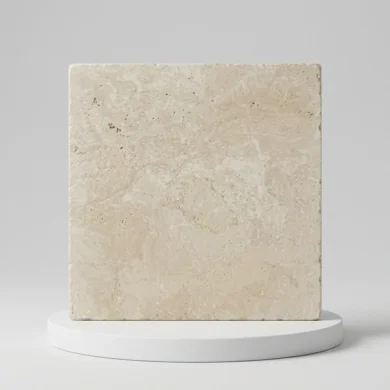
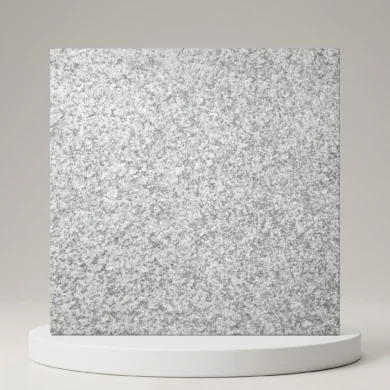
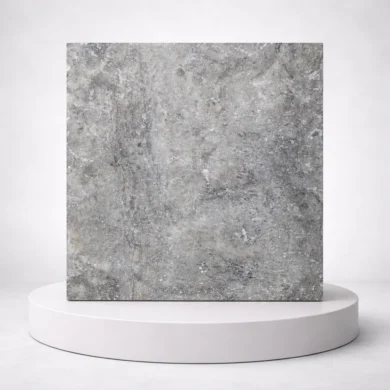
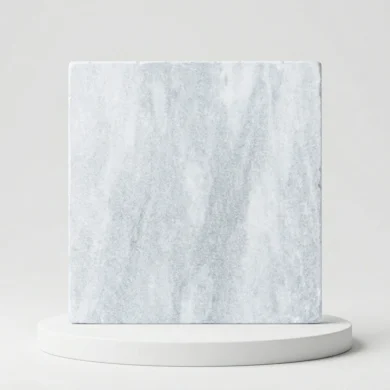
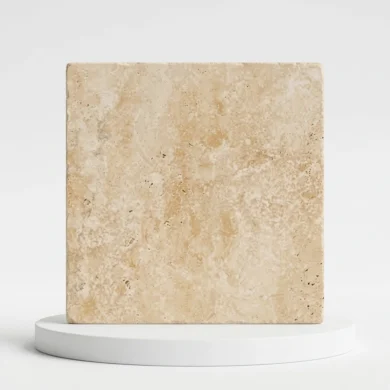
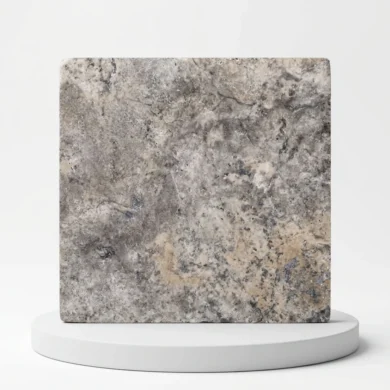
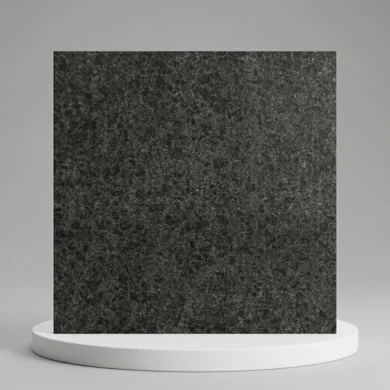
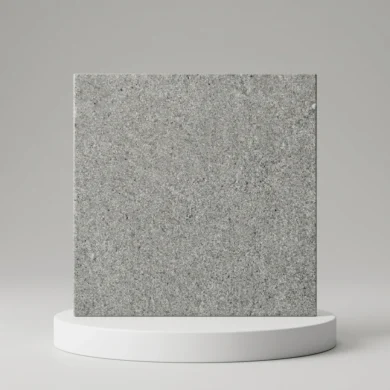
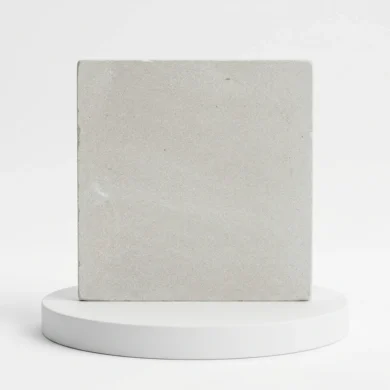
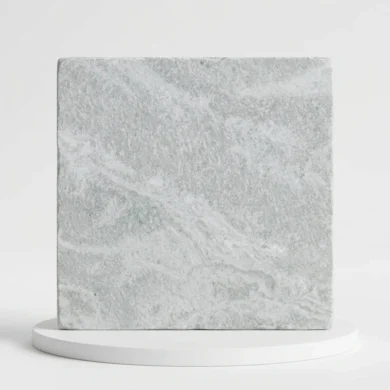
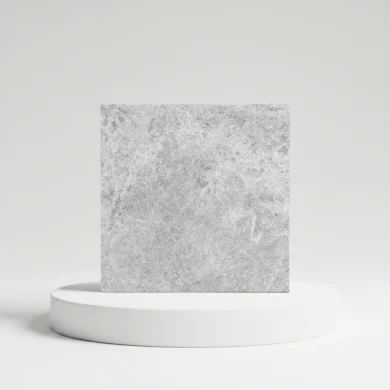
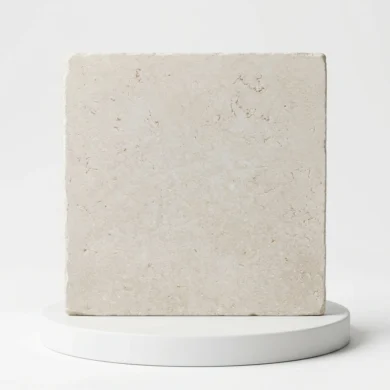
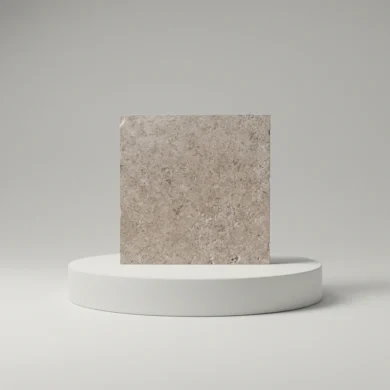
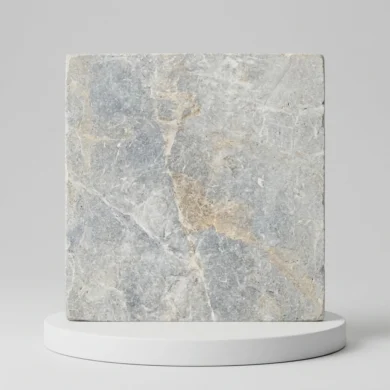
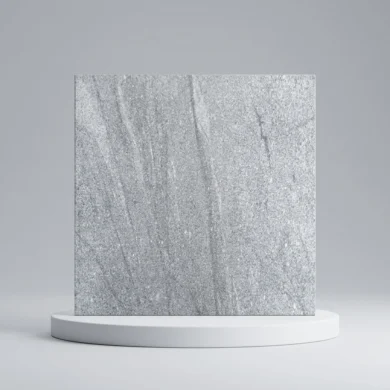
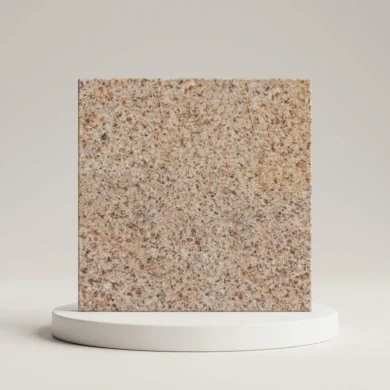
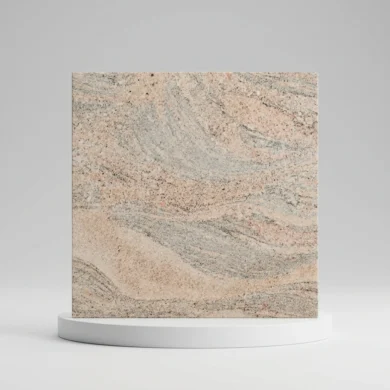
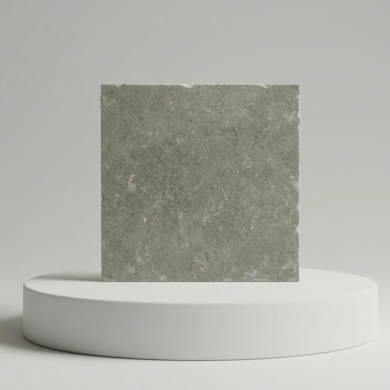
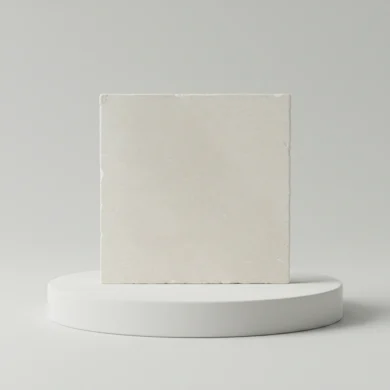
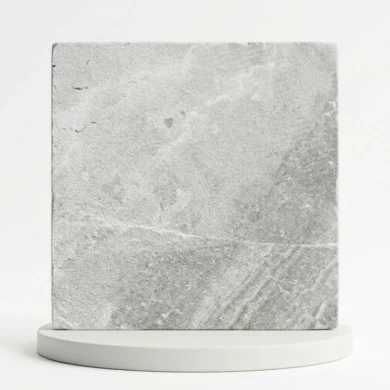
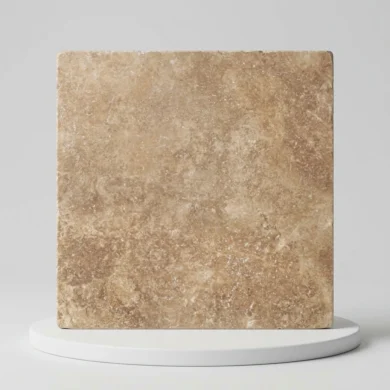
Travertine can show open pores, bands and warm-to-silver tones. Limestone usually presents a finer, quieter visual character. Marble brings visible veining and stronger piece-to-piece pattern changes. Granite has a crystalline, speckled grain that gives it a different visual character again.
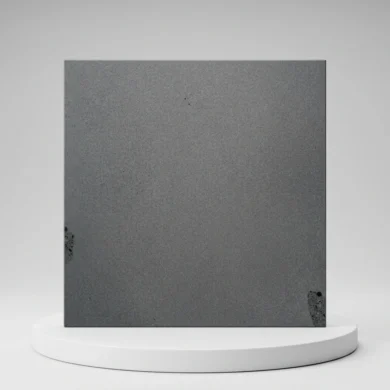
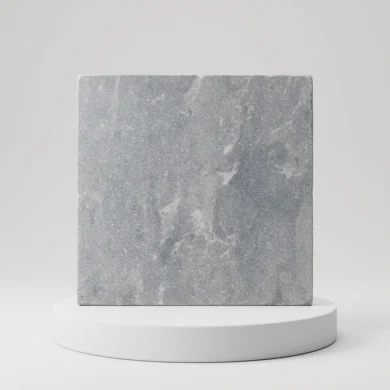
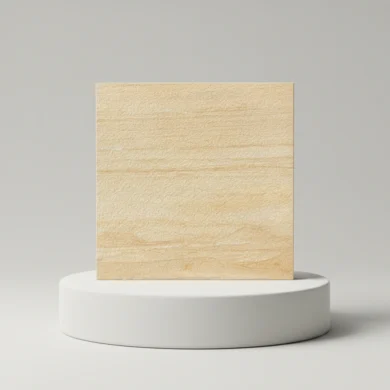
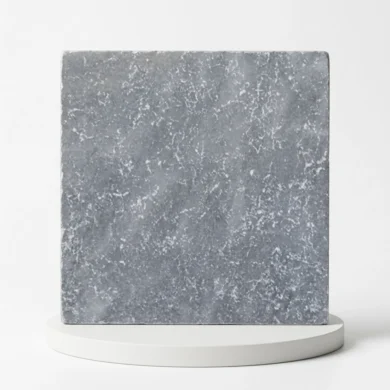
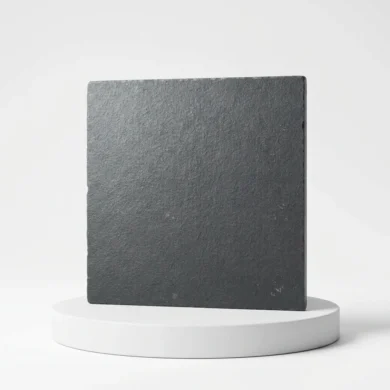
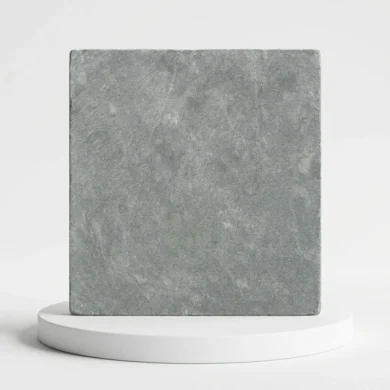
Bluestone sits in the grey-to-charcoal family with its own natural surface markings while Sandstone commonly shows warmer tones, open grain and visible bedding character.
Natural stone varies. Colour, tone, veining, grain, pores, markings, texture and finish can shift between pieces and between batches. A sample or photograph shows the character of the stone, not every variation that may appear across a full stair.
Finish matters on a tread because it is the surface underfoot. Where slip-test evidence forms part of a specification, use evidence for the exact stone, product and finish being supplied rather than carrying a result across from another finish.
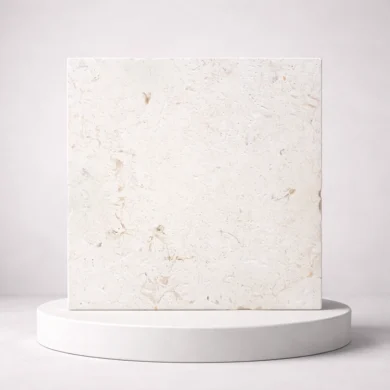
Current product examples include Premium Ivory Travertine and Galala Light Limestone, both of which currently list tread and riser pieces with Bullnose and Pencil Edge tread options.
Stone Treads and Risers for Indoor and Outdoor Steps
Treads and risers can form part of both indoor and outdoor stairs. What changes is the stone, finish, exposure and the surfaces the steps connect to.
Outdoor Steps, Garden Stairs and Entrances
Outdoor stone steps rarely sit on their own. They may come off a path, bridge a change in level, lead to a front door or connect one paved area with another.
Wide front entries put tread length high on the checklist because every joint is easy to see. Longer garden runs make step count, material choice and quantity just as important.
Where steps lead into an alfresco area, the tread should sit comfortably with the landing stone above. The same applies when steps form part of a broader backyard layout with paving, retaining stone or other natural stone nearby.
Indoor Stone Stairs
Indoor stairs bring the edge profile, veining and joints closer to eye level. Lighting also makes differences between pieces easier to notice, so sample comparison and batch expectations matter.
At the top and bottom of the stair, the tread may meet stone tiles or another finished floor. The adjoining tile can use a different thickness from the 30mm tread, so finished levels need to be resolved around the actual products being supplied.
Matching Treads and Risers with Adjoining Stone
Very few staircases are isolated stonework. Most steps meet paving, tiling or coping and those junctions can make a finished job look deliberate or pieced together.
Stone Steps Meeting Pavers and Tiles
Treads regularly meet natural stone pavers at an outdoor landing and tiled floors indoors. Sharing a material name does not guarantee the same thickness, finish or appearance across different formats.
Check these together before ordering:
- Finished levels — use the actual thicknesses and build-up for the adjoining products.
- Finish — compare the tread surface with the adjoining paving or tile rather than relying on listing photographs.
- Tone and markings — natural variation can read differently across long treads than it does across smaller paving or tile pieces.
Where the stair opens into a larger natural stone flooring area, the formats can be specified together so the steps, landing and adjoining floor work as one finished composition.
Poolside Steps and Pool Coping
Bullnose and Pencil Edge terminology also appears in pool coping which is why the products can be confused on drawings and material schedules.
They serve different parts of the project. A tread is the horizontal stone component of a step; coping finishes the pool edge. Where both appear near each other, compare the material, finish and edge treatment together without treating the pieces as interchangeable.
The wider pool surround can introduce another adjoining stone format, so finished levels and visual coordination need to be considered across the whole junction.
Do Stone Treads and Risers Need Sealing?
Yes. For treads and risers, our normal sealing sequence is to seal the stone on all sides before installation, then reseal the exposed top surface after installation and cleaning.
The sequence is:
- Start with clean stone.
- Seal the stone on all sides before installation.
- Install the treads and risers.
- Clean the installed stone.
- Reseal the exposed top surface.
Follow the sealer manufacturer’s instructions for the product being used. If the selected stone, sealer or project specification requires a different procedure, that guidance takes priority.
Stone Tread and Riser Prices and Quotes
There is no single rate for a stone tread because material, dimensions and finishing requirements change from one order to another. A standard long-format tread and a custom-cut piece are different specifications, so the quote needs to reflect the actual components.
| What changes the quote |
Why it matters |
| Material and product |
Different stones and products are priced differently. |
| Piece dimensions |
Length and depth change the amount of stone in each piece. |
| Thickness |
Current 30mm treads and 20mm risers differ from a custom thickness. |
| Edge profile |
Bullnose and Pencil Edge require different edge finishing. |
| Finish |
The surface finish forms part of the product specification. |
| Quantity |
Step count, landings and spare pieces affect the order. |
| Custom requirements |
Non-standard dimensions, profiles or project-specific pieces change the specification. |
| Freight and destination |
Delivery requirements vary with the order and destination. |
A useful quote starts with the stair dimensions, material, profile, finish, number of steps, any custom pieces and the delivery location.
Stone Planet has been serving globally since 1993, supplying ethically sourced natural stone to homeowners, trade professionals and resellers. Free samples are available and delivery is available Australia-wide.