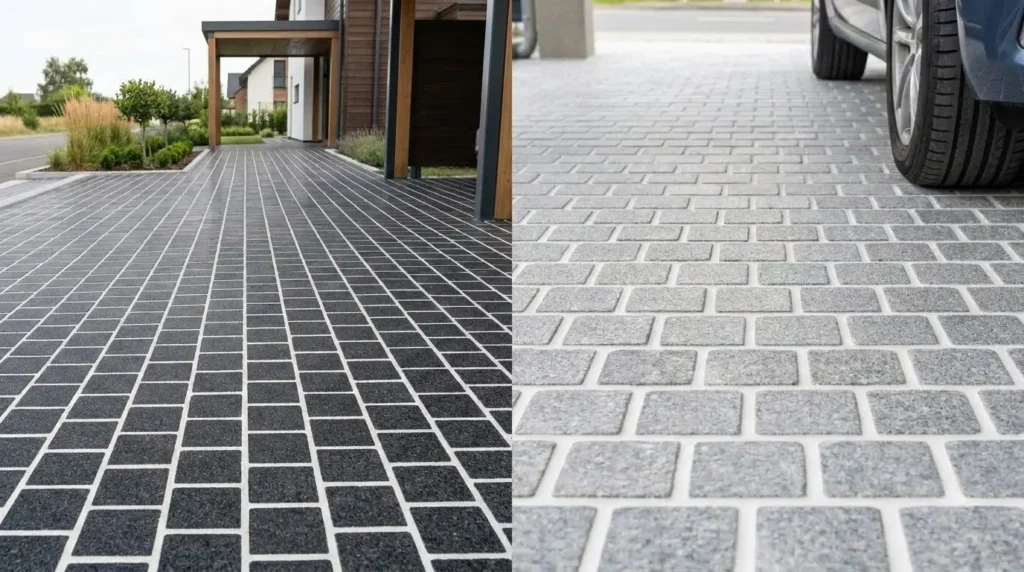
Ideal way of choosing a cobblestone is based on where it is going to be installed and how that space will be utilised. A driveway that has vehicle movement in or and out several times during a day requires a different cobblestone in comparison to a garden path, an edge of a lawn, a side walkway or a courtyard where the look is doing most of the work.
When someone contacts us about cobblestones, we tend to ask the same few things early. What colour preference are you after? Do you already have a material in mind? Where are the cobbles going? And if vehicles are involved, how often will they cross the area? Those answers change our recommendation more than anything else on the enquiry, including the size and thickness the customer often leads with.
For the current cobblestone range itself, including which products are supplied loose, mesh-mounted or as Batons and Filetti, view our natural stone cobblestones.
How Do You Choose the Right Cobblestone?
| Project question | What it changes |
| Where is the cobblestone going? | Driveway, path, border, edging or landscaped area sets the whole conversation. |
| How often will vehicles cross it? | Moves the enquiry towards a strength-led material discussion, or away from it. |
| Is strength or appearance leading the choice? | Decides whether we start with Granite or with colour and character. |
| What colour do you want? | Often narrows the material list faster than a stone name does. |
| Which material? | Affects colour, surface character, available formats and price direction. |
| Mesh-mounted or loose pieces? | Changes installation approach, pattern control and the look of the finished area. |
| Brick Bond or Straight Bond? | Applies to mesh and changes the visual pattern. |
| Which finish? | Affects texture and appearance, and any product-specific technical evidence. |
| What size and thickness? | A product specification to confirm, not a performance rating. |
| What shape is the area? | Curves, borders, openings and edges change cutting and quantity. |
| How much extra for wastage? | Measured area is not necessarily the final order quantity. |
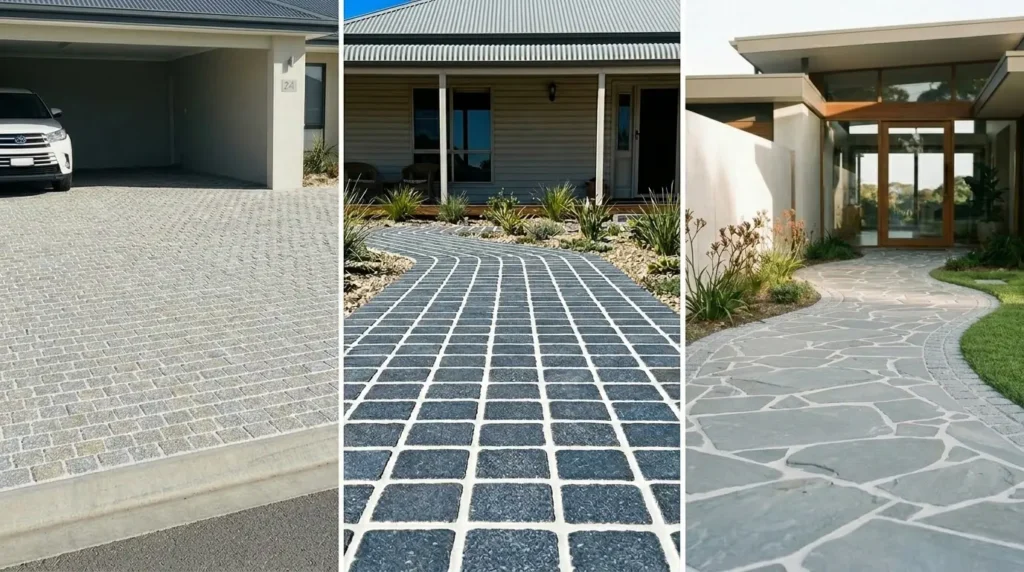
Which Cobblestones Does Stone Planet Recommend for Driveways?
We generally start the conversation with Granite Cobblestones where there is substantial vehicle movement or the customer tells us strength is their main concern. Granite is one of Stone Planet’s strongest recommendation from current natural stone driveway options and we supply Granite in loose and mesh-mounted cobblestone formats.
That is a supply recommendation only than an engineering result. We are not saying that a given Granite cobble carries a particular vehicle load, or that every Granite product suits every driveway. Loading, base construction and site conditions belong with the builder, landscaper, engineer or other project professional running the job. Stone Planet can confirm the product specification and available product documentation for the cobblestone being considered. For more knowledge about this stone, see Granite.
Where a customer specifically wants Sandstone for a driveway, we prefer to discuss Sandstone cobblestones rather than leading with large-format Sandstone paving. Bluestone cobblestones sit in the collection as well, though for a driveway enquiry where the material is still open, Granite remains the usual starting point.
For broader driveway material selection, you can view our Driveway’s catalogue for more details.
Do Cobblestones Have to Be Granite?
No. Customers arrive with that assumption often and it can rule out products that fit a design led project better.
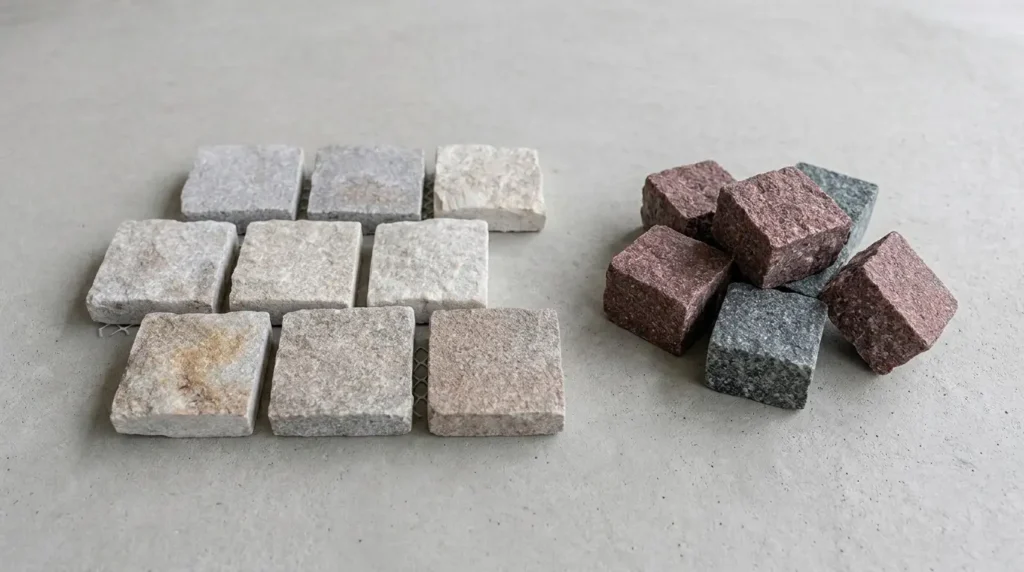
Stone Planet supplies cobblestones across more than one natural stone. When strength is not the leading selection priority and the project is more design biased, Stone Planet provides details about Sandstone, Limestone, Travertine and Bluestone, with Quartzite or Marble where an actual current product supports the use. Each has its own colour, surface character and available formats while the material Hubs remain the deeper owners of the material itself.
Colour is worth taking seriously here. Plenty of buyers do not start with a geological name at all. They want dark, grey, warm beige or a mixed look that sits with the paving and planting already chosen. That is a legitimate starting point. Tell us the colour preference and intended use and we can compare the actual products available in that preference.
When Does Mesh Suit the Project and When Do Loose Cobbles Suit the Look?
In our experience, mesh-mounted cobbles are chosen more often than individual loose cubes, although loose cobbles still sell and suit a different look.
Customers choose mesh because it groups multiple cobbles onto one sheet instead of requiring every piece to be positioned individually. That can reduce installation labour cost compared with placing the equivalent number of loose cobbles. Mesh also gives a controlled pattern design including Brick Bond and Straight Bond where the actual product supports them.
Customers choose loose cobbles when the individual pieces are part of the design. A Natural Split face, visible variance in size and thickness, and a more visibly varied field can create the earthy, raw character some projects are looking for. That is a design decision rather than a claim that loose cobbles are technically superior.
Sizes, thicknesses and current product membership vary by product. The cobblestone range is the commercial owner for actual current products and specifications.
Does Mesh Mean You Will Not Need to Cut the Cobblestones?
No. This is a recurring customer misconception.
Mesh sheets still have to meet the real boundaries of the project. Driveway edges, garden beds, service covers, curves and transitions can require adjustment or cutting. Edges, curves, openings and transitions can still create wastage, which is why mesh should not be treated as a zero cut or zero wastage format.
What mesh reduces is the individual placement work. It does not remove site cutting, layout decisions or the need to allow for wastage. How the cutting is done, and with what, is the installer’s call.
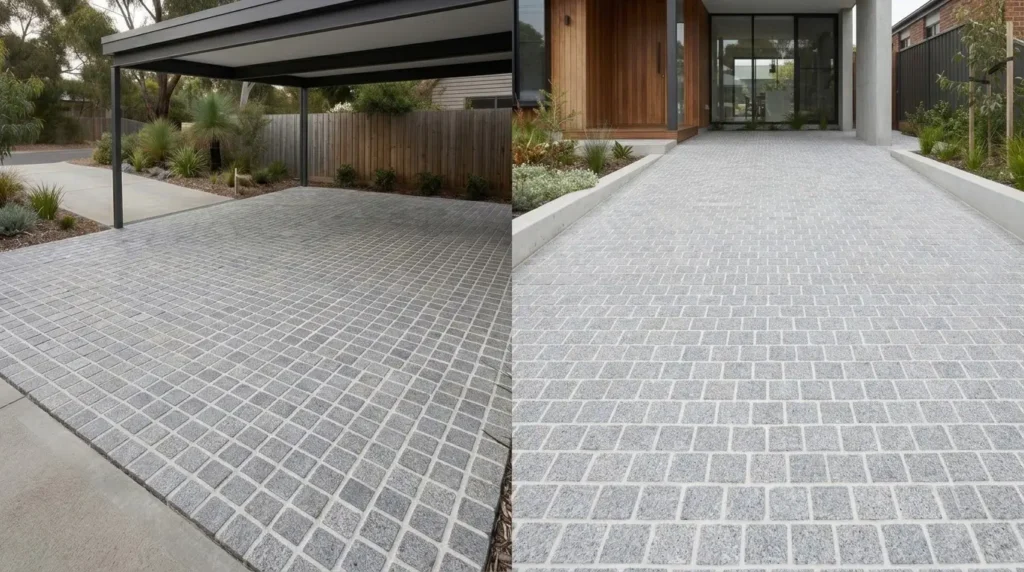
What Are Brick Bond and Straight Bond Mesh Cobblestones?
These are two mesh patterns sold by Stone Planet.
Brick Bond staggers each row against the next so the joints do not line up continuously across the surface.
Straight Bond aligns the rows into a regular grid with the joints following through in both directions.
When Do Batons or Filetti Make More Sense?
Batons and Filetti are elongated loose pieces within the Cobblestones category rather than a separate broad category. Instead of a square cube, you are working with a longer narrower unit.
They are chosen most often for small areas, narrow paths, walkways, garden borders, edging and transitions between one surface and another. Their elongated proportions can suit linear design work and can complement adjoining pavers, gardens or paths.
200 × 50 mm is an important standard Stone Planet Baton/Filetti size. Other sizes can exist by product and project. That does not make Batons better than square cobbles; it makes them a different design tool.
The same applies to combining cobbles with pavers. In our experience those combinations are primarily driven by the designer, architect or customer’s project design.
Why Does the Finish Matter?
Finish is another specification customers sometimes overlook on a cobblestone enquiry. Two products carrying the same material name can read differently once the surface treatment is taken into account.
Finish affects visual texture, surface character and how the colour reads in the overall design. It also matters where documented technical performance forms part of the project specification, because that evidence attaches to a specific product and finish rather than to a material name or cobblestones as a category.
If the finish matters to the specification, ask for the actual product documentation rather than working from the material name.
Does a Thicker Cobblestone Automatically Mean It Is Better for Cars?
No. Thickness is a product specification, not a vehicle-load rating.
Our catalogue includes 20 mm and 30 mm cobblestone examples, and sizes such as 90 × 90 mm and 100 × 100 mm sit in the loose-cube direction. Those numbers describe the product specification. They do not classify what the finished surface can carry, because loading and construction depend on the actual product and project.
Where loading matters, the actual product and project specification should be worked through with the builder, landscaper, engineer or relevant project professional. Exact sizes and thicknesses remain product-level information.
How Much Extra Cobblestone Should You Allow for Wastage?
The measured area is the starting quantity, not necessarily the final order quantity.
Mesh sheets can still be cut at boundaries. Loose pieces still need to be selected and fitted. Curves, borders, garden edges, openings and transitions can all change how much material is actually required.
As a planning starting point, around 10% extra may be discussed for cobblestones. Treat that as a practical starting figure, not a universal installation allowance or industry standard. The actual quantity depends on the product, design and project, and the installer is better placed to confirm the final quantity once the layout is set.
For the wider ordering consultation, use our outdoor project planning guide.
What Should You Tell Stone Planet Before Asking for a Cobblestone Quote?
- the application: driveway, path, walkway, border, edging or landscaped area
- approximate area in square metres
- how often vehicles will cross the area, where that applies
- colour preference even if you have no material in mind
- preferred material if you already know it
- mesh, loose or Baton/Filetti preference
- Brick Bond or Straight Bond if you are considering mesh
- preferred finish
- size and thickness if either is already specified
- drawings, plans or design images where you have them
- project timing
Colour preference and intended use are two of the most useful starting points. With those, Stone Planet can shortlist actual products rather than sending a general range.
Which Cobblestone Should You Choose?
- Start withGranite if the project is driveway-led, vehicles will cross it regularly, or strength is your main material concern.
- Look atSandstone,Limestone,Travertine,Bluestone or another available natural stone cobble if colour and visual character are driving the project and the actual product and project support the intended use.
- Choose mesh if easier/faster installation design matters or you want the controlled pattern of Brick Bond or Straight Bond.
- Consider loose cubes if Natural Split character, visible variation and an individually laid appearance are central to the look.
- Consider Batons or Filetti if the cobble is doing linear work: a narrow path, small area, border, edge or transition.
Then confirm the finish, the actual size and thickness, and a realistic order quantity before committing. Those details are where several avoidable cobblestone ordering mistakes begin.
Frequently Asked Questions
Which cobblestones are best for a driveway?
For driveway projects with regular vehicle movement, Stone Planet generally starts with Granite cobblestones, supplied loose or mesh-mounted. That is a current supply recommendation rather than a load rating. Suitability depends on the actual product, the base construction and the project, which should be confirmed with your builder, landscaper or engineer.
Do cobblestones have to be Granite?
No. Stone Planet supplies cobblestones in more than one natural stone, including Sandstone, Limestone, Travertine and Bluestone, with Quartzite or Marble where a current product applies. Granite is Stone Planet’s usual starting point for strength-led driveway enquiries, not a requirement for every cobblestone project.
Are mesh cobblestones easier to install?
Mesh groups multiple cobbles onto one sheet instead of requiring each piece to be placed individually, which can reduce installation labour and affect installed cost. Stone Planet does not publish a fixed time or cost saving, because the result depends on the product, the area, the site and the installer.
Do mesh cobblestones still need cutting?
Yes. Mesh sheets still have to meet real project boundaries, so edges, curves, openings and transitions can require cutting and adjustment. Mesh reduces individual placement work. It does not remove site cutting, layout decisions or the need to allow for wastage.
When should I choose mesh cobblestones instead of loose cobblestones?
Mesh cobblestones can suit projects where a regular Brick Bond or Straight Bond pattern and a lower-individual-placement installation direction matter. Loose cobblestones can suit a more individually laid appearance with Natural Split character and visible variation. For exact current formats, sizes and specifications, use Stone Planet’s Cobblestones category.
What is the difference between Brick Bond and Straight Bond cobblestones?
Brick Bond staggers each row so the joints do not line up continuously across the surface. Straight Bond aligns the rows into a regular grid with joints following through in both directions. Stone Planet sells both mesh patterns where the actual product supports them.
What are Filetti or Baton cobblestones used for?
Batons and Filetti are elongated loose pieces within the Cobblestones category. Our customers most often use them for small areas, narrow paths, walkways, garden borders, edging and transitions. 200 × 50 mm is an important standard size used for many projects.
Does cobblestone thickness determine driveway suitability?
No. Thickness is a product specification, not a vehicle-load rating. Stone Planet’s catalogue includes 20 mm and 30 mm examples, but thickness alone does not establish what a finished surface can carry. Loading and construction should be resolved with your builder, landscaper, engineer or project professional.
How much extra cobblestone should I order for wastage?
Stone Planet’s practical planning starting point is around 10% extra for cobblestones. That is a starting figure rather than a universal allowance. Cuts at edges, curves, borders and transitions can change the real requirement, so confirm the final quantity with your installer once the layout is set.