Ethically Sourced Stones
•
Free Samples
•
Australia wide delivery
•
Serving Globally Since 1993
•
Limestone pavers for outdoor paving including pool areas, patios, courtyards, alfresco areas and garden paths for Syndey, Brisbane and Melbourne projects. Explore natural Limestone paving in a choice of selections, finishes, paver sizes and thicknesses to suit outdoor residential & commercial requirements
Showing all 13 results
Limestone outdoor pavers is a subtle bestseller when it comes to paving pools, patios, backyards and alfresco. A pool surround brings wet surface and coping decisions into play; a patio has to work with the house, furniture and finished levels; and on a garden path, module, cutting and edges often decide whether the layout feels clean. Start with the area, then choose the finish, size and thickness that suits it.
Around a pool, the coping sets the visible line at the water’s edge and the paving works back from it. Choose both together to ensure that Limestone Pool Pavers and Coping match for the entire space.
Our customers commonly run the same Limestone through the paving area, pool coping and adjoining steps. That keeps the material direction consistent right to the water and reduces the risk of having to match a later order from a different production lot. Compare Bullnose, Pencil Edge and Drop Edge / Rebated Edge options in pool coping. If the material or format for the whole area is still open, compare Stone Planet’s broader pool surround options as well.
Buyers often consider textured and sandblasted surfaces for wet outdoor paving but the exact stone and finish determine wet slip performance. Pool surrounds also collect splash water, sunscreen, leaves and general outdoor residue, so routine cleaning matters.
A patio or alfresco area is where the paving meets the house and that meeting point becomes a levels problem before a style decision. The paver and paving build must resolve against door thresholds, drainage points and adjoining surfaces. Confirm the support, build-up and finished levels before you order the stone. A 10mm thickness change looks small on paper and becomes expensive after the surrounding levels are fixed.
Furniture is the second consideration. A pronounced natural split surface can be awkward under dining tables and chair legs, while a more even textured face is usually easier to live with in an entertaining area.
Enclosed courtyards read darker than open patios. Walls, fences and pergolas reduce available light, so a stone that looks mid-tone in an open yard can feel heavier in a narrow courtyard. Look at samples in the actual position, in daylight, wet as well as dry.
Alfresco kitchens add food, grease and barbecue use to the paving decision. Pale Limestone can show spills or marking more readily if they are left to sit, so finish choice and prompt cleaning matter. If you are still choosing between tiles, regular pavers and irregular paving for the whole entertaining zone, compare the wider alfresco and patio options before locking in the format.
Path width and paver module need to work together. Set the path width against the actual format before the installer fixes the edges; a clean module can reduce unnecessary cuts and awkward edge pieces.
Garden areas also expose the stone to soil splash, mulch, leaves, sprinkler overspray and everyday outdoor debris. Lighter selections show marking sooner, while a more textured face can make day-to-day variation less visually obvious.
For stepping-stone or planted-joint layouts, check the paver thickness and support so individual pieces remain stable underfoot. Where a run curves or the shapes become awkward, an irregular format can suit the geometry better than repeatedly cutting rectangular pavers.
At 15 square metres you are choosing a colour. At 120 square metres you are choosing a colour, a quantity, a lot of limestone pavers and a set out. Scale changes which decisions matter.
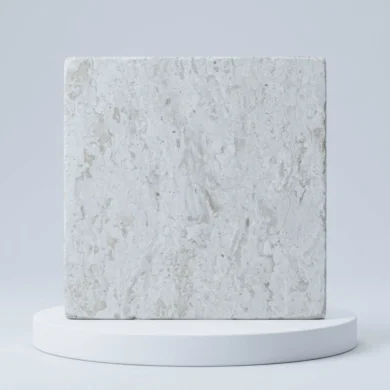
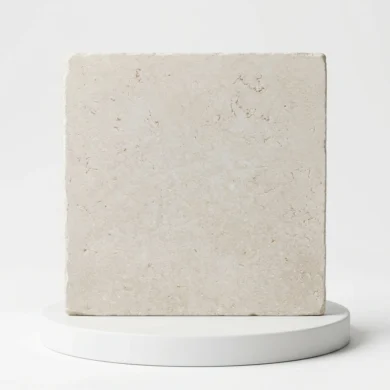
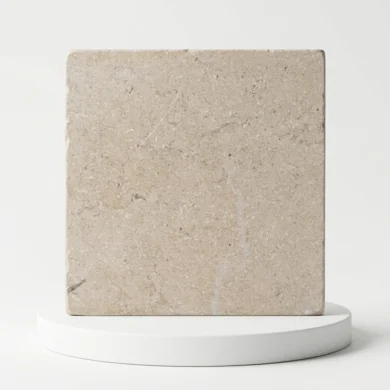
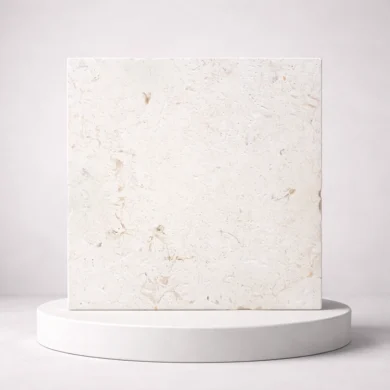
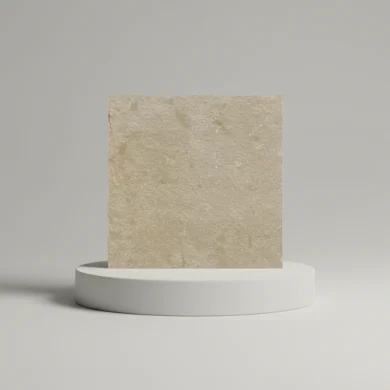
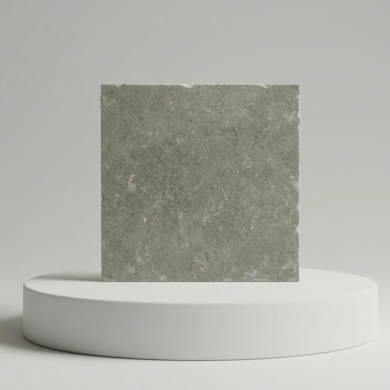
Galala Light limestone from Egypt and Shell White limestone from Turkey are two important pale coloured or white Limestone pavers in Stone Planet’s range. Galala Light generally reads creamish white with relatively restrained natural variation while Shell White sits in Stone Planet’s lighter Turkish collection. Pale paving can visually brighten shaded courtyards and sit cleanly beside darker architecture, timber and warm planting.
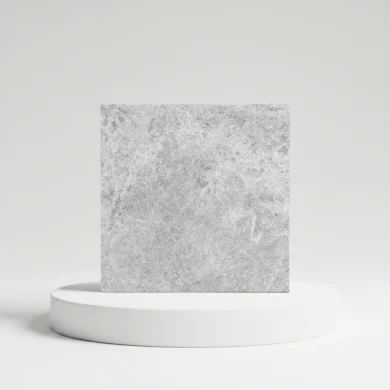
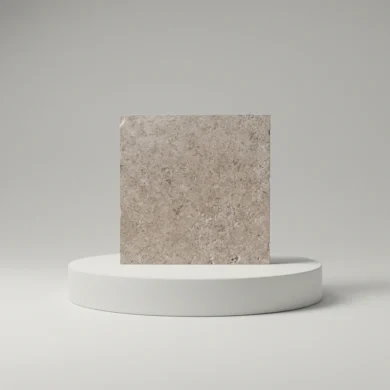
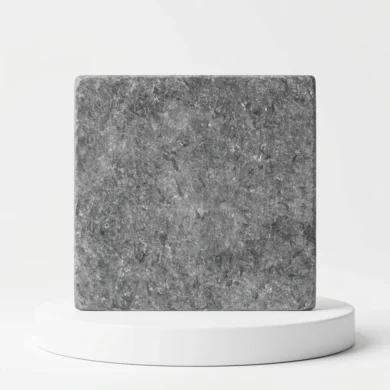
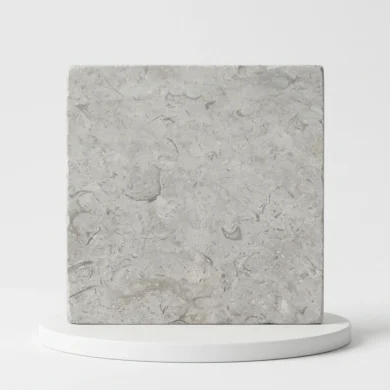
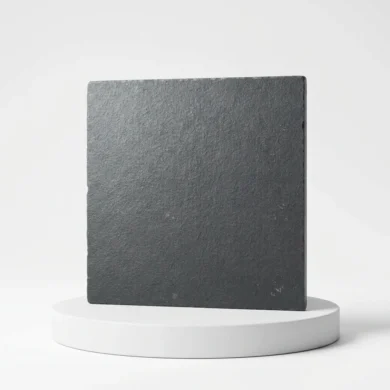
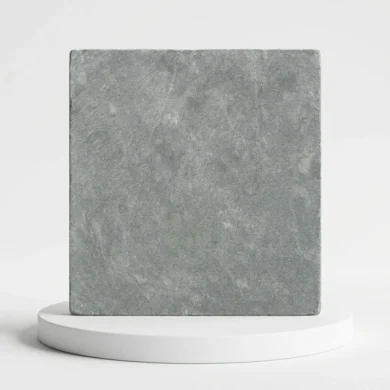
Tundra Grey limestone from Turkey sits at the cooler end and works naturally with contemporary architecture, darker pool interiors and grey-toned cladding. Sinai Pearl limestone from Egypt moves in a warmer, sandy-cream direction and generally shows more fossils and tonal movement than Galala Light, which stays closer to a lighter creamish-white selections. If both Egyptian selections suit the palette, compare their colour, finish and wet appearance in Stone Planet’s Galala Light vs Sinai Pearl Limestone guide.
Before committing a large area to any tone, view representative current material outside and, for pool or exposed areas, wet as well as dry. Limestone can deepen in colour when wet and a showroom sample cannot show how a full paved area will read in the light at your property.
Do not expect every paver in an order to carry identical colour. Every import brings natural variation because the stone comes from a quarry face rather than a manufactured colour batch.
That matters more across a large paved area because the eye reads dozens or hundreds of pieces as one area. A hand sample shows the direction of the stone: its tone, finish and general character but it cannot represent the full range across a large order.
The practical decisions that follow are straightforward:
For a broader pre-order check on quantities, coping, related formats, current material and later-stage requirements, use Stone Planet’s outdoor natural-stone project planning guide.
Finish changes the texture, colour expression, cleaning behaviour and wet slip performance of the surface. Available finishes vary by selection. Honed, sandblasted, tumbled, acid washed, natural split and antique all appear across Stone Planet’s Limestone collection but not every product runs in every finish.
Sandblasting develops a fine, even texture across the face. Compared with a smoother honed surface, that added texture can improve wet slip performance in a comparable product but use the tested stone and finish for the actual rating.
The treatment can also soften the visual colour slightly, so a sandblasted piece may read paler or more muted than a smoother finish of the same stone. Honing creates a smoother, denser visual character. If you are considering a honed outdoor Limestone product, check wet-surface evidence for that exact stone and finish.
Tumbling softens the arrises, so each piece carries a more rounded edge and a less formal joint line. On paving that can make the surface feel older and more relaxed and small dimensional or edge variations are less visually obvious than they would be with a sharp-edged stack-bond layout.
Antique finishes sit in a similar aged-texture family, while natural split leaves more relief in the face of the stone. That stronger relief can suit informal garden paving but dining furniture and chair legs are usually easier on a more even surface.
Set the finish against the use rather than the photograph. A softened, informal edge may suit a garden courtyard; an alfresco dining area usually benefits from a more even surface under furniture.
Do not assign one slip rating to Limestone as a material. Read wet slip evidence at the exact stone-and-finish scope.
Stone Planet holds named wet pendulum results for two sandblasted Limestone selections:
These results apply only to those named stones in the tested finish. They do not make all Limestone P4 or P5 and they do not carry automatically to honed, tumbled or other finishes. Where a project needs formal slip evidence or sign-off, match the documentation to the exact selection and finish you specify.
Size sets the rhythm of the paving and the cutting plan. Thickness follows the support, finished levels and intended use. Both are decisions to settle before the order rather than after the surrounding work is fixed.
Rectangular formats such as 600 × 400mm and 610 × 406mm are common outdoor Limestone paving references. If a project calls for a square format such as 400 × 400mm, confirm it against the actual Limestone product rather than assuming it is available across the whole collection.
Match the format to the area. A large open patio or pool surround can carry a larger paver comfortably and gains a calmer surface with fewer joints. A compact courtyard can end up with awkward perimeter cuts if the module is too large for the real dimensions. Where a standard format cannot resolve the area, Stone Planet can discuss custom sizes, thicknesses and finishes where sourcing and production allow.
European Limestone commonly follows a 610 × 406mm convention. Asian Limestone commonly follows a 600 × 400mm convention. The difference looks small on a specification sheet and becomes important once the module repeats across a paved area.
Ten 610mm pavers cover 6.1 m before joints. Ten 600mm pavers cover 6.0 m. Across 20 modules, the nominal difference compounds to 200mm before joint widths are considered. That can appear as an unplanned cut, a border that no longer lands where expected, or coping and steps that do not line through with the paving.
Where the difference matters most:
Joint width can absorb a small amount of variation but it does not erase the cumulative difference over a long run. Pick one dimensional convention and coordinate it across paving, coping, steps, borders and any later stage you are already planning.
Thickness becomes a levels and support decision before anything else. The paver and paving build together set the finished surface and that surface has to work against door thresholds, existing drainage points, pool coping, step risers and adjoining areas. If you change limestone paver thickness after fixing the surrounding levels, the rest of the build has to absorb that change.
Thickness also changes handling and logistics. A large paving order is a substantial palletised load to deliver, unload and move through a property, so site access and the distance from delivery point to the paving area belong in the planning conversation alongside the price per square metre.
Consider size and thickness together. As paver formats become larger, handling, cutting and support become more important, so choose the two as part of the same project decision rather than independently.
Large limestone pavers give a quieter surface with fewer joints, which suits open pool surrounds, patios and broad courtyards. They also expose more of each individual piece, so the natural range within the stone can read more strongly across the finished area.
Modular layouts, including French Pattern, repeat a group of different sizes as a set. The pattern only closes when the component sizes belong to the same dimensional convention and arrive in the correct proportions. Not every Limestone selection is available as a modular set, so confirm the actual product before designing the whole area around the pattern.
Diagonal layouts, curved pool surrounds and circular features create more cutting and potential wastage than a straightforward rectangular field. Build that into the quantity before laying starts.
Set out from the line people actually look at. On a pool surround that is usually the water’s edge. On a patio it is often the house wall or line of the doors. Work from the visually important line and push awkward cuts towards the least noticeable boundary where the geometry allows.
Avoid narrow sliver cuts at edges and coping. They are visually weak and can be more vulnerable during handling and installation. A small set-out adjustment or a deliberate border course can absorb the difference between the paver module and the real dimensions of the area.
Add a cutting and breakage allowance on top of the measured area and increase it for diagonal layouts, curves and modular patterns because they generate more off-cuts than a simple rectangular field. Where possible, order limestone pool coping, treads and step components with the matching pavers so you coordinate the project within one ordering window and reduce the risk of later-lot mismatch.
Calibration controls stone to a nominal thickness range. Relevant calibrated Stone Planet Limestone products have an approximate stated thickness tolerance of ±2mm. Calibration does not apply to every Limestone product, so check the actual specification.
For a paving quote and set-out, that tolerance gives the installer and buyer a clearer piece-to-piece thickness range to plan around. The final surface still depends on the stone, the paving build, the set-out and the workmanship.
Pavers and tiles are not an indoor versus outdoor split. Both Limestone formats can be used outside when the actual product and project support the use. The practical distinction is the format, thickness and installation approach you are designing around.
For exterior projects using Limestone tiles, Stone Planet treats the tile format as bonded flooring over a prepared rigid substrate. For Limestone pavers, start with the paver format, support, paving bed or base and paver thickness.
An existing concrete slab does not automatically make a tile the only option. You can also consider a 20mm Limestone paver where concrete supports the stone, the finished levels suit it and the area does not take much heavy-vehicle loading.
Start with the build in front of you:
The same Limestone selection may appear in more than one format. Treat this as a build and product decision rather than an indoor-versus-outdoor rule.
30mm is Stone Planet’s normal Limestone paver thickness and the usual standard paver across its Limestone paving range.
That makes 30mm the normal comparison point when you plan finished levels, handling and support. Choose the paving build from the actual project rather than assuming thickness alone determines vehicle or structural use.
20mm becomes worth discussing when two things line up: what supports the stone underneath and what the area will be used for.
Where concrete supports the Limestone and the area does not take much heavy-vehicle loading, Stone Planet can consider 20mm. Finished levels are another common reason to raise it. An existing slab, door threshold or adjoining surface may leave limited depth and 20mm can sometimes fit the available build more comfortably than 30mm.
Use 20mm for the right reason:
For vehicle areas, we usually suggest limestone cobblestone pavers while Limestone paver options remain available for suitable projects.
For a Limestone driveway, start with the actual product, expected vehicle use and construction beneath the stone. Thickness alone does not prove driveway suitability. A residential driveway used by passenger cars presents a different brief from regular delivery vehicles, caravan access or a commercial crossover.
Colour and finish matter too. On a pale Limestone driveway, think about how visible tyre marking, oil or general vehicle-area dirt may be and how much routine cleaning you are comfortable with.
If the vehicle area is the main decision, compare Stone Planet’s driveway material and format options and cobblestone formats. For a deeper look at how Stone Planet chooses cobbles for driveways, paths and borders, read the cobblestone selection guide. Limestone driveway pavers can still coordinate through paths, entries and garden areas around the driveway.
It is quite common to run the same Limestone across the paving, pool coping and steps or treads. Using one Limestone product across all three creates a coordinated material direction from the paved area to the water’s edge and the steps.
Coordinate those formats before ordering because each one needs a different product specification. Coping needs an edge profile, treads have their own dimensions and edge treatment and pavers follow the main paving module.
Settle these before you finalise the order:
Compare the available edge profiles in pool coping and the step components in treads and risers. Do not expect exact matching between separate imports or later production lots, which is why ordering the components together matters.
Limestone Bullnose pavers are pool coping pieces with a rounded edge on the longer or shorter side. The curved profile gives the pool perimeter a softer edge while allowing the Limestone used through the surrounding paving to continue through to the waterline.
Stone Planet’s Bullnose coping profile uses a 30mm thickness on the longer edge (one side) with the overall coping dimensions depending on the selected product. When matching Bullnose coping with Limestone pavers, choose the stone and finish together so the pool edge feels like part of the same paving design rather than a separate material added later.
Limestone Pencil Edge pavers use a smaller, lightly rounded exposed edge, creating a cleaner and more restrained pool-edge profile than a full Bullnose. This profile works well when the design calls for a sharper architectural line while still avoiding a completely square exposed edge.
Stone Planet’s Pencil Edge coping profile also uses a 30mm thickness, while length and width remain product-specific. If the same Limestone continues across the pool surround, coordinate the Pencil Edge pieces with the paving, sizes and any adjoining steps before ordering.
Limestone Drop Edge pavers, also called Rebated Edge coping, use a vertical drop or downstand at the exposed pool edge. The deeper face creates a more substantial visual edge than Bullnose or Pencil Edge coping and can give the pool perimeter a stronger architectural finish.
Drop Edge profiles vary by product. Stone Planet’s confirmed coping collection includes examples such as 40/20 mm, 60/30 mm and 70/30 mm profiles, so the correct drop depth should be selected from the actual Limestone coping product and pool design rather than treated as one standard dimension.
Bullnose, Pencil Edge and Drop Edge each create a different pool-edge appearance, but the best result comes from planning the coping with the Limestone paving rather than choosing it afterwards. Explore Stone Planet’s natural stone pool coping options when comparing the profile, dimensions and adjoining paving for the project.
Regular pavers, crazy paving and cobblestones are three different physical formats. The right choice usually comes down to the geometry of the area, the look you want, the set-out and the installation approach.
Regular Limestone pavers give you a repeating design so you can plan quantities and joint lines before delivery. With Limestone Crazy Paving, the installer fits loose irregular pieces across the area. That format follows curves and organic shapes without forcing a rectangular module through them but the layout and jointing approach differ.
Compare both, the stone supply and the installed approach before choosing the format. A regular limestone paver may simplify a rectilinear pool surround or patio; limestone crazy paving may make more sense where the design deliberately wants irregular geometry.
Cobblestones use small-format units. Stone Planet supplies them loose or on mesh. They create a denser joint pattern and a more textured visual field than large regular pavers. We also prefer referring cobblestone formats before moving to large pavers for areas with vehicular traffic.
An area of large Limestone pavers gives a calmer surface with fewer joints. A limestone cobblestone installation gives a smaller scale and a more traditional or detailed texture. Many projects also combine them: a paver with a cobble border, a cobble band marking a transition, or cobbles through the vehicle area with Limestone pavers continuing into paths and landscape zones.
Turkish Limestone has had strong recognition in imported Limestone paving and selections such as Tundra Grey and Shell White remain important options. In Stone Planet’s more recent sourcing and customer experience, Egyptian limestone paver alternatives such as Galala Light and Sinai Pearl have become increasingly important in paving projects.
That shift broadens the choice; it does not make Egyptian Limestone automatically better and Turkish Limestone remains an active part of Stone Planet’s paving range.
Country of origin is a useful shorthand and a poor specification. Egypt and Turkey each cover multiple quarries and stone characteristics and the finished result also depends on the selection, processing, finish, size and thickness. Compare the actual stone and project requirements before comparing countries. The wider Limestone range also includes selections sourced from Vietnam, Morocco and India.
Outdoor Limestone is straightforward to maintain when you use cleaning products suited to this calcareous natural stone.
Sweep or blow loose grit and debris off regularly. Abrasive dirt underfoot can wear the surface over time, particularly in high-traffic paths and entertaining areas.
For routine cleaning, start with water and a soft broom. Where more is needed, use a pH-neutral cleaner made for natural stone.
Keep acidic products away from Limestone. Acid can etch a calcareous stone surface and dull the finish, so avoid vinegar and aggressive acid-based paving, masonry or bathroom cleaners unless the cleaner specifically states that it suits the installed Limestone.
Deal with spills reasonably promptly. Barbecue oil, wine, leaf tannin, soil and general outdoor grime can sit on paving longer than they would indoors and earlier cleaning usually makes them easier to remove.
Use pressure washing cautiously and follow the stone, jointing and sealer guidance for the installed system. Aggressive pressure at close range can damage a stone surface or disturb jointing.
Stone Planet bases resealing on the stone, finish, exposure and sealer rather than one fixed calendar interval. Follow the guidance for the actual sealer and installed paving.
There is no single fixed price per sqm for Limestone pavers. Two Limestone paving options can look similar in a photo and still price differently after you match the selection, size, thickness, finish and quantity.
Compare like with like: the exact stone, size, thickness and finish at the quantity and delivery location you need. Do not use the price of a tile or another Limestone format as the benchmark for the paver you are buying.
The stone is one line in a paving budget. Installed cost can also include excavation or preparation, the base or support, bedding or fixing materials, labour, cutting and wastage, edge restraints, drainage, jointing, sealing and site access.
Layout changes labour too. Straight rectangular paving is a different job from diagonal layouts, curved pool surrounds, modular patterns, crazy paving or detailed cobble work. The more cutting, fitting and transitions the design creates, the more the installed comparison can move away from a simple supply price per square metre.
When two quotes land far apart, check what each includes before deciding the stone is the difference. One may include coping, step components, delivery or other project items while another prices field paving alone.
Get the following clear before you commit a whole outdoor area to a product or get limestone pavers on sale :
If you are still weighing Limestone against other natural stones in the same format, compare the wider natural stone pavers collection before finalising the material.
Residential buyers usually pave a particular project once. Use samples to shortlist the colour and finish then review current material before committing to a large area. Plan the full quantity, coping, steps and sensible spare pieces at the same time.
Commercial and multi-residential projects add more coordination. Specifiers may need documented evidence at the exact stone and finish scope rather than a general material claim. Larger fields show more natural range, so lot planning and blending matter more. Raise delivery, site access, replacement stock strategy and component coordination during quoting rather than after the first delivery.
Buy Limestone Pavers in premium quality at Stone Planet for all projects.
Stone Planet imports Limestone and supplies Limestone pavers wholesale in Australia. The broader Limestone collection draws on Egypt, Turkey, Vietnam, Morocco and India.
Stone Planet uses its own factories in Denizli, Turkey and Rajasthan, India alongside selected partner factories. The factory or partner used varies with the actual selection and source. This makes us an ideal Limestone paver importer and wholesale supplier in Sydney, Brisbane and Melbourne.
That sourcing and production network lets Stone Planet coordinate size, thickness, finish and related components as one paving requirement. We can also discuss custom sizes, thicknesses and finishes where sourcing and production allow.
Stone Planet supplies homeowners, builders, landscapers and stone resellers including Limestone paving projects in Sydney, Melbourne, Brisbane and Newcastle with Australia wide delivery available.
Trade and project buyers generally benefit from settling the selection, sizes, quantity, coping requirement and steps together rather than treating them as separate orders.
30mm is Stone Planet's normal Limestone paver thickness. Stone Planet can consider a 20mm option where concrete supports the stone and the area does not take much heavy-vehicle loading, subject to the actual product and paving build.
Slip resistance belongs to a particular stone in a particular finish rather than to Limestone as a material. Stone Planet holds a P4 wet pendulum result for Sandblasted Tundra Grey and a P5 result for Sandblasted Sinai Pearl. Match the evidence to the exact selection and finish you plan to use.
You can consider Limestone pavers over concrete where the actual product, levels and paving system suit the project. An existing slab is also where a 20mm Limestone paver may come into the discussion but thickness alone does not define the installation.
Not exactly. Natural Limestone varies and separate production lots can differ. Order the full area, cuts and coordinated coping or step components together where possible and keep spare pieces if future repairs are likely.
Lighter paving generally absorbs less solar heat than very dark stone and can feel more comfortable underfoot in strong sun. The actual surface temperature still changes with the stone, finish, direct sun and site conditions.
Yes. Stone Planet customers commonly coordinate the same Limestone selection across those components. Quote and order them together so you consider the module, finish and natural colour range as one project.
600 × 400mm and 610 × 406mm are two common Limestone paving conventions, with European Limestone commonly using 610 × 406 and Asian Limestone commonly using 600 × 400. They are not interchangeable and exact availability depends on the actual selection.
Stone Planet's normal guidance for horizontal natural stone is to seal or dip-seal clean stone on all sides before installation, then clean the installed paving and reseal the exposed top surface. Choose the actual sealer and ongoing resealing approach for the stone, finish, exposure and installed system rather than one fixed calendar interval.
Add a cutting and breakage allowance above the measured area and increase it for diagonal layouts, curves, borders and modular patterns because they create more off-cuts than a simple rectangular field.
Stone Planet can discuss custom sizes, thicknesses and finishes where sourcing and production allow. Raise them early because they affect the set-out, component coordination and production planning.
Some Limestone products are. For a calibrated product, Stone Planet's relevant stated tolerance is approximately ±2mm. Confirm calibration and tolerance against the specific paver being quoted.