If you’ve been scrolling through home renovation blogs or wandering through display homes lately, you’ve likely seen a particular type of stone popping up everywhere. It has a soft, earthy look, interesting textures, and a way of making a backyard look like a luxury Mediterranean resort.
That stone is Travertine, and it’s currently one of the most popular choices for Australian homeowners. But before you dive into a renovation, it’s worth understanding exactly what you’re putting in your home.
What is Travertine?
To put it simply, Travertine is a type of natural limestone. However, it isn’t formed just anywhere; it’s created by mineral springs, especially hot springs. As the water moves and evaporates, it leaves behind minerals that harden into stone over thousands of years.
The most distinct feature of this stone is the tiny holes and pits on its surface. These were caused by carbon dioxide bubbles trapped during the stone’s formation. In many cases, these holes are filled at the factory to create a smooth surface, but they can also be left open for a more “rustic” or organic look.
Bringing the Outdoors In: Travertine Tile Flooring
One of the best ways to use this material is through travertine tile flooring. Unlike ceramic or porcelain tiles that are printed in a factory, every single travertine stone tile is unique. You’ll get a mix of shades, swirls, and patterns that no one else has.
Because it’s a natural stone, it stays relatively cool underfoot, which is a massive win during a scorching Australian summer. It also adds a sense of “minimalist luxury” to a living room or kitchen. If you want a home that feels bright, airy, and high-end without being too “flashy,” this is the way to go.
The Modern Choice: Grey Travertine Tiles
While most people picture Travertine in beige or tan tones (often called “Classic” or “Ivory”), there has been a huge shift toward grey travertine tiles.
Silver or grey varieties offer a more contemporary, “architectural” feel. They pair beautifully with modern Australian architecture—think charcoal window frames, timber accents, and native green gardens. Grey shades are also fantastic at hiding a bit of dust or footprints, making them a practical choice for busy families.
Making a Splash: Travertine Pavers for Pools
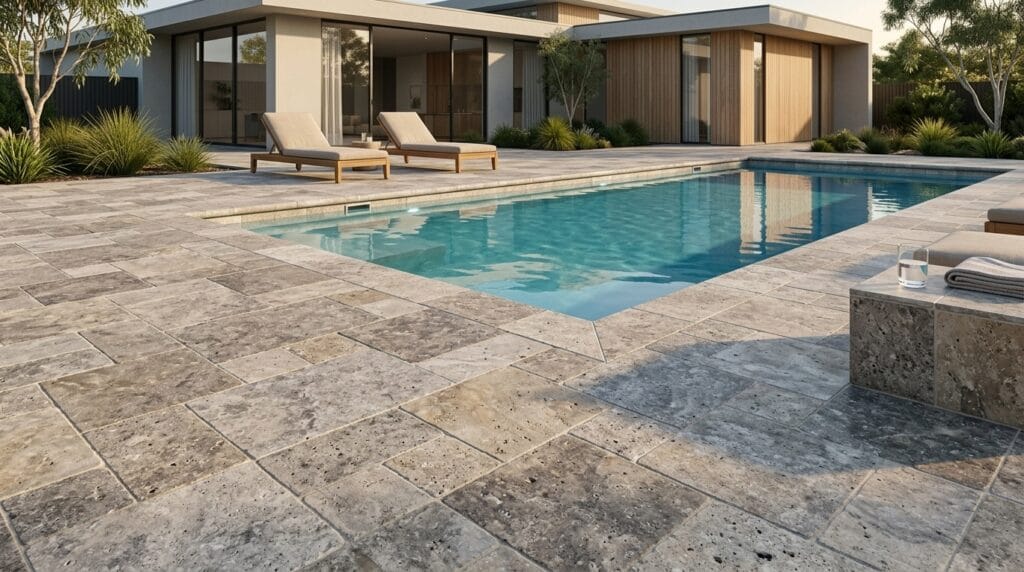
If you are looking to renovate your outdoor space, you’ll find that travertine pavers for pools are the gold standard. There are two main reasons for this:
- Heat Resistance: Unlike dark concrete or brick pavers, Travertine doesn’t absorb as much heat. You can walk from the back door to the pool without burning your soles.
- Texture and Grip: When finished correctly (usually “tumbled” or “unfilled”), Travertine provides excellent slip resistance, which is vital for wet areas.
How to Look After Your Stone
Travertine is incredibly durable, but it does require a little bit of love. Because it’s a “porous” stone (meaning it has tiny microscopic pores), it’s important to have it sealed after installation. This prevents liquids like red wine or pool chemicals from soaking in and leaving a stain.
For daily cleaning, skip the harsh chemicals. A simple bucket of warm water and a pH-neutral cleaner will keep the stone looking fresh for decades.
Final Thoughts
Whether you are looking for a sleek indoor floor or a rugged outdoor patio, Travertine offers a blend of durability and beauty that’s hard to beat. It’s a bit of an investment, but considering it can last a lifetime and adds significant value to your property, it’s a choice you likely won’t regret.