Natural Stone Supplier Brisbane
Natural Stone Supplier Brisbane Stone Planet supplies and sells natural stone throughout Brisbane, from the Southside through to the Northside…
View Details
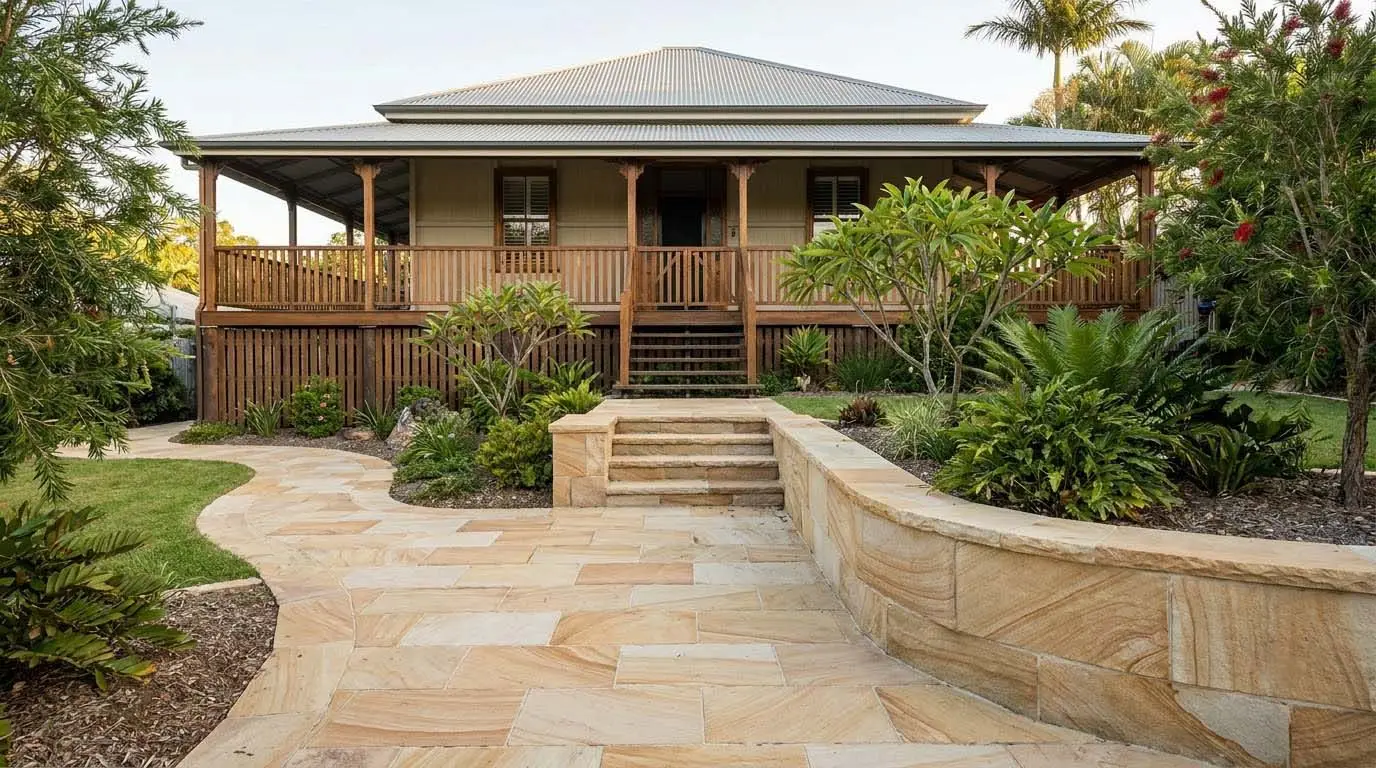
Pool surrounds and walls are the biggest application area we supply for in Queensland. Sedimentary stones at 30mm with matched bullnose coping has bee the best seller for many years.
Are you in Brisbane? Go to our Brisbane page. It covers many suburbs in detail.
Everywhere else, keep reading.
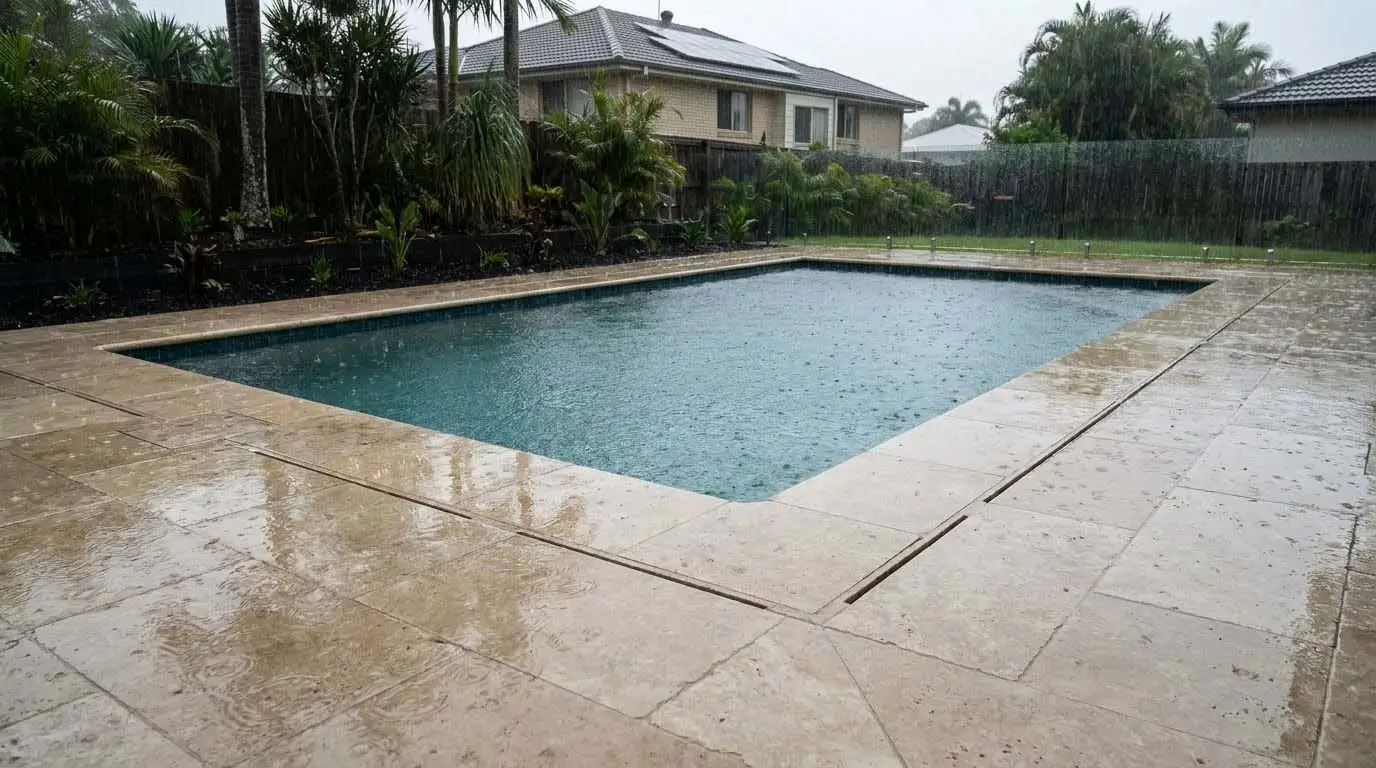
Subtropical. Humid year round, with a storm season running through summer.
Three things decide a job here. Drainage sized for storm volume rather than average rainfall, because a Gold Coast storm can drop more in an hour than some places get in a month. A textured finish, because shaded paving grows algae in this humidity. And pale stone anywhere people walk barefoot, since dark surfaces in full Queensland sun pass 60°C.
Areas: Southport, Surfers Paradise, Coomera, Pimpama, Yatala, Mountain Creek, Ipswich.
Cairns takes around 2,000mm of rain a year, most of it between November and April. A monsoon event can drop several hundred millimetres in a day.
That volume washes out bedding and undermines paving from below. The surface can look sound while sitting over a void. Edge restraint and a stable base matter more here than the choice of stone.
The far north also sits in a cyclone-prone region, where unrestrained material becomes debris. Requirements come from the structural design for your property.
Areas: Cairns.
Ipswich runs several degrees above coastal Brisbane, with less sea breeze and 40°C days in summer. Surface temperature and dust drive the decisions rather than humidity.
Areas: Ipswich.
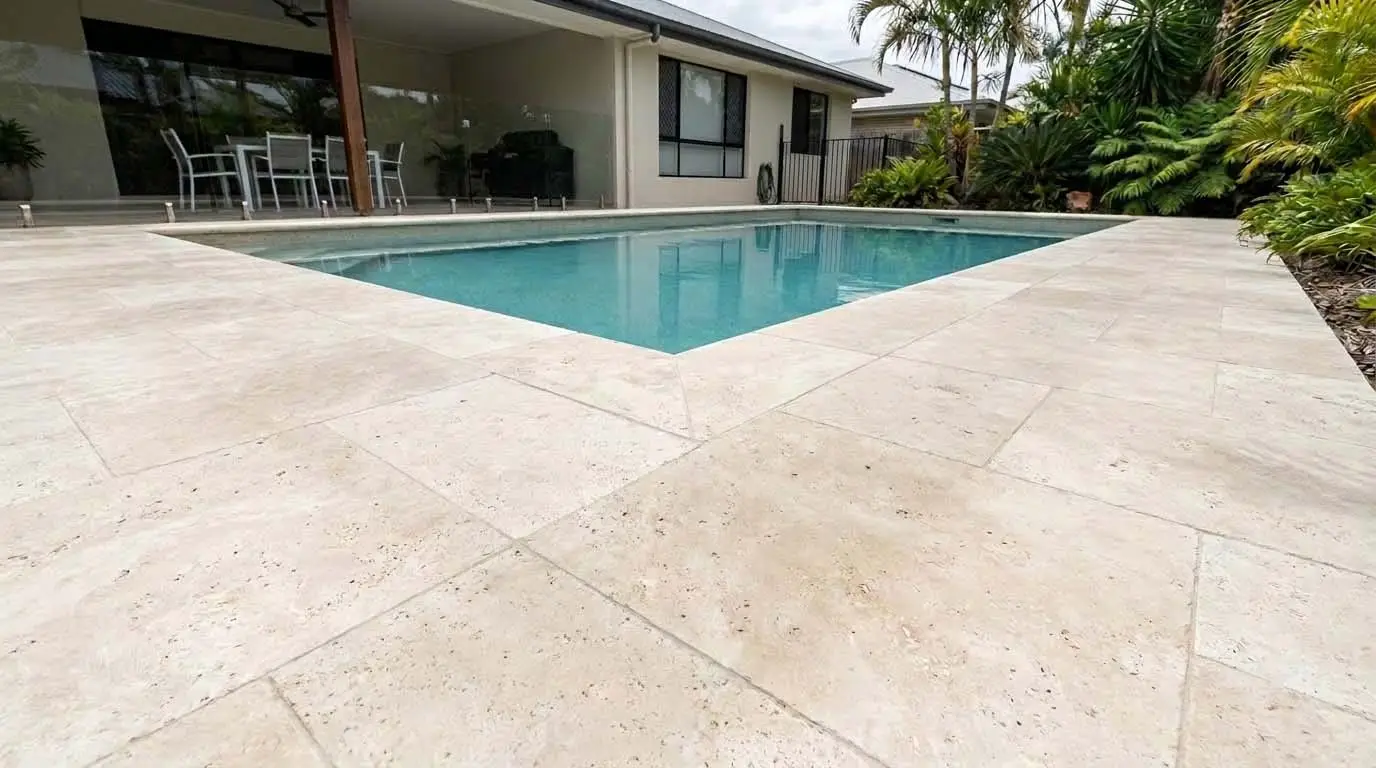
The most used stone in the state. Honed and unfilled leaves the natural voids open, which grips a wet foot on a pool edge. Pale, so it sits well below dark stone in surface temperature. Supplied in 30mm pavers and 12mm tiles.
→ Travertine pavers, travertine tiles
Under 0.5% absorption, and the hardest wearing stone we stock. Driveways, high traffic areas, and low-lying bayside blocks where salt water reaches on a king tide.
→ Granite pavers, granite tiles
Queensland is hilly, so retaining and terracing take a bigger share of our supply here than in NSW or Victoria. Walls above about one metre generally need approval and engineering.
→ Natural stone walling, stacked stone walling, free style walling
Absorption 2% to 6%. Alfresco and indoor floors, with the same pale advantage as travertine.
→ Limestone pavers, limestone tiles
Garden walling, terracing and character-home paths. Suits Queenslanders and pre-1947 brick.
→ Sandstone pavers
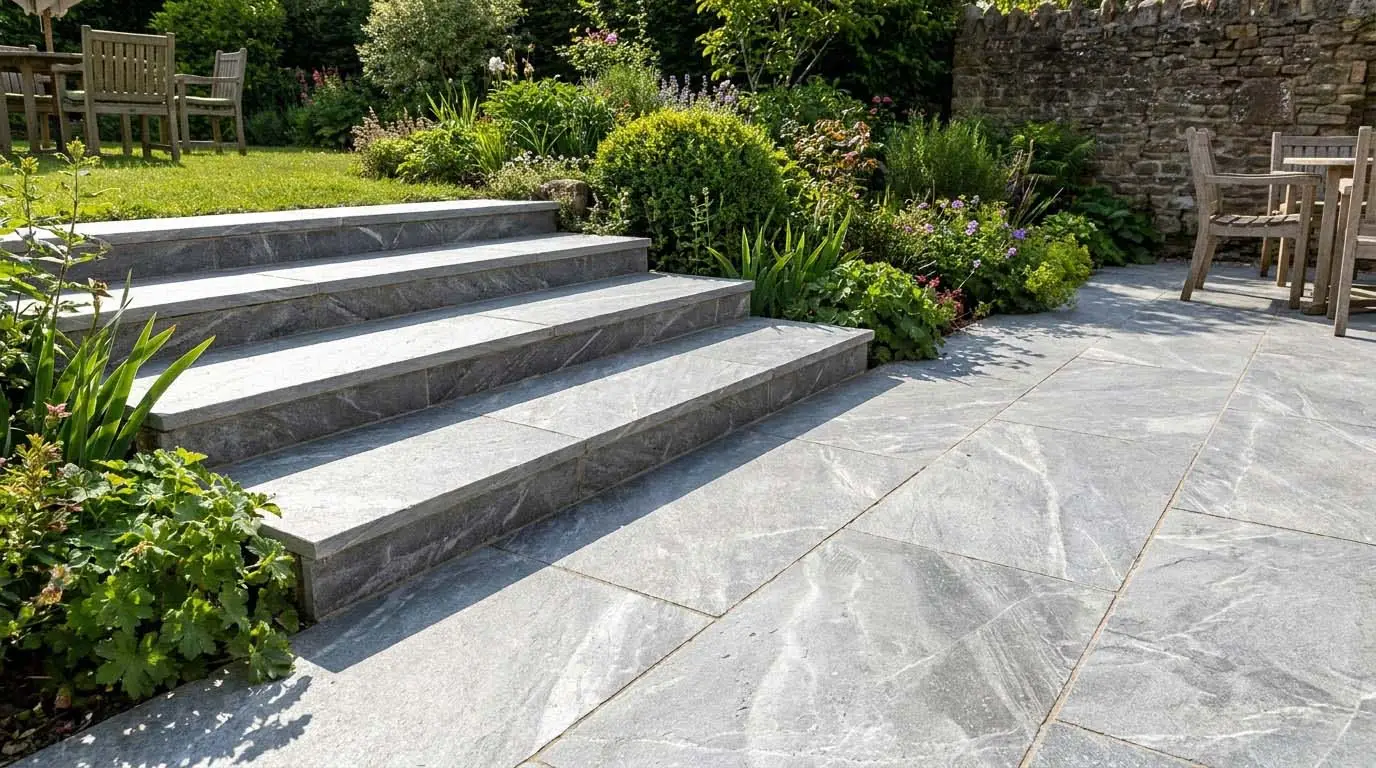
Paths, shaded courtyards and cooking zones. Keep it out of full sun where people stand barefoot.
→ Bluestone pavers
Outdoor kitchens are common here. Granite takes barbecue heat and does not etch from lemon juice or wine. Marble is calcium based and does etch. Engineered stone benchtops have not been available in Australia since the mid-2024 ban over silicosis risk. → Carindale
→ Granite tiles, marble tiles
Tiles at 12mm. Indoor floors and covered areas. Outdoor areas with a slab
Pavers at 30mm. Outdoor paving, roughly 75kg to 85kg per square metre.
Pool coping. Bullnose, pencil nose and drop face, matched to the deck paver. The most requested item in this state.
Cobblestones at 100×100 in multiple thicknesses. Loose cobbles are also high in demand in Queensland and its suburbs. Driveways, acreage entrances and permeable installs, which cut the load on drainage during a storm.
Crazy paving. Suits Queenslanders and character homes.
Walling. Stacked stone, ledge stone and free style.
Honed and unfilled for pool edges. Flamed or exfoliated for driveways and slopes. Filled and honed indoors. Ask for P4 or P5 under AS 4586 on anything wet, and check the certificate covers the finish supplied.
Pool safety certificates. Queensland runs its own approval system and a certificate is required when a property with a pool is sold or leased. Barrier rules include non-climbable zone requirements. A raised planter or stacked stone feature near a fence can fail an inspection after it is built which is almost common in every state.
Termite management. Queensland is high risk. Termite systems rely on a visible slab edge, commonly around 75mm exposed above finished ground level. Paving that buries it can defeat the system and affect your warranty. Ask a licensed pest inspector before you set levels. → Chermside
Retaining walls. Approval and engineering generally apply above about one meter. A driveway or pool above a wall can bring a lower wall into scope.
Acid sulfate soils. Coastal lowland soils contain iron sulfides that produce sulfuric acid when excavated and exposed to air. Disturbance is regulated. Shallow paving rarely goes deep enough, but a pool excavation does. → Wynnum
Cyclone and bushfire. Both are assessed per property.
Our warehouse is at Richlands, 4077 and Yatala.
On sloping blocks and acreage, tell us the access at order time. A pallet at 1.2 tonnes cannot sit on a slope.
Trade accounts get pallet pricing rather than retail rates. We can import any stone if you give us ample time for production and import. This suits volume-builder work through the Coomera and Pimpama corridor. Coomera