
Australia banned a defined category of engineered stone benchtops, panels and slabs. It did not ban natural stone, instead gave it a boost.
That distinction matters, but natural stone is not automatically silica-free as well. Being natural does not remove the need to control respirable crystalline silica when silica containing stone is mechanically processed.
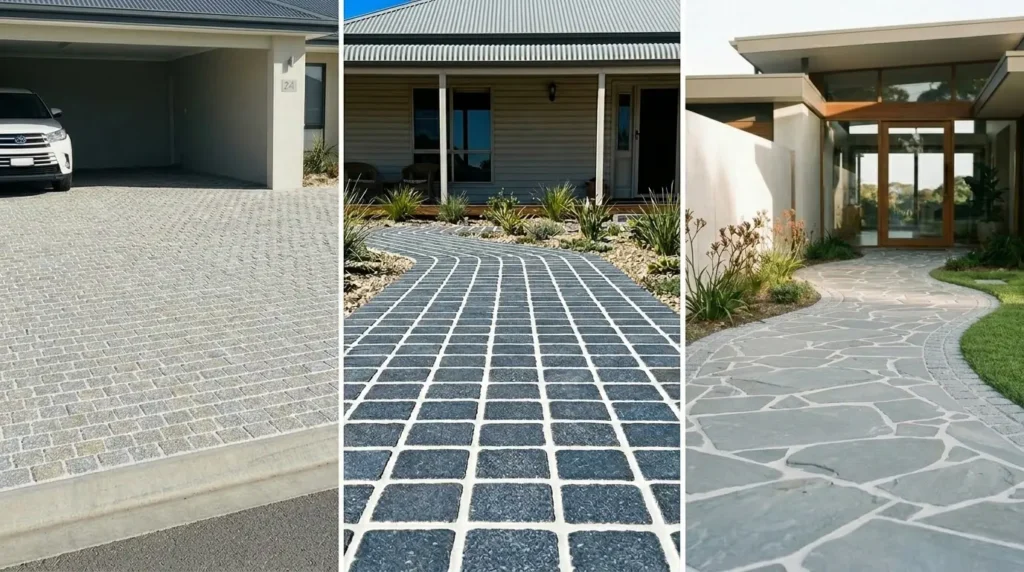
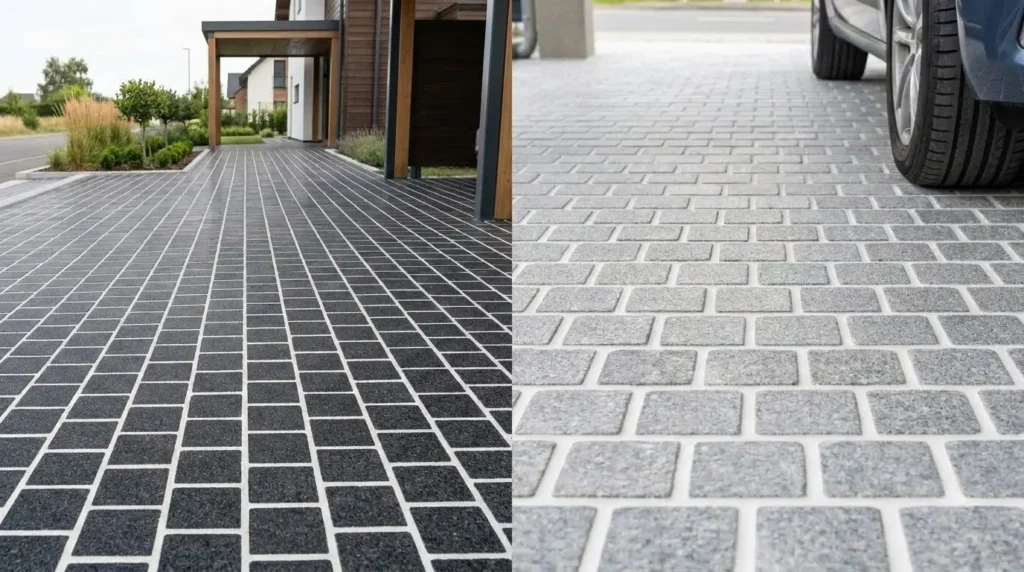
Stone Planet supplies natural stones for paving, stone tiles, coping, cobblestones, walling and related outdoor applications rather than benchtops. Since the ban on engineered stone, we have seen more homeowners and tradesmen asking what the ban means for natural stone, whether particular stones contain crystalline silica and if test reports validating that can be provided.
What Did Australia Actually Ban?
From 1 July 2024, Australia prohibited work involving the manufacture, supply, processing or installation of engineered stone benchtops, panels and slabs. Safe Work Australia defines engineered stone for the model WHS Regulations as an artificial product that contains at least 1% crystalline silica by weight, is created by combining natural stone materials with other chemical constituents such as water, resins or pigments, and becomes hardened.
The prohibition is therefore not a blanket ban on every building material containing crystalline silica.
The rules specifically exclude a number of products from the engineered stone definition, including concrete and cement products , bricks and similar stone pavers or blocks, ceramic tiles, qualifying sintered stone and porcelain products, roof tiles, grout, mortar, render and plasterboard.
A separate import prohibition for engineered stone benchtops, panels and slabs commenced on 1 January 2025.
WHS requirements are implemented through Commonwealth, state and territory laws, and Safe Work Australia notes that some details can vary between jurisdictions. Businesses with a specific compliance question should therefore check the requirements of their relevant WHS regulator.
Was Natural Stone Banned?
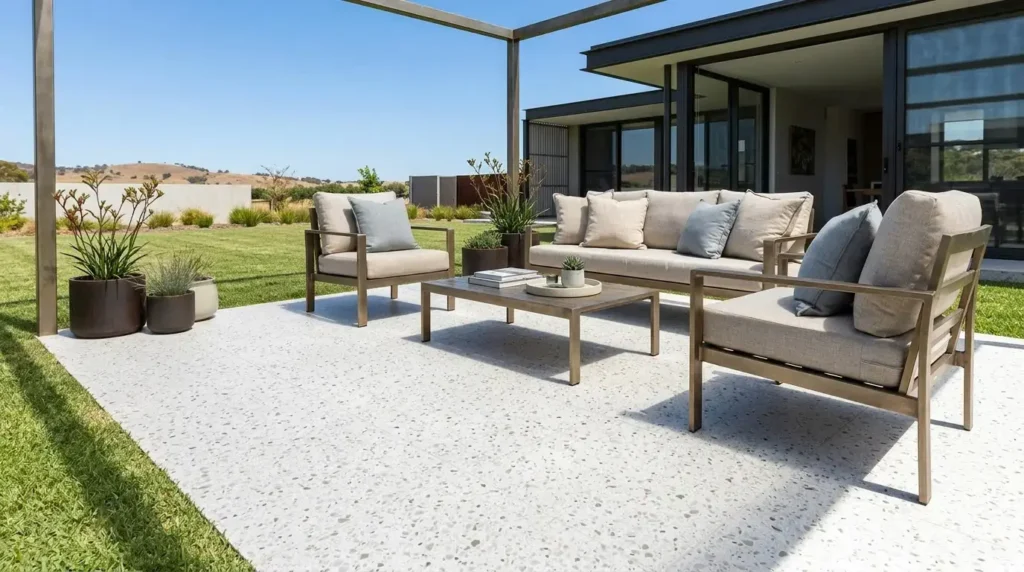
No. Natural stone products do not fall under the engineered stone product category targeted by the prohibition. Natural stone continues to be used for pavers, tiles, coping tiles, wall cladding and other building and landscaping applications in Australia.
However, It does not prove that a particular natural stone contains zero silica and it does not remove workplace obligations where processing of silica containing material can generate hazardous dust.

Why Was Engineered Stone Banned?
The prohibition was introduced in response to serious health risks associated to the workers with exposure to the respirable crystalline silica or RCS which is generated during the processing of engineered stone.
Safe Work Australia states that RCS can penetrate deep into the lungs and cause irreversible lung damage. Cutting, grinding, drilling, polishing and similar mechanical processing are the types of activities that can generate silica-containing dust.
This is an important distinction for homeowners as well as trades. The health concern is primarily about dust exposure during processing, not simply the existence of an undisturbed finished surface in a home or outdoor area.

Natural Stone Is Not the Same as Silica-Free Stone
Four different ideas are often collapsed into one conversation.
- Natural stone describes the origin of the material. It is a natural quarried material rather than an engineered composite.
- Crystalline silica content describes part of a material’s composition. Different natural stones can contain different amounts, and the commercial material name alone should not be used to assign a specific percentage.
- Respirable crystalline silica describes the fine airborne fraction of silica-containing dust capable of being inhaled deep into the lungs when that material is processed.
- The engineered stone prohibition is a regulatory rule applying to a specifically defined category of engineered stone benchtops, panels and slabs.
Those are separate questions. A material can be natural stone and still contain crystalline silica. A product can be outside the engineered stone prohibition without containing zero silica.
And a material being described as “low silica” does not by itself answer what controls are required when that material is mechanically processed.

Three Different Checks, Three Different Answers
For a natural stone project after the engineered stone ban, it is useful to separate three checks.
1. Is the product prohibited?
That is a regulatory-definition question.
2. What does the relevant crystalline-silica evidence show?
That is a product and testing question.
3. How will the material be processed?
That is a workplace-safety and project-execution question.
Passing one check does not answer the other two.
A natural stone product being permitted for sale, for example, does not automatically tell you its crystalline silica content. A low reported silica result also does not tell you how a contractor should manage a particular cutting or grinding task.

Does Natural Stone Contain Silica?
It can. There is no single crystalline-silica percentage that should be assigned to all natural stone, or even automatically to every product carrying the same broad material label.
This is why Stone Planet does not recommend relying on generic tables saying that every Marble, Limestone, Granite or Sandstone has one fixed silica percentage.
Where crystalline silica content matters to a project or specification, ask for relevant product-specific test information.
Stone Planet commissions silica testing on products from time to time. Where testing is available, the report should be considered in relation to the stone or sample it actually covers rather than transferred automatically to another product because the commercial material name appears similar.
Useful details to check include the product or sample identification, laboratory or report reference, date of testing, reported result and whether the information corresponds to the product currently being considered.
What Changed for Other Silica-Containing Materials?
The engineered stone prohibition was not the end of Australia’s silica reforms.
Amendments to the model WHS Regulations commencing from 1 September 2024 introduced stronger regulation for work involving crystalline silica substances containing at least 1% crystalline silica. Safe Work Australia describes these requirements as applying more broadly across materials and industries, rather than only to prohibited engineered stone.
That distinction is important: the engineered stone rules prohibit a defined product category; the broader crystalline silica rules regulate certain work with silica-containing materials.
Natural stone can therefore be legal to supply and install while workplace requirements still apply when it is mechanically processed. The precise requirements should be checked against the applicable WHS law and regulator for the jurisdiction where the work is being carried out.
What Stone Planet Has Seen Since the Ban
Stone Planet has seen increased interest in natural stone from customers and trades following the engineered stone changes.
That is our experience, not a national market statistic.
What has changed most noticeably is the type of question we receive. Customers now ask more often:
- Does this natural stone contain silica?
- How much silica has been reported for this product?
- Is this stone affected by the engineered stone ban?
- Do you have testing available for it?
We also see customers and trades actively looking for stones with lower or no reported crystalline silica where that forms part of their material-selection criteria.
Stone Planet does not supply benchtops and does not operate an Australian stone fabrication workshop. We sell and distribute natural-stone products, so our role is to provide accurate product information where available rather than pretend to replace the WHS responsibilities of the businesses carrying out cutting or fabrication.
Why Product-Specific Silica Testing Matters
A silica result is only useful when you understand what was tested.
A test performed on one Stone Planet product is evidence relating to that test sample and report. It should not automatically be applied to an unrelated product – or turned into a blanket percentage for an entire natural-stone category.
This creates a simple rule:
If silica content matters to your specification, match the evidence to the product being considered.
Where information is available, ask what product or sample the report refers to, when it was tested and whether it is relevant to the current material being offered.
Don’t Ask Only “Is It Natural Stone?”
For buyers, builders and specifiers, a better sequence is:
- What is the actual material and product?
- Is that product within the engineered stone prohibition?
- Is relevant product-specific crystalline-silica information available?
- Which product or sample does the report actually cover?
- Will the stone need cutting, drilling, grinding or other mechanical processing?
- Who is responsible for that work and the WHS controls that apply to it?
The first four are material-selection questions.
The last two become workplace questions once somebody starts mechanically processing the stone.
Keeping those responsibilities separate leads to much better decisions than assuming “natural stone” is itself a safety classification.
What About Cutting Natural Stone?
Natural origin does not make stone dust harmless.
Cutting, grinding, drilling, polishing or crushing silica-containing stone can generate dust that needs to be properly controlled. Safe Work Australia guidance recognises engineering controls including effective wet cutting or water suppression, on-tool dust extraction and local exhaust ventilation.
Respiratory protection can also form part of the control system where required, but it should not be presented as a substitute for effective engineering controls. Safe Work Australia’s crystalline-silica guidance sets out broader responsibilities around controlled processing, risk assessment and other measures depending on the work being undertaken.
Stone Planet’s trade customers are generally experienced installers. Their practical enquiries to us are more commonly about the material itself and whether their existing tooling is appropriate for it – for example, whether the equipment they have is suited to the stone they plan to cut.
The contractor carrying out the work remains responsible for understanding and complying with the WHS requirements applicable to that task.
What Does This Mean for an Installed Floor, Patio or Pool Surround?
The silica issue discussed here concerns hazardous airborne dust generated during processing.
It should not be interpreted as meaning that someone simply walking across installed natural-stone paving is experiencing the same exposure scenario as a worker cutting stone.
Safe Work Australia makes a similar distinction for legacy engineered stone already installed in homes and workplaces. Its current guidance says available evidence suggests installed engineered stone does not pose a safety risk while it remains unprocessed; risks can arise if dust is generated during repair, modification, removal or disposal.
That does not mean homeowners should attempt such work themselves. Safe Work Australia advises using qualified trades for work involving legacy engineered stone, and permitted processing is subject to specific controls and, in most jurisdictions, notification requirements.
How Stone Planet Sources and Supplies Natural Stone
Stone Planet receives and distributes natural stone in Australia rather than operating an Australian fabrication workshop.
Because much of the cutting and finishing takes place before the products reach us, our sourcing checks include the processing practices used by factories we work with.
In our factory relationships, we expect stone processing practices such as wet processing, water-fed dust suppression or extraction, appropriate PPE and clean processing procedures around machinery.
These expectations align broadly with recognised dust-control principles such as wet suppression and extraction identified by Safe Work Australia.
We do not claim that these practices guarantee zero exposure, nor do we turn those observations into an unsupported statement that every part of a supply chain is independently ethically certified. They are practical worker-safety practices we expect to see when stone is being processed.
What Does the Engineered Stone Ban Mean When Choosing Natural Stone?
The engineered stone changes have made buyers and trades more conscious of what is actually in the materials they specify.
We see that as useful when it leads to better questions, product specific evidence and responsible processing rather than replacing one oversimplification with another.
Natural stone is silica free is not true. Instead, choose natural stone first according to the requirements of the actual project: application, stone selection, format, finish, available thickness, natural variation and relevant technical specification.
If crystalline silica content is important to the project, add that to the information you need from the suppliers.
If the material will then be mechanically processed, the business performing that work needs to manage the applicable workplace risks and comply with the requirements of the relevant WHS regulator.
Quick Answers
Was natural stone banned? No.
Were all products containing silica banned? No.
Can natural stone contain crystalline silica? Yes. It depends on the actual stone/product.
Does natural mean silica-free? No.
Does not banned mean zero silica? No.
Should product specific testing be checked where relevant? Yes.
Do processing controls still matter for natural stone? Yes, where silica containing material are mechanically processed.
Frequently Asked Questions
No. Australia's ban on stones applies to engineered stone benchtops, panels and slabs meeting the regulatory definition. Natural stone paving, tiles, coping and similar products were not banned.
It can. Crystalline silica content depends on the actual stone and product. Check relevant product specific test information if the project requires it,.
No. Natural describes the origin of the stone; it does not guarantee a particular crystalline silica content.
The prohibition applies to engineered stone benchtops, panels and slabs meeting the relevant definition under the WHS framework. The domestic prohibition commenced on 1 July 2024, and the import prohibition commenced on 1 January 2025.
No. Natural stone pavers are not banned. Engineered stone have been banned. Broader silica management requirements can still apply when silica containing material is processed.
Natural Marble and natural Limestone are not engineered stone merely because they are stone products. The engineered stone ban depends on the regulatory definition and product form.
No. A reported silica result and the controls required for a particular workplace task are separate questions. Businesses processing crystalline-silica-containing materials need to follow the WHS requirements that apply to their work.
If crystalline silica content forms part of your specification, yes. Ask whether relevant product-specific test information is available and confirm which product or sample the report covers rather than assuming the result applies to an entire stone category.