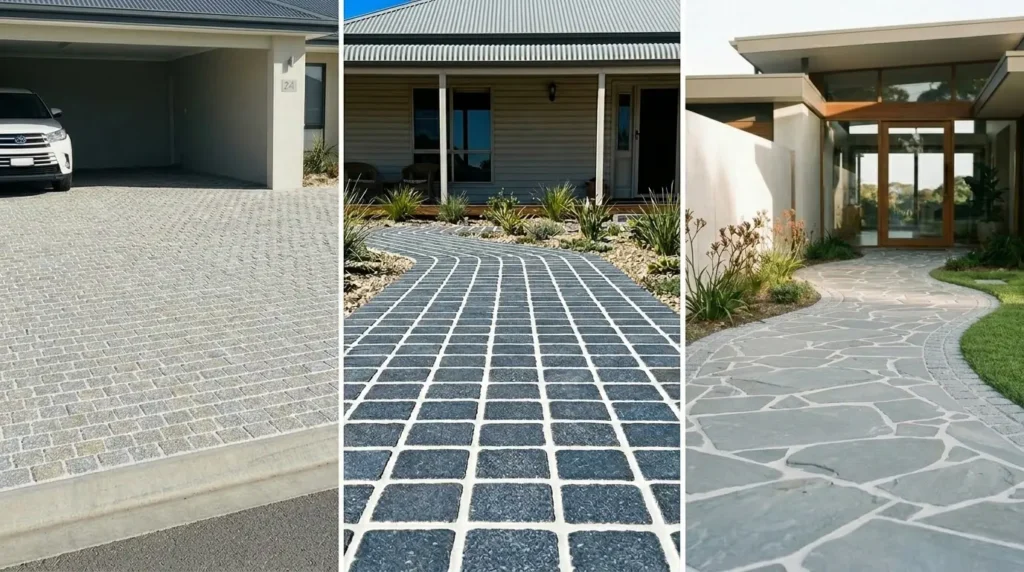
You cannot suffice one natural stone for every Sydney outdoor area. Two builds in the same city can end up with different materials, colours, finishes or formats because the usage are different.
A shaded path that stays damp after rain raises different questions from an open pool surroundexposed to direct sun. An alfresco area, driveway, balcony and pool edge also place different requirements on the stone and the project.
That is why Stone Planet does not recommend choosing from the material name alone. Start with the site, the application and the project specification. Once you understand exposure, wet conditions, drainage, format, finish and any documented performance requirement, the useful stone shortlist becomes much clearer.
Start With the Site, Not Just the Stone
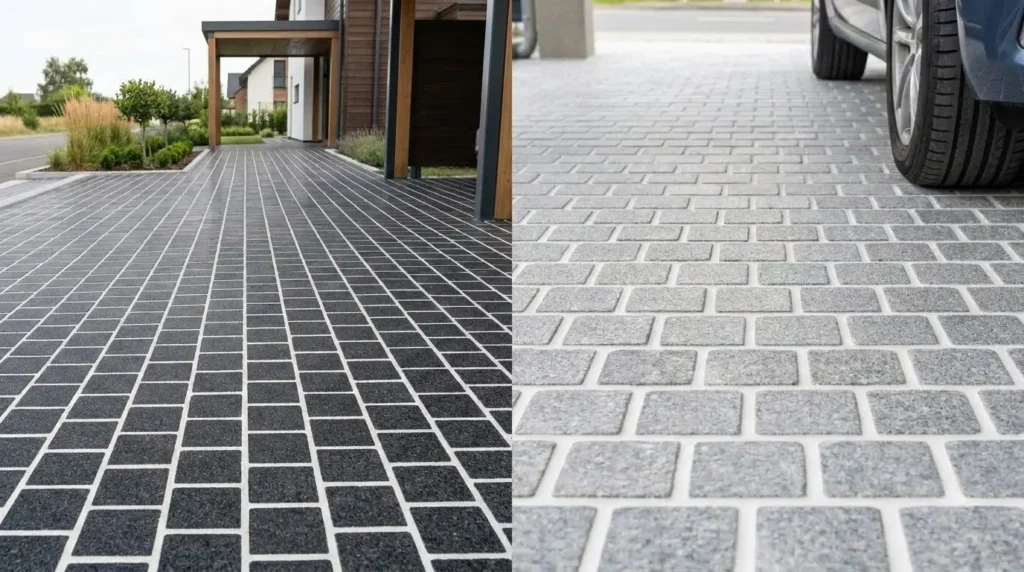
Many enquiries begin with a material somebody already likes: Travertinefrom another pool, a lightLimestone from an architectural project or a darker Granitefrom a driveway.
There is nothing wrong with beginning with appearance. The problem starts when the material name becomes the entire specification.
A pool surround, paved courtyard, balcony and driveway are different projects. Format, thickness, colour, finish, wet exposure, drainage, adjoining levels and any required technical evidence should be considered alongside the stone itself.
Before choosing a product, finalize where the stone will be used, climate of that region, whether it is regularly wet and whether other stone formats such as coping or steps will be needed. Site specific construction and installation decisions stay with the installer, builder, landscaper or other relevant project professional.
How Should Full Sydney Sun Affect the Stone Choice?
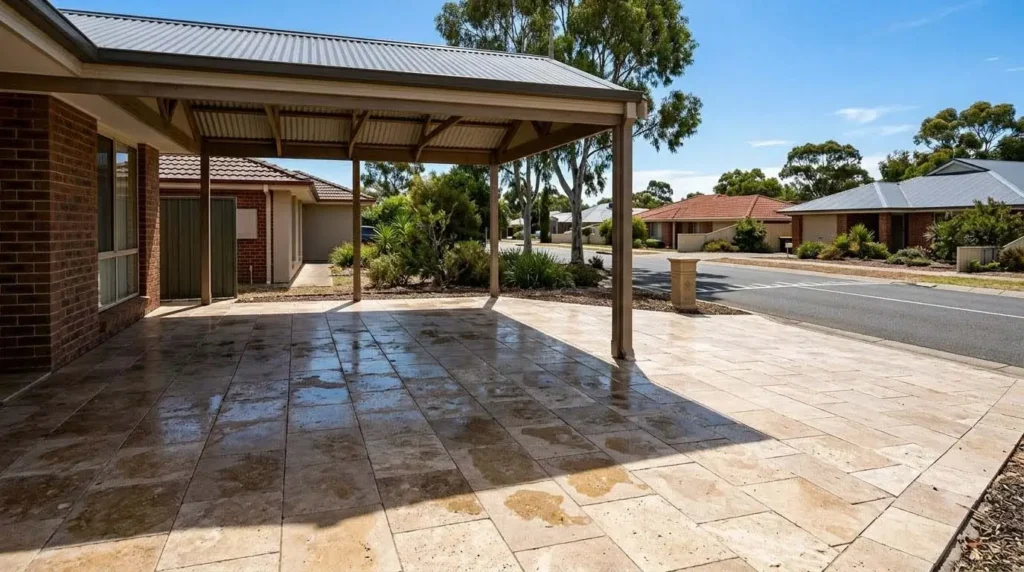
Drainage is one of the practical issues Stone Planet raises with customers planning outdoor natural stone.
Persistent moisture can become a project problem when falls, drainage or installation detailing do not allow water to move away as intended. That does not make the stone selection irrelevant; it means the stone cannot be considered separately from the system it is being installed into.
Stone Planet does not publish one universal drainage or installation specification. Falls, substrate preparation, waterproofing where applicable, drainage points, bedding or fixing systems and the overall build-up need to be determined for the actual site by the relevant project professional.
A useful question to settle before the stone specification is finalised is simple: where will the water go?
Why Drainage Matters
Surface temperature is a common concern for outdoor areas where people expect to walk barefoot.
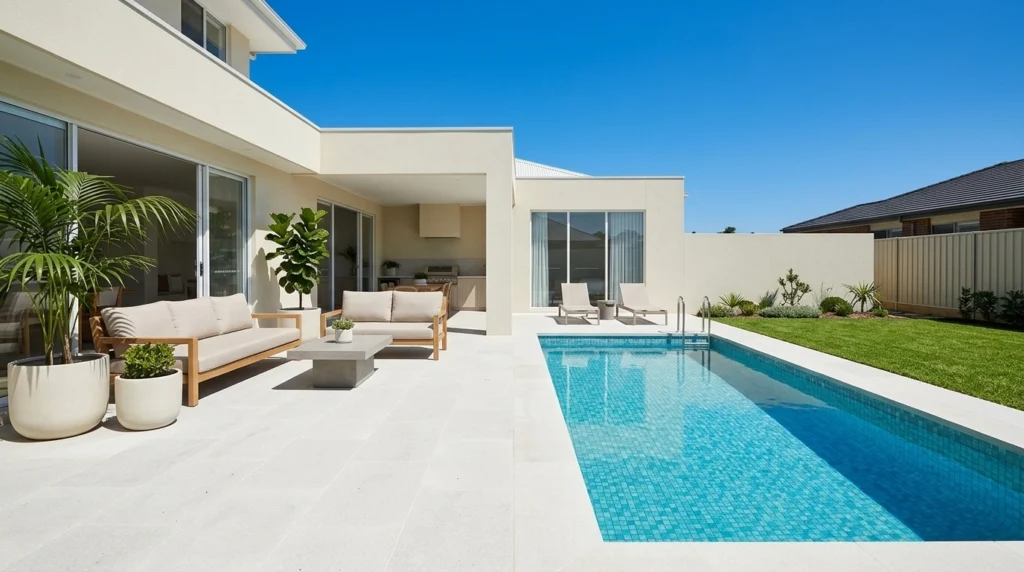
When a cooler-feeling surface is a priority, Stone Planet’s practical starting direction is usually to compare lighter-coloured selections before much darker ones. Lighter Limestone, Travertine and Marbledirections are common examples in those conversations.
That is Stone Planet’s product selection experience rather than a universal laboratory ranking between entire stone categories. The actual stone, colour, finish and amount of direct exposure still matter.
Sun exposure should therefore sit alongside format, finish, thickness and any other project requirement rather than deciding the whole specification on its own.
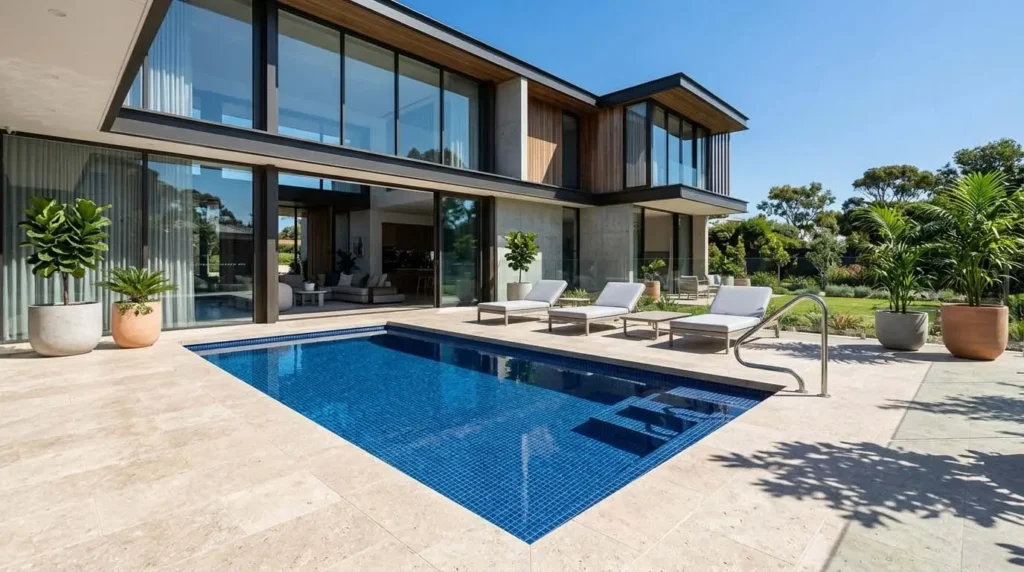
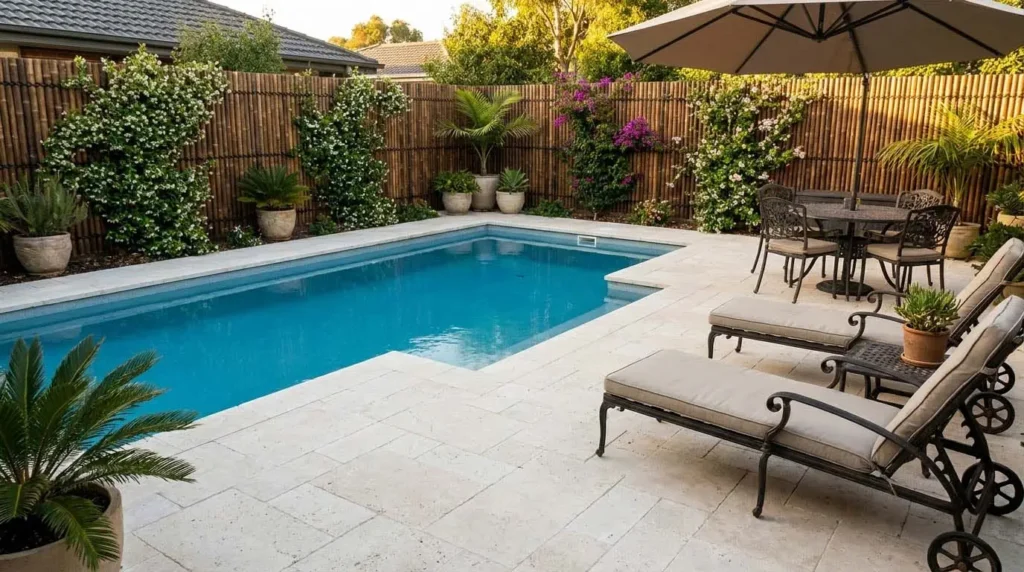
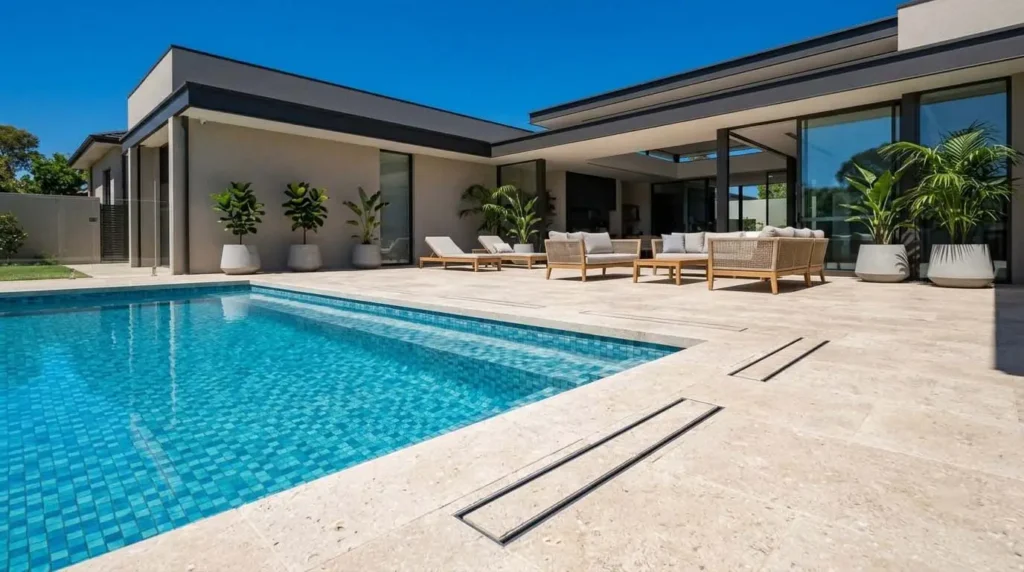
Choosing Natural Stone Around a Pool
Pool projects add several decisions beyond colour.
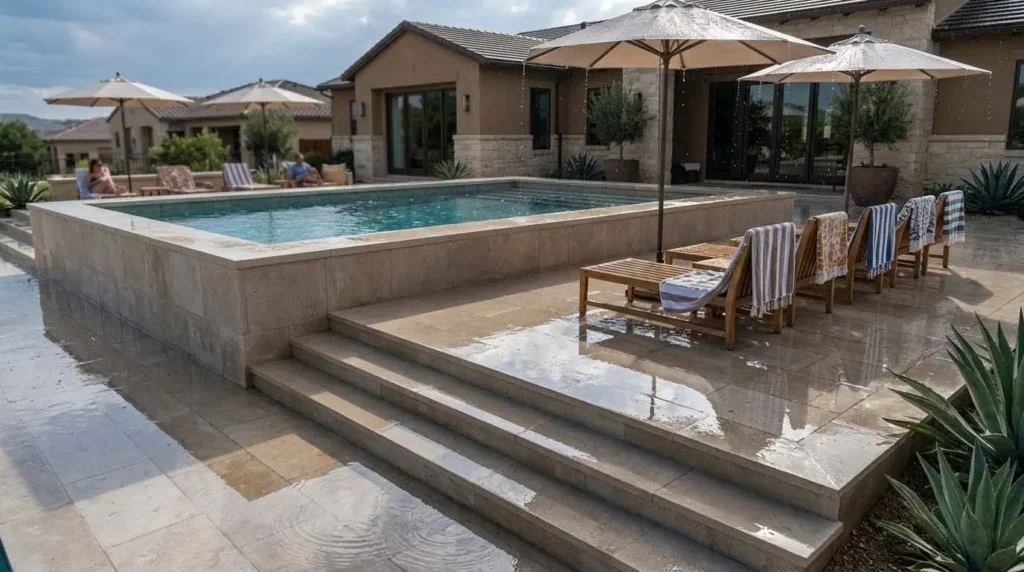
Start with the actual stone and finish, then establish whether documented slip performance is required, how the area will be used and what pool copingis needed. Where slip evidence matters, check the evidence relevant to the actual product and finish rather than assuming a rating from the material name.
The whole pool-area material and format decision belongs on Stone Planet’sPool Surroundspage. The immediate pool edge, including coping profiles and product-specific dimensions, belongs on the Pool Copingpage.
What About Salt Exposure?
Stone Planet does not apply one blanket coastal-Sydney rule to every natural-stone project.
If meaningful salt exposure is part of the project, whether from a saltwater pool or an exposed coastal location, raise it during product selection. The actual stone, finish, available product evidence, sealing approach and project specification should be considered together.
Stone Planet does not use a broad label such as “salt-safe” as a substitute for product-specific evidence. Site-specific installation and detailing remain with the relevant project professional.
If salt exposure matters, treat it as a specification question rather than a marketing claim.
What Changes in Shaded or Damp Areas?
Shade can change the maintenance conversation because some areas remain damp for longer after rain or washing.
How a shaded area behaves depends on drainage, surrounding vegetation, the actual stone, finish and maintenance. The useful point at selection stage is to recognise that a sheltered side path and an open, fast-drying terrace may not present the same maintenance conditions.
Use cleaning and care methods appropriate for the actual natural stone and finish. Do not assume one cleaning or pressure-washing approach suits every outdoor stone surface.
How Stone Planet Approaches Sealing Outdoors
For the outdoor natural stone Stone Planet supplies, sealing is treated as part of the project plan.
The exact sealer, preparation, application system and later maintenance interval depend on the actual stone, finish, selected sealing system, exposure and project conditions. Stone Planet does not publish one fixed resealing interval for every outdoor natural-stone product.
Where a sealer manufacturer or project specification gives product-specific instructions, that actual system guidance takes priority.
What Stone Planet Is Seeing in Sydney in 2026
Stone Planet’s own Sydney enquiries in 2026 are showing more interest in Limestone, particularly lighter-coloured directions. Galala Light is one example of the lighter palette customers are currently asking about, while the broader Limestone programme includes many other colours and selections.
Travertine remains a major outdoor option within Stone Planet’s range. What has changed in our enquiries is that customers are increasingly willing to compare it with Limestone rather than treating Travertine as the automatic starting point.
Current Sandstoneenquiries are more often connected to existing Sandstone properties, extensions, repairs or projects where the customer needs to continue or coordinate with stone that is already installed.
These are Stone Planet enquiry and sales observations, not third-party Sydney market statistics and not a statement that one material is universally more suitable than another.
Should Every Sydney Outdoor Project Use Travertine?
No. Travertine may be the right choice, but familiarity is not a project specification. Depending on the site, appearance and actual requirements, Limestone, Marble, Granite or another suitable natural-stone product may also deserve consideration.
The decision should return to the project: application, exposure, wet conditions, format, thickness, colour, finish, documented performance requirements where relevant and the installation specification.
Questions to Ask Before Choosing Outdoor Natural Stone
Before requesting quotes or deciding from samples alone, work through these questions:
- Where exactly will the stone be installed, and approximately how much is required?
- Is the area exposed to full sun, shade or a mixture of both?
- Is it a pool surround or another regularly wet area?
- Is meaningful salt exposure part of the project?
- Which finish is being considered?
- Does the project require documented slip performance?
- What thickness and format have been specified?
- How will drainage and falls be handled by the project team?
- Are coping, steps or other coordinating stone components required?
- What sealing and maintenance approach will apply to the actual product?
Those answers make it easier to compare actual products and quotations instead of trying to choose from a material name alone.
Talk Through the Actual Project
If you are choosing natural stone for a Sydney outdoor area, tell Stone Planet where the stone will be installed, the approximate quantity, sun or shade exposure, the appearance you want and any format, thickness, finish or performance requirements already specified.
For a pool project, include the coping requirement from the beginning. If salt exposure, drainage or another site condition matters, raise it during the same conversation.
Stone Planet can then help compare relevant current products and samples, while the installer or other project professional handles the site-specific installation, falls, drainage and construction requirements.https://stoneplanet.com.au/shop-by-application/alfresco-areas/
Frequently Asked Questions
There is no single best stone for every Sydney project. The useful choice depends on the application, exposure, wet conditions, drainage, required format and thickness, finish and any documented performance requirements. Start with the site and project specification rather than the material name alone.
When a cooler-feeling outdoor surface is a priority, Stone Planet generally starts by comparing lighter-coloured selections before much darker ones. This is practical Stone Planet product experience rather than a universal tested ranking, and the actual stone, colour, finish and amount of direct exposure still matter.
Yes. Drainage is one of the practical issues Stone Planet raises on outdoor projects. Falls, drainage, waterproofing where applicable and the installation build-up need to be resolved for the actual site by the relevant installer or project professional.
Start with the actual stone and finish, then consider whether documented slip performance is required, how the area will be used and what coping is needed. Where slip evidence matters, check evidence relevant to the actual product and finish.
For the outdoor natural stone Stone Planet supplies, sealing is treated as part of the project plan. The actual sealer, application system and later maintenance interval depend on the specific stone, finish, exposure, selected sealing system and project conditions. Stone Planet does not apply one fixed resealing interval across every outdoor product.
Natural stone is used in coastal projects, but Stone Planet does not apply one universal coastal specification. Where salt exposure matters, the actual stone, finish, available product evidence, sealing approach and project requirements should be considered together with the relevant project professional.
No. Travertine is a major outdoor option, but depending on the site, appearance and project specification, Limestone, Marble, Granite or another suitable natural-stone product may also deserve consideration. Familiarity alone is not a reason to treat one material as universally best.
In Stone Planet's current Sydney enquiries, interest has increased in Limestone, particularly lighter-coloured directions. Travertine remains a major outdoor option, while current Sandstone enquiries are more often connected to existing Sandstone properties, extensions, repairs or matching established areas. This is Stone Planet's own enquiry experience rather than an Australia-wide market statistic.