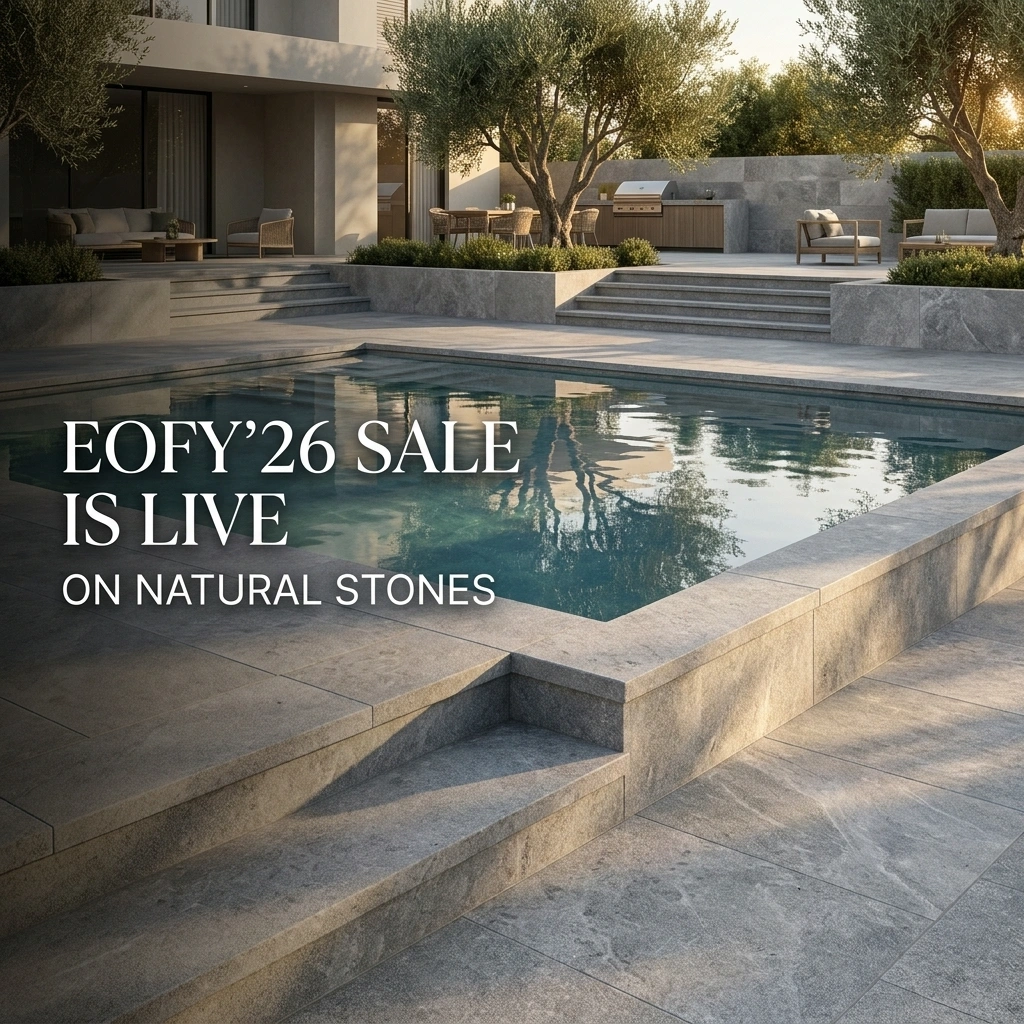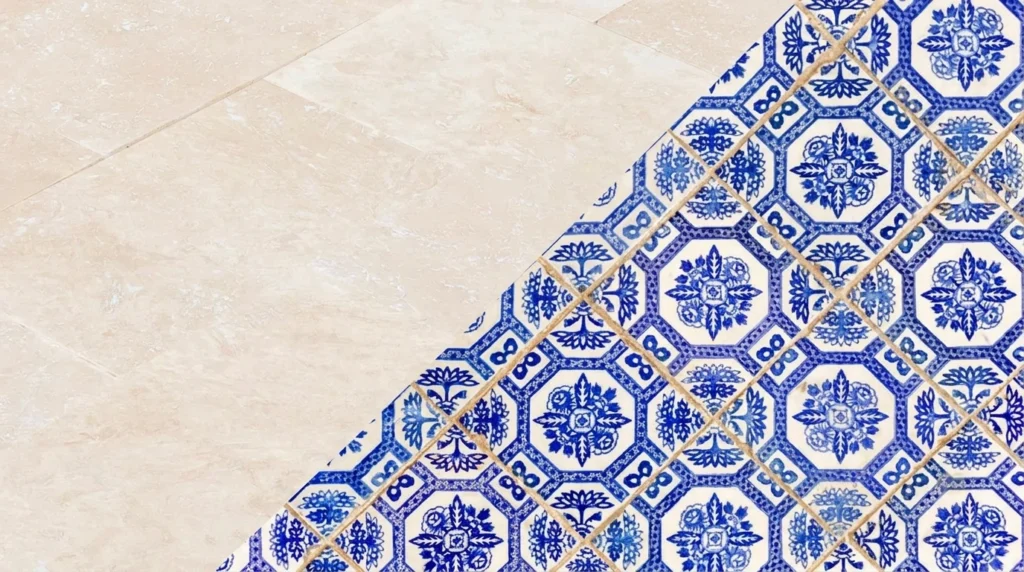
Choosing the right material for a pool surround means finding a balance between safety, durability, and looks. The surface needs to handle constant water, hot sun, pool chemicals, and wet feet without getting slippery or ruined.
For homeowners in Australia who are planning for a pool installation or a rennovation, the choice usually comes down to two options: Natural Stone or Porcelain Tiles. Here is how they compare in everyday terms.
Natural Stone: The Real Deal
Natural stone pavers—like travertine, limestone, granite, and quartzite—come straight from the earth. Because they are natural, no two pieces look exactly alike. This gives your pool area a unique, high-end look that factory-made materials cannot perfectly copy.
Porcelain Tiles: The Modern Choice
Outdoor porcelain tiles are made from refined clay baked at extremely high temperatures. This process makes them incredibly dense and tough. Thanks to modern printing technology, these tiles can be made to look exactly like wood, concrete, or even real stone.
Head-to-Head Comparison
1. Water and Chemical Damage
Pool decks get splashed constantly with chlorine or saltwater.
- Porcelain: These tiles act like glass; they do not absorb water at all. Because water and salt cannot get inside, the tiles will not crack in freezing weather, fade from chemicals, or get damaged by pool salt.
- Natural Stone: Stone has tiny natural pores that can soak up water. Over time, salt and pool chemicals can weaken softer stones like travertine, causing them to flake or wear away if they aren’t protected.
2. Slip and Slide Safety
Safety is the most important factor around a pool.
- Natural Stone: Real stone has a natural texture. For example, travertine has tiny pits and granite has a rough finish. These textures give feet a natural grip, even when the stone is wet.
- Porcelain: Normal indoor porcelain is very slippery. For a pool, you must choose specific outdoor-rated tiles that have a rough, slip-resistant texture built into them.
3. The Barefoot Heat Test
Summer sun can turn pool decks into scorching hot zones.
- Natural Stone: Light-colored stones, especially travertine, are famous for staying cool. They reflect the sun and do not trap heat, making them very comfortable to walk on with bare feet.
- Porcelain: Because porcelain is so dense, it holds onto heat. Darker porcelain tiles can get painfully hot in direct sunlight, though lighter colors stay a bit cooler.
4. Cleaning and Upkeep
- Porcelain: Porcelain is incredibly easy to maintain. It never needs to be sealed, it resists mold and algae, and you can pressure-wash it without worrying about damaging the surface.
- Natural Stone: Stone requires regular homework. To keep it from staining or getting damaged by pool chemicals, you need to apply a protective liquid sealer every 1 to 3 years.
Quick Comparison Table
| Feature | Natural Stone | Outdoor Porcelain |
| Soaks up water? | Yes (Needs sealing to protect it) | No (Completely waterproof) |
| Gets hot in the sun? | Stays pretty cool | Can get very hot |
| Look and Style | 100% unique, natural look | Printed designs (can repeat) |
| Resists Pool Salt? | Can damage over time if unsealed | Completely immune |
| Maintenance | High (Requires regular sealing) | Low (Just sweep and wash) |
The Verdict: Why Natural Stone Takes the Crown
While engineered porcelain has its perks, natural stone is ultimately the superior choice for a high-quality pool surround.
A pool area is meant for relaxation, and natural stone excels where it matters most: under your feet. It stays remarkably cool under the blazing summer sun, saving your family and guests from burning their bare feet—a common frustration with dense porcelain tiles. Furthermore, stone’s organic, slip-resistant texture offers unmatched safety when kids are running around on wet surfaces.
Beyond safety, you simply cannot replicate the timeless luxury and prestige of real stone. While porcelain patterns repeat and can eventually look dated, natural stone ages beautifully, adds genuine value to your property, and connects your outdoor space to the beauty of the natural world. If you want a pool deck that is safe, uniquely beautiful, and naturally cool, natural stone is well worth the minor effort of regular sealing.